Prader-Willi syndrome
Last updated 13 May 2022
Meets Patient’s editorial guidelines
- DownloadDownload
- Share
- Language
- Discussion
- Ask Patient
- Audio Version
- Add to preferred sources on Google
Prader-Willi syndrome is a complex genetic condition that affects many parts of the body. In infancy, this condition is characterised by weak muscle tone (hypotonia), feeding difficulties, poor growth, and delayed development. Beginning in childhood, affected individuals develop an extreme hunger, which leads to chronic overeating (hyperphagia) and obesity. Some people with Prader-Willi syndrome, particularly those with obesity, also develop type 2 diabetes (the most common form of diabetes).
Video picks for Genetic conditionsVideo library
Description
Prader-Willi syndrome is a complex genetic condition that affects many parts of the body. In infancy, this condition is characterised by weak muscle tone (hypotonia), feeding difficulties, poor growth, and delayed development. Beginning in childhood, affected individuals develop an extreme hunger, which leads to chronic overeating (hyperphagia) and obesity. Some people with Prader-Willi syndrome, particularly those with obesity, also develop type 2 diabetes (the most common form of diabetes).
People with Prader-Willi syndrome typically have mild to moderate intellectual impairment and learning disabilities. Behavioural problems are common, including temper outbursts, stubbornness, and compulsive behaviour such as picking at the skin. Sleep abnormalities can also occur. Additional features of this condition include distinctive facial features such as a narrow forehead, almond-shaped eyes, and a triangular mouth; short stature; and small hands and feet. Some people with Prader-Willi syndrome have unusually fair skin and light-colored hair. Both affected males and affected females have underdeveloped genitals. Puberty is delayed or incomplete, and most affected individuals are unable to have children (infertile).
Inheritance patterns
The source lists the following possible inheritance patterns: Not inherited. More than one pattern can apply in different cases.
Related genes
Other names
Prader-Labhart-Willi syndrome
PWS
Willi-Prader syndrome
Patient picks for Genetic conditions
Children's health
Down's syndrome
Down's syndrome (also known as Down syndrome) is a genetic chromosome problem. Someone with Down's syndrome has an extra copy of chromosome 21 in the cells of their body. This causes the typical features of the condition. All people with Down's syndrome have some degree of learning disability. They are also at increased chance of having various other medical problems. Down's syndrome may be detected before birth (prenatally) or after birth (postnatally). It cannot be cured but treatment and support can help someone with Down's syndrome to lead an active life. A number of advice and support groups are available for people with Down's syndrome and their families and carers, such as the Down's Syndrome Association (see Further Reading below for link to website).
by Dr Colin Tidy, MRCGP
Brain and nerves
Cervical rib
About 1 in 100 people are born with an extra rib called a cervical rib. About 1 in 10 people who have a cervical rib develop thoracic outlet syndrome. This happens if the cervical rib squashes the nerves and blood vessels going into the arm. Treatment can include painkillers, physiotherapy and sometimes surgery to relieve the compression caused by, for example, a cervical rib.
by Dr Doug McKechnie, MRCGP
Digestive health
Gilbert's syndrome
Gilbert's syndrome is due to an inherited defect in processing bilirubin in the liver. Bilirubin is produced from the breakdown of red blood cells. When it cannot be cleared properly in the liver, its levels build up in the blood. This can cause mild jaundice from time to time and can also be seen as slightly raised bilirubin levels on a blood test. Gilbert's syndrome does not require any treatment.
by Dr Colin Tidy, MRCGP

Bones, joints and muscles
Hypermobility spectrum disorders
Hypermobility spectrum disorders include all people with what used to be called joint hypermobility syndrome, and before that benign joint hypermobility syndrome. Anyone who has symptoms as a result of having hypermobile joints, but who does not have all the features of Ehlers-Danlos syndrome, has a hypermobility spectrum disorder. These problems mainly affect children and young adolescents with extra-flexible (hypermobile) joints who develop pain on exercise, which persists when they rest. These conditions can have a major impact on school and sporting life. Whilst they do not usually cause long-term harm, they can be associated with injuries and can sometimes persist into adulthood. Treatment is aimed at increasing muscle strength and joint resilience without causing injury.
by Dr Colin Tidy, MRCGP
Children's health
Cri du chat syndrome
Cri du chat syndrome is a chromosome problem caused by a missing piece of chromosome 5. The syndrome is called cri du chat (French for cry of the cat) because affected babies often have a high-pitched cry. Not all babies with the missing piece of chromosome 5 will develop cri du chat syndrome. Cri du chat syndrome may cause a variety of abnormalities, especially affecting the head and face. Other features may include learning difficulties and slow growth and development. There is no specific treatment. However, physiotherapy, speech and language therapy, and surgical treatment for some abnormal features may be needed. Many affected children will survive well into adulthood. However, those babies severely affected may die within the first year of life.
by Dr Hayley Willacy, FRCGP
Children's health
Ehlers-Danlos syndrome
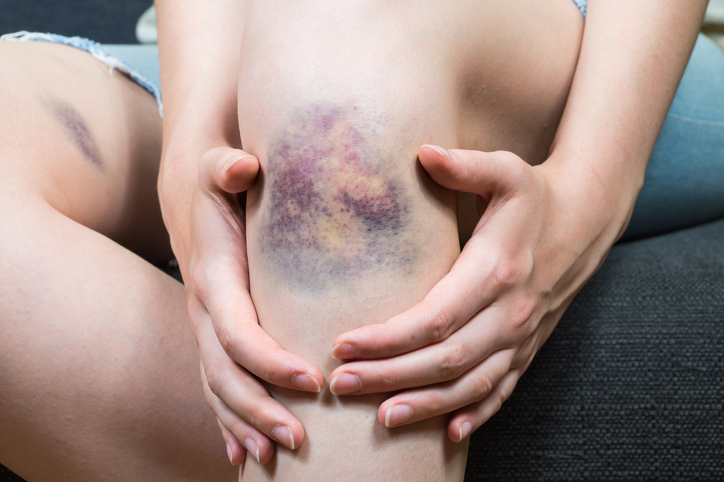
The Ehlers-Danlos syndromes (EDS) are a group of conditions that affect the stretchiness and strength of supporting tissues in the body, including skin, joints, blood vessels and internal organs. They vary in their impact from very mild through to very severe.
by Dr Rachel Hudson, MRCGP
Related patient information and medicines

Patient information leaflet
Restricted growth
This is a genetic condition affecting g... As well as short height, there are typical physical features, and ovaries do not work normally. See the separate leaflet called Turner syndrome for more information. Turner syndrome Prader-Willi syndrome. This is a rare genetic condition with many features including learning disability, obesity, muscle.
Patient information leaflet
Down's syndrome
Down's syndrome (also known as Down syndrome) is a genetic chromosome problem. Someone with Down's syndrome has an extra copy of chromosome 21 in the cells of their body. All people with Down's syndrome have some degree of learning disability. Down's syndrome may be detected before birth (prenatally) or after birth (postnatally). It cannot be.
Patient information leaflet
Restless legs syndrome
Restless legs syndrome causes uncomfortable feelings in your legs. As a result, you have an urge to move your legs which gives temporary relief. Symptoms come on... Medication can ease symptoms if the condition is distressing. What is restless legs syndrome. Restless legs syndrome (RLS) is sometimes called Willis-Ekbom disease after the doctors.
Patient information leaflet
Cervical rib
About 1 in 100 people are born with an extra rib called a cervical rib. About 1 in 10 people who have a cervical rib develop thoracic outlet syndrome. This happens if the cervical rib squashes the nerves and blood vessels going into the arm. Treatment can include painkillers, physiotherapy and sometimes surgery to relieve the compression caused.
Patient information leaflet
Fetal anticonvulsant syndrome
Fetal anticonvulsant syndrome (FACS) - also known as fetal valproate syndrome and fetal hydantoin syndrome - is a group of malformations that can affect some babies if they are exposed to certain medicines known as antiepileptic drugs (AEDs) while in the womb. Most women with epilepsy will have a healthy child. Women with epilepsy who are pregnant.
Patient information leaflet
Gilbert's syndrome
Gilbert's syndrome is due to an inherited defect in processing bilirubin in the liver. Bilirubin is produced from the breakdown of red blood cells. When it cannot be cleared properly in the liver, its levels build up in the blood. What is Gilbert's syndrome. Gilbert's syndrome - also known as constitutional hepatic dysfunction - is a condition.
Further reading and references
- Prader-Willi syndrome; MedlinePlus, National Library of Medicine.
- Bittel DC, Butler MG. Prader-Willi syndrome: clinical genetics, cytogenetics and molecular biology. Expert Rev Mol Med. 2005 Jul 25;7(14):1-20. doi: 10.1017/S1462399405009531.
- Cassidy SB, Driscoll DJ. Prader-Willi syndrome. Eur J Hum Genet. 2009 Jan;17(1):3-13. doi: 10.1038/ejhg.2008.165. Epub 2008 Sep 10.
- Cassidy SB, Schwartz S, Miller JL, Driscoll DJ. Prader-Willi syndrome. Genet Med. 2012 Jan;14(1):10-26. doi: 10.1038/gim.0b013e31822bead0. Epub 2011 Sep 26.
- Chen C, Visootsak J, Dills S, Graham JM Jr. Prader-Willi syndrome: an update and review for the primary pediatrician. Clin Pediatr (Phila). 2007 Sep;46(7):580-91. doi: 10.1177/0009922807299314. Epub 2007 May 23.
- Driscoll DJ, Miller JL, Cassidy SB. Prader-Willi Syndrome. 1998 Oct 6 [updated 2026 Feb 19]. In: Adam MP, Bick S, Mirzaa GM, Wallace SE, Amemiya A, editors. GeneReviews(R) [Internet]. Seattle (WA): University of Washington, Seattle; 1993-2026. Available from http://www.ncbi.nlm.nih.gov/books/NBK1330/
- Goldstone AP, Holland AJ, Hauffa BP, Hokken-Koelega AC, Tauber M; speakers contributors at the Second Expert Meeting of the Comprehensive Care of Patients with PWS. Recommendations for the diagnosis and management of Prader-Willi syndrome. J Clin Endocrinol Metab. 2008 Nov;93(11):4183-97. doi: 10.1210/jc.2008-0649. Epub 2008 Aug 12.
- Gunay-Aygun M, Schwartz S, Heeger S, O'Riordan MA, Cassidy SB. The changing purpose of Prader-Willi syndrome clinical diagnostic criteria and proposed revised criteria. Pediatrics. 2001 Nov;108(5):E92. doi: 10.1542/peds.108.5.e92.
- Kocher MA, Huang FW, Le E, Good DJ. Snord116 Post-transcriptionally Increases Nhlh2 mRNA Stability: Implications for Human Prader-Willi Syndrome. Hum Mol Genet. 2021 Jun 9;30(12):1101-1110. doi: 10.1093/hmg/ddab103.
- Lee S, Wevrick R. Identification of novel imprinted transcripts in the Prader-Willi syndrome and Angelman syndrome deletion region: further evidence for regional imprinting control. Am J Hum Genet. 2000 Mar;66(3):848-58. doi: 10.1086/302817.
- Mendiola AJP, LaSalle JM. Epigenetics in Prader-Willi Syndrome. Front Genet. 2021 Feb 15;12:624581. doi: 10.3389/fgene.2021.624581. eCollection 2021.
- Oiglane-Shlik E, Zordania R, Varendi H, Antson A, Magi ML, Tasa G, Bartsch O, Talvik T, Ounap K. The neonatal phenotype of Prader-Willi syndrome. Am J Med Genet A. 2006 Jun 1;140(11):1241-4. doi: 10.1002/ajmg.a.31223. No abstract available.
- Shelkowitz E, Gantz MG, Ridenour TA, Scheimann AO, Strong T, Bohonowych J, Duis J. Neuropsychiatric features of Prader-Willi syndrome. Am J Med Genet A. 2022 May;188(5):1457-1463. doi: 10.1002/ajmg.a.62662. Epub 2022 Jan 30.
- Wattendorf DJ, Muenke M. Prader-Willi syndrome. Am Fam Physician. 2005 Sep 1;72(5):827-30.
Share your thoughts or experiences with others in our patient communities.
Simple access to trusted treatments and health services online.
Common conditions
Get help with common conditions through the NHS, without a GP appointment.





Sign up to the Patient newsletter
Your weekly dose of clear, trustworthy health advice - written to help you feel informed, confident and in control.
By subscribing you accept our Privacy Policy. You can unsubscribe at any time. We never sell your data.