Vitamin D-dependent rickets
Last updated 20 Mar 2026
Meets Patient’s editorial guidelines
- DownloadDownload
- Share
- Language
- Discussion
- Ask Patient
- Audio Version
- Add to preferred sources on Google
Vitamin D-dependent rickets is a group of disorders that are characterised by soft, weak bones (rickets). In people with these conditions, the process by which minerals are deposited into developing bones (mineralization) is disrupted. The long bones in the arms and legs are particularly affected. People with vitamin D-dependent rickets have problems using vitamin D, which helps maintain the proper levels of calcium and phosphate in the blood. These minerals are needed for the normal development of strong bones and teeth.
Video picks for Genetic conditionsVideo library
Description
Vitamin D-dependent rickets is a group of disorders that are characterised by soft, weak bones (rickets). In people with these conditions, the process by which minerals are deposited into developing bones (mineralization) is disrupted. The long bones in the arms and legs are particularly affected. People with vitamin D-dependent rickets have problems using vitamin D, which helps maintain the proper levels of calcium and phosphate in the blood. These minerals are needed for the normal development of strong bones and teeth.
There are several forms of vitamin D-dependent rickets: type 1A (VDDR1A), type 1B (VDDR1B), type 2A (VDDR2A), type 2B (VDDR2B), and type 3 (VDDR3). The types are distinguished by their genetic cause.
The signs and symptoms of vitamin D-dependent rickets often begin in infancy. Infants with vitamin D-dependent rickets may have weak muscle tone (hypotonia) and fail to grow or gain weight at the expected rate (failure to thrive). When affected children begin to walk, they may develop abnormally curved (bowed) legs because the bones are too weak to bear weight. The weakened bones are often painful and are prone to fractures. Bone growth is often delayed, and affected individuals may be shorter than their peers. Additional skeletal features include enlargement of the skull, the wrists, and the ends of the ribs.
Affected individuals may also have dental abnormalities, such as delayed tooth formation and thin tooth enamel. Some people with vitamin D-dependent rickets who have very low levels of calcium in the blood can have muscle cramps, tingling sensations (paresthesias), or seizures. Hair loss (alopecia) has been reported in some individuals with VDDR2A.
With early treatment, affected individuals may have less-severe skeletal signs and symptoms and fewer long-term health issues. Unlike with some other forms of rickets, vitamin D-dependent rickets cannot be treated with standard doses of vitamin D.
Inheritance patterns
The source lists the following possible inheritance patterns: Autosomal dominant; Autosomal recessive. More than one pattern can apply in different cases.
Related genes
Other names
Hereditary vitamin D-resistant ricket
HVDRR
VDDR
Patient picks for Genetic conditions

Diet and nutrition
What are the benefits of vitamin D?
No matter how healthy our diet, we're unlikely to get enough vitamin D. So, are vitamin D supplements the answer to giving our bodies a boost and do we need to take them all year round.
by Victoria Raw

Diet and nutrition
How to get vitamin-ready for autumn and winter
Winter might be the last thing on your mind as you enjoy the ebbing rays of the sun but, make no mistake, those darker days with their accompanying coughs and sneezes are just around the corner. So, what can you do apart from stock up on tissues and Lemsip? Read on for your step-by-step plan to getting 'vitamin-ready' for winter.
by Dr Carrie Ruxton, PhD, Child Nutrition

Pregnancy
Which pregnancy vitamins do I really need?
With so many pregnancy vitamins on the market, it can be hard to know where to begin. So which vitamins do you actually need during pregnancy and which are less essential?
by Abi Millar

Diet and nutrition
How to boost your vitamin D levels this winter
With less sunlight during the winter months, your body's ability to produce vitamin D diminishes. This can have a negative effect on your health. But what happens to our vitamin D levels during winter, and how can we support our health by boosting them until the sunshine returns?
by Victoria Raw
Diet and nutrition
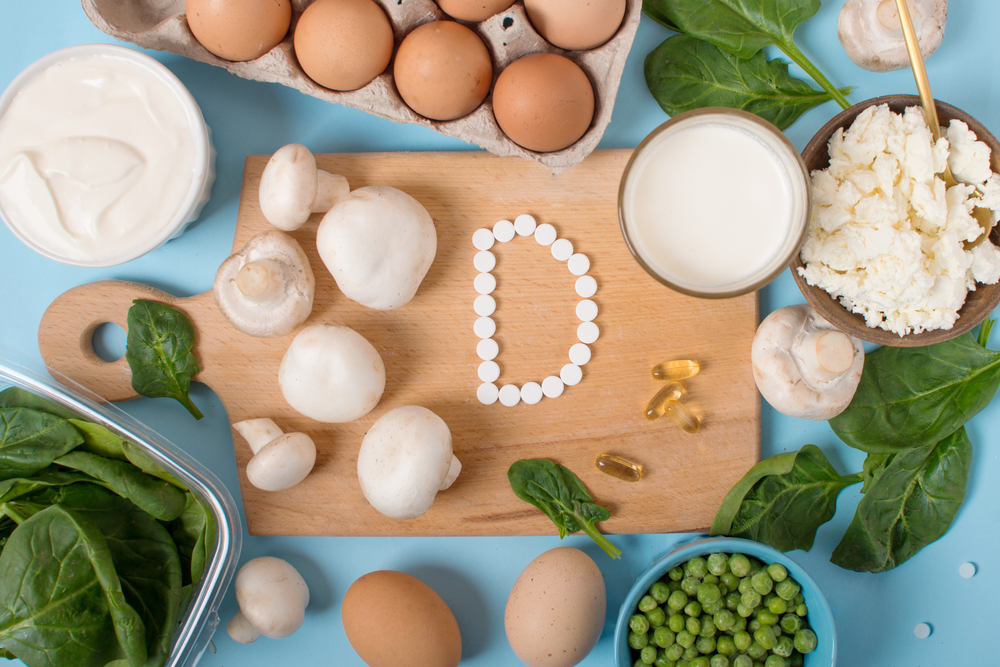
10 everyday foods high in vitamin D
Vitamin D plays an essential role in bone health, immunity, and mood, yet many people in the UK don’t get enough, especially during the darker months. While sunlight is the main source, certain foods can also help to boost your levels naturally. In this article, we explore vitamin D foods you might not expect and how to include them in your diet.
by Josh Alderman
Diet and nutrition
Most vitamin supplements aren't beneficial for health, study finds
Vitamin supplements show little evidence of health benefits and some could actually be harmful, suggests new research.
by Ashwin Bhandari
Related patient information and medicines

Patient information leaflet
Vitamin D deficiency
Vitamin D deficiency happens when your body does not have enough vitamin D. It can lead to weak or soft bones (rickets in children, osteoporosis in adults), muscle weakness, fatigue, and may affect the immune and nervous systems. Low levels can weaken your bones and increase the risk of osteoporosis Oste... In children, it can cause rickets, where.

Patient information leaflet
Can I take Pregabalin and Vitamin D together?
There are no known significant interactions between pregabalin and vitamin D supplements. It is generally considered safe to take these two together. Combining alcohol with this medicine can significantly increase side effects such as extr... It can also increase the risk of breathing problems. High-fat meals Vitamin D is a fat-soluble vitamin. It.
Patient information leaflet
Can I take Vitamin C and Vitamin D together?
There is no known negative interaction between Vitamin C (ascorbic acid) and Vitamin D (cholecalciferol). In fact, they are often taken together in multivitamin supplements. Vitamin C is water-soluble and Vitamin D is fat-soluble, meaning they do not compete for the same transport systems in the body. Our Medicines Interaction Checker helps you.
Patient information leaflet
Can I take Prozac and Vitamin D together?
There is no known harmful interaction between Prozac (fluoxetine) and Vitamin D. It is generally considered safe to take these two together. Why this happens Prozac is an antidepressant (SSRI) processed by specific liver enzymes, while Vitamin D is a fat-soluble vitamin processed differently by the body. They do not interfere with each other's.
Patient information leaflet
Can I take Vitamin B2 and Vitamin D together?
There is no known negative interaction between vitamin B2 (riboflavin) and vitamin D. Vitamin B2 is water-soluble and primarily excreted through urine, while vitamin D is fat-soluble and stored in the body's fatty tissues and liver. ...on Checker helps you check whether your prescriptions, over-the-counter medicines, and supplements are safe to.
Patient information leaflet
Can I take Vitamin B12 and Vitamin D together?
There is no known negative interaction between Vitamin B12 and Vitamin D. Vitamin B12 is a water-soluble vitamin absorbed mainly in the small intestine with the help of a protein called intrinsic factor. Vitamin D is a fat-soluble vitamin that requires dietary fat for absorption. They do not compete for absorption or interfere with how the other.
Further reading and references
- Vitamin D-dependent rickets; MedlinePlus, National Library of Medicine.
- Chanchlani R, Nemer P, Sinha R, Nemer L, Krishnappa V, Sochett E, Safadi F, Raina R. An Overview of Rickets in Children. Kidney Int Rep. 2020 Apr 11;5(7):980-990. doi: 10.1016/j.ekir.2020.03.025. eCollection 2020 Jul.
- Dahash BA, Sankararaman S. Rickets. 2023 Aug 7. In: StatPearls [Internet]. Treasure Island (FL): StatPearls Publishing; 2023 Jan-. Available from http://www.ncbi.nlm.nih.gov/books/NBK562285/
- Feldman D, J Malloy P. Mutations in the vitamin D receptor and hereditary vitamin D-resistant rickets. Bonekey Rep. 2014 Mar 5;3:510. doi: 10.1038/bonekey.2014.5. eCollection 2014.
- Gentile C, Chiarelli F. Rickets in Children: An Update. Biomedicines. 2021 Jun 27;9(7):738. doi: 10.3390/biomedicines9070738.
- Haffner D, Leifheit-Nestler M, Grund A, Schnabel D. Rickets guidance: part I-diagnostic workup. Pediatr Nephrol. 2022 Sep;37(9):2013-2036. doi: 10.1007/s00467-021-05328-w. Epub 2021 Dec 15.
- Levine MA. Diagnosis and Management of Vitamin D Dependent Rickets. Front Pediatr. 2020 Jun 12;8:315. doi: 10.3389/fped.2020.00315. eCollection 2020.
- Malloy PJ, Feldman D. The role of vitamin D receptor mutations in the development of alopecia. Mol Cell Endocrinol. 2011 Dec 5;347(1-2):90-6. doi: 10.1016/j.mce.2011.05.045. Epub 2011 Jun 13.
- Malloy PJ, Tasic V, Taha D, Tutunculer F, Ying GS, Yin LK, Wang J, Feldman D. Vitamin D receptor mutations in patients with hereditary 1,25-dihydroxyvitamin D-resistant rickets. Mol Genet Metab. 2014 Jan;111(1):33-40. doi: 10.1016/j.ymgme.2013.10.014. Epub 2013 Nov 4.
- Mantoanelli L, de Almeida CM, Coelho MCA, Coutinho M, Levine MA, Collett-Solberg PF, Bordallo AP. Vitamin D-Dependent Rickets Type 3: A Case Report and Systematic Review. Calcif Tissue Int. 2023 Apr;112(4):512-517. doi: 10.1007/s00223-022-01051-2. Epub 2023 Jan 19.
- Molin A, Wiedemann A, Demers N, Kaufmann M, Do Cao J, Mainard L, Dousset B, Journeau P, Abeguile G, Coudray N, Mittre H, Richard N, Weryha G, Sorlin A, Jones G, Kottler ML, Feillet F. Vitamin D-Dependent Rickets Type 1B (25-Hydroxylase Deficiency): A Rare Condition or a Misdiagnosed Condition? J Bone Miner Res. 2017 Sep;32(9):1893-1899. doi: 10.1002/jbmr.3181. Epub 2017 Jul 13.
- Roizen JD, Li D, O'Lear L, Javaid MK, Shaw NJ, Ebeling PR, Nguyen HH, Rodda CP, Thummel KE, Thacher TD, Hakonarson H, Levine MA. CYP3A4 mutation causes vitamin D-dependent rickets type 3. J Clin Invest. 2018 May 1;128(5):1913-1918. doi: 10.1172/JCI98680. Epub 2018 Apr 3.
- Thacher TD, Fischer PR, Singh RJ, Roizen J, Levine MA. CYP2R1 Mutations Impair Generation of 25-hydroxyvitamin D and Cause an Atypical Form of Vitamin D Deficiency. J Clin Endocrinol Metab. 2015 Jul;100(7):E1005-13. doi: 10.1210/jc.2015-1746. Epub 2015 May 5.
- Unger S, Ferreira CR, Mortier GR, Ali H, Bertola DR, Calder A, Cohn DH, Cormier-Daire V, Girisha KM, Hall C, Krakow D, Makitie O, Mundlos S, Nishimura G, Robertson SP, Savarirayan R, Sillence D, Simon M, Sutton VR, Warman ML, Superti-Furga A. Nosology of genetic skeletal disorders: 2023 revision. Am J Med Genet A. 2023 May;191(5):1164-1209. doi: 10.1002/ajmg.a.63132. Epub 2023 Feb 13.
Share your thoughts or experiences with others in our patient communities.
Simple access to trusted treatments and health services online.
Common conditions
Get help with common conditions through the NHS, without a GP appointment.





Sign up to the Patient newsletter
Your weekly dose of clear, trustworthy health advice - written to help you feel informed, confident and in control.
By subscribing you accept our Privacy Policy. You can unsubscribe at any time. We never sell your data.