platelet derived growth factor receptor alpha
Last updated 13 Jul 2021
Meets Patient’s editorial guidelines
- DownloadDownload
- Share
- Language
- Discussion
- Ask Patient
- Audio Version
- Add to preferred sources on Google
The PDGFRA gene provides instructions for making a protein called platelet-derived growth factor receptor alpha (PDGFRA), which is part of a family of proteins called receptor tyrosine kinases (RTKs). Receptor tyrosine kinases transmit signals from the cell surface into the cell through a process called signal transduction. The PDGFRA protein is found in the cell membrane of certain cell types where a specific protein, called platelet-derived growth factor, attaches (binds) to it. This binding turns on (activates) the PDGFRA protein, which then activates other proteins inside the cell by adding a cluster of oxygen and phosphorus atoms (a phosphate group) at specific positions (a process called phosphorylation). This process leads to the activation of a series of proteins in multiple signaling pathways.
Video picks for GenesVideo library
Normal function
The PDGFRA gene provides instructions for making a protein called platelet-derived growth factor receptor alpha (PDGFRA), which is part of a family of proteins called receptor tyrosine kinases (RTKs). Receptor tyrosine kinases transmit signals from the cell surface into the cell through a process called signal transduction. The PDGFRA protein is found in the cell membrane of certain cell types where a specific protein, called platelet-derived growth factor, attaches (binds) to it. This binding turns on (activates) the PDGFRA protein, which then activates other proteins inside the cell by adding a cluster of oxygen and phosphorus atoms (a phosphate group) at specific positions (a process called phosphorylation). This process leads to the activation of a series of proteins in multiple signaling pathways.
The signaling pathways stimulated by the PDGFRA protein control many important cellular processes such as cell growth and division (proliferation) and cell survival. PDGFRA protein signaling is important for the development of many types of cells throughout the body.
Conditions referring to this gene or chromosome
Other names
CD140 antigen-like family member A
CD140A
CD140a antigen
GAS9
PDGFR-alpha
PDGFR2
PGFRA_HUMAN
platelet-derived growth factor receptor 2
platelet-derived growth factor receptor alpha
platelet-derived growth factor receptor, alpha polypeptide
Patient picks for Genes

Children's health
Restricted growth
Dwarfism is a medical or genetic condition which causes people to have restricted growth so that they are shorter than average. Specifically, people with dwarfism grow no higher than 4 ft 10 ins (147 cm). It can be due to literally hundreds of different causes, so the term actually includes many different medical conditions. The cause and type of dwarfism will therefore affect the outlook and problems that may be associated with it. The most common condition causing dwarfism is achondroplasia.
by Dr Hayley Willacy, FRCGP

Children's health
Alpha-1 antitrypsin deficiency
Alpha-1 antitrypsin deficiency is an inherited genetic condition. A genetic condition is one that can be passed on from parents through genes. In alpha-1 antitrypsin deficiency the result of a genetic abnormality leads to lung and, in some people, liver damage. Lung symptoms are the most common and include shortness of breath, cough and wheezing. Symptoms can worsen over time. At present, there is no cure for alpha-1 antitrypsin deficiency. Treatment aims at slowing down the progression of the disease.
by Dr Philippa Vincent, MRCGP
Treatment and medication
Alpha-blockers
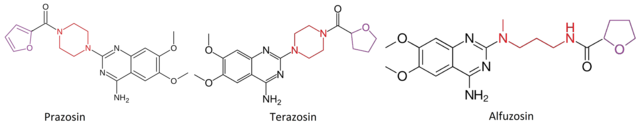
Alpha-blockers are medicines that are mainly used to treat high blood pressure (hypertension) and problems with passing urine in men who have enlargement of the prostate gland. Prostate gland enlargement is also called benign prostatic hyperplasia (BPH).
by Dr Doug McKechnie, MRCGP

Treatment and medication
What factors are causing antimicrobial resistance?
Following a recent study by health economists at the University of Manchester and the University of Southern Denmark, the tremendous pressure GPs are currently working under has been linked to increasing broad-spectrum antibiotic prescribing in England. Because excess antibiotic prescribing has been closely linked to antibiotic resistance, there are concerns that these higher prescribing levels may be contributing to antimicrobial resistance.
by Emily Jane Bashforth

Heart health and blood vessels
Dilated cardiomyopathy causes: what are the risk factors?
Having dilated cardiomyopathy means that your heart muscle is weakened, which affects how your heart pumps blood around your body. There are a wide range of dilated cardiomyopathy causes, including genetics, other health conditions, alcohol consumption and a poor diet. While we can't control some of these risk factors, we can make positive lifestyle changes to reduce our risk of developing dilated cardiomyopathy.
by Amberley Davis

Cancer
Breast cancer facts and risk factors
Most cases of breast cancer occur by chance. However, breast cancer does occur more often than usual in some families because of their genetic makeup.
by Dr Colin Tidy, MRCGP
Related patient information and medicines

Patient information leaflet
Throat cancer
Throat cancer is a general term used to describe cancers of the throat. Dr Krishna Vakharia, 16th October 2023 The National Institute for Health and Care Excellence (NICE) has recommended that a person should receive a diagnosis. It is a type of monoclonal antibody which means that it can recognise a... These proteins are epidermal growth factor.

Patient information leaflet
Polycythaemia rubra vera
Polycythaemia rubra vera (PRV) is a myeloproliferative disorder, which means the bone marrow makes too many blood cells. It is also sometimes just called polycythaemia (PV). There is an abnormally high number of red blood cells in your blood. You may also have an abnormally high number of platelets and white blood cells. What is normal blood made.

Patient information leaflet
Breast cancer
Dr Sarah Jarvis MBE If left untreated, cancers often go through three stages: local growth, spread to lymph channels and spread to other areas of the body. For more information on the stages of cancer, go to [https://patient.info/health/cancer/stages-of-cancer](https://patient.info/health/c... Treatment can block the oestrogen in these cancers.

Patient information leaflet
Childhood leukaemias
Before discussing the different types of leukaemia it may help to know some basics about normal blood cells and how they are made. What is normal blood made up of. Blood cells These can be seen under a microscope and make... Natural killer cells, which also help to protect against infection. All the other different blood cells (red blood cells,.

Patient information leaflet
Full blood count and blood film
There are various causes. Too many platelets - this is called thrombocythaemia ( or thrombocytosis). This is due to disorders which affect cells in the bone marrow which make platelets. The FBC test provides a number of results that provide information about red and white blood cells and platelets. The normal values for each of these three main.

Patient information leaflet
Peripheral vasodilators
Peripheral vasodilators are medicines that are used to treat conditions that affect blood vessels in outer (peripheral) parts of the body such as the arms and legs. For example, they are used to treat peripheral arterial disease and Raynaud's phenomenon. Nifedipine Nifedipine is a type of medicine called a calcium-channel blocker. Moxisylyte is a.
Further reading and references
- platelet derived growth factor receptor alpha; MedlinePlus, National Library of Medicine.
- Bain BJ. Relationship between idiopathic hypereosinophilic syndrome, eosinophilic leukemia, and systemic mastocytosis. Am J Hematol. 2004 Sep;77(1):82-5. doi: 10.1002/ajh.20088.
- Buitenhuis M, Verhagen LP, Cools J, Coffer PJ. Molecular mechanisms underlying FIP1L1-PDGFRA-mediated myeloproliferation. Cancer Res. 2007 Apr 15;67(8):3759-66. doi: 10.1158/0008-5472.CAN-06-4183.
- Cools J, DeAngelo DJ, Gotlib J, Stover EH, Legare RD, Cortes J, Kutok J, Clark J, Galinsky I, Griffin JD, Cross NC, Tefferi A, Malone J, Alam R, Schrier SL, Schmid J, Rose M, Vandenberghe P, Verhoef G, Boogaerts M, Wlodarska I, Kantarjian H, Marynen P, Coutre SE, Stone R, Gilliland DG. A tyrosine kinase created by fusion of the PDGFRA and FIP1L1 genes as a therapeutic target of imatinib in idiopathic hypereosinophilic syndrome. N Engl J Med. 2003 Mar 27;348(13):1201-14. doi: 10.1056/NEJMoa025217.
- Elling C, Erben P, Walz C, Frickenhaus M, Schemionek M, Stehling M, Serve H, Cross NC, Hochhaus A, Hofmann WK, Berdel WE, Muller-Tidow C, Reiter A, Koschmieder S. Novel imatinib-sensitive PDGFRA-activating point mutations in hypereosinophilic syndrome induce growth factor independence and leukemia-like disease. Blood. 2011 Mar 10;117(10):2935-43. doi: 10.1182/blood-2010-05-286757. Epub 2011 Jan 11.
- Fukushima K, Matsumura I, Ezoe S, Tokunaga M, Yasumi M, Satoh Y, Shibayama H, Tanaka H, Iwama A, Kanakura Y. FIP1L1-PDGFRalpha imposes eosinophil lineage commitment on hematopoietic stem/progenitor cells. J Biol Chem. 2009 Mar 20;284(12):7719-32. doi: 10.1074/jbc.M807489200. Epub 2009 Jan 14.
- Heinrich MC, Corless CL, Duensing A, McGreevey L, Chen CJ, Joseph N, Singer S, Griffith DJ, Haley A, Town A, Demetri GD, Fletcher CD, Fletcher JA. PDGFRA activating mutations in gastrointestinal stromal tumors. Science. 2003 Jan 31;299(5607):708-10. doi: 10.1126/science.1079666. Epub 2003 Jan 9.
- Hirota S, Ohashi A, Nishida T, Isozaki K, Kinoshita K, Shinomura Y, Kitamura Y. Gain-of-function mutations of platelet-derived growth factor receptor alpha gene in gastrointestinal stromal tumors. Gastroenterology. 2003 Sep;125(3):660-7. doi: 10.1016/s0016-5085(03)01046-1.
- Lasota J, Wang ZF, Sobin LH, Miettinen M. Gain-of-function PDGFRA mutations, earlier reported in gastrointestinal stromal tumors, are common in small intestinal inflammatory fibroid polyps. A study of 60 cases. Mod Pathol. 2009 Aug;22(8):1049-56. doi: 10.1038/modpathol.2009.62. Epub 2009 May 15.
- Roufosse FE, Goldman M, Cogan E. Hypereosinophilic syndromes. Orphanet J Rare Dis. 2007 Sep 11;2:37. doi: 10.1186/1750-1172-2-37.
- Schildhaus HU, Cavlar T, Binot E, Buttner R, Wardelmann E, Merkelbach-Bruse S. Inflammatory fibroid polyps harbour mutations in the platelet-derived growth factor receptor alpha (PDGFRA) gene. J Pathol. 2008 Oct;216(2):176-82. doi: 10.1002/path.2393.
Share your thoughts or experiences with others in our patient communities.
Simple access to trusted treatments and health services online.
Common conditions
Get help with common conditions through the NHS, without a GP appointment.





Sign up to the Patient newsletter
Your weekly dose of clear, trustworthy health advice - written to help you feel informed, confident and in control.
By subscribing you accept our Privacy Policy. You can unsubscribe at any time. We never sell your data.