polyglutamine binding protein 1
Last updated 26 Sept 2025
Meets Patient’s editorial guidelines
- DownloadDownload
- Share
- Language
- Discussion
- Ask Patient
- Audio Version
- Add to preferred sources on Google
The PQBP1 gene provides instructions for making a protein called polyglutamine-binding protein 1. This protein attaches (binds) to stretches of multiple copies of a protein building block (amino acid) called glutamine in certain other proteins.
Video picks for GenesVideo library
Normal function
The PQBP1 gene provides instructions for making a protein called polyglutamine-binding protein 1. This protein attaches (binds) to stretches of multiple copies of a protein building block (amino acid) called glutamine in certain other proteins.
While the specific function of polyglutamine-binding protein 1 is not well understood, it is believed to play a role in processing and transporting RNA, a chemical cousin of DNA that serves as the genetic blueprint for the production of proteins.
In nerve cells (neurons) such as those in the brain, polyglutamine-binding protein 1 is found in structures called RNA granules. These granules allow the transport and storage of RNA within the cell. The RNA is held within the granules until the genetic information it carries is translated to produce proteins or until cellular signals or environmental factors trigger the RNA to be degraded. Through these mechanisms, polyglutamine-binding protein 1 is thought to help control the way genetic information is used (gene expression) in neurons. This control is important for normal brain development.
Conditions referring to this gene or chromosome
Other names
38 kDa nuclear protein containing a WW domain
nuclear protein containing WW domain 38 kD
polyglutamine tract-binding protein 1
polyglutamine-binding protein 1
PQBP-1
PQBP1_HUMAN
RENS1
Patient picks for Genes

Diet and nutrition
10 sources of plant-based protein for bone health
Plant-based diets are growing in popularity. People choose this way of eating for various reasons - to boost their health, help animals, and protect the environment. But switching to a plant-based diet may mean you're missing out on vital, bone-friendly nutrients. One of these is protein.
by Victoria Raw

Kidney and urinary tract
Proteinuria
Proteins are molecules that are found in almost every part of the body, including in the blood. The kidneys normally have a filter which stops protein from entering the urine, except in very tiny amounts; however, kidney problems can cause higher levels of protein to be found in the urine.
by Dr Doug McKechnie, MRCGP
Healthy living
Natural protein verses protein powder: which is better for strength training?
Consuming enough protein is essential for building strong muscles. Protein powder shakes are not a complete replacement for natural protein sources found in your food. However, you may consider supplementing your diet and strength-training regime with protein shakes. Before you decide if this is right for you, there are several benefits and considerations to take into account.
by Amberley Davis
Healthy living
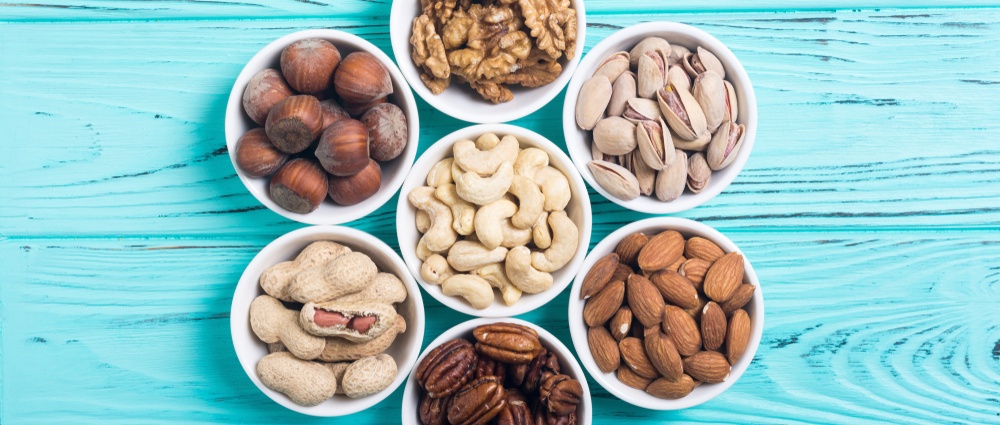
8 high-protein nuts to boost your strength
Packed with protein, delicious, easy to eat, and versatile - nuts are a great source of fuel for people building their fitness and strength. But not all nuts are created equal, which is why we count down the top eight nuts you should eat while strength training and serve these up with tasty recipe ideas.
by Lynn Stephen
Allergies, blood and immune system
Cow's milk protein allergy
Cow's milk protein allergy is one of the most common food allergies seen in children. It is most commonly seen during the first year of life. Many children who have been allergic to cow's milk protein become tolerant to it by the time they are 5 years old.
by Dr Hayley Willacy, FRCGP

Diet and nutrition
How a protein-packed breakfast can boost your health
When we think of breakfast, we often picture a bowl of cornflakes with milk. While it’s a classic morning staple, it might not be the most effective way to start your day, as it lacks protein. Adding more protein to your breakfast can boost your energy levels and help keep you feeling full for longer.
by Victoria Raw
Related patient information and medicines

Patient information leaflet
The immune system
This leaflet gives a brief overview of the immune system and how it works. A person with a weak immune system might have difficulty fighting off infections. In autoimmune diseases the body is unable to tell what is its own and what is foreign, so it attacks itself. Autoimmune diseases can attack any part of the body - eg, type 1 diabetes.

Patient information leaflet
Wilson's disease
Wilson's disease is a genetic disorder in which copper builds up in the body, mainly in the liver and brain. Without any treatment, the build-up of copper can cause serious symptoms. Treatment is with medication to remove the excess copper and/or to prevent a further build-up of copper. What is Wilson's disease. Wilson's disease is a condition.

Patient information leaflet
Blood tests
Blood cells are divided into three main types: Red cells (erythrocytes) These make blood a red colour. One drop of blood contains about five million red cells. A constant new supply of red blood cells is needed to replace old cells that break down. Millions of red blood cells are made each day. Red cells contain a chemical called haemoglobin. This.

Patient information leaflet
Nephrotic syndrome
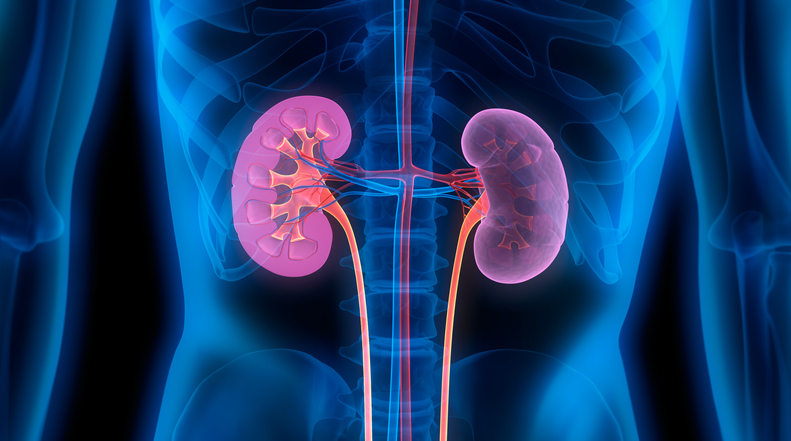
Nephrotic syndrome is a condition where the 'filters' in the kidney become 'leaky' and large amounts of protein leak from the blood into the urine. The main symptom is fluid retention (oedema) which is mainly due to the low protein level in the blood. Various diseases can cause nephrotic syndrome, some more serious than others. Nephrotic syndrome.
Patient information leaflet
Chronic kidney disease
Untreated or poorly treated high blood pressure High blood pressure is a major cause of CKD. However, CKD can also cause high blood pressure as the kidney has a role in blood pressure regulation. About nine out of ten people with CKD stages 3-5 have high blood pressure. About half of people aged over 75 have some degree of CKD. In most of these.

Patient information leaflet
Liver function tests
Liver function tests are a set of blood tests commonly done to check on the health of your liver. Changes in liver function tests give a clue as to whether your liver is under strain, inflamed, infected or diseased, and how badly. The pattern of the liver function tests can give a clue to the cause and can allow early detection of unsuspected.
Further reading and references
- polyglutamine binding protein 1; MedlinePlus, National Library of Medicine.
- Cossee M, Demeer B, Blanchet P, Echenne B, Singh D, Hagens O, Antin M, Finck S, Vallee L, Dollfus H, Hegde S, Springell K, Thelma BK, Woods G, Kalscheuer V, Mandel JL. Exonic microdeletions in the X-linked PQBP1 gene in mentally retarded patients: a pathogenic mutation and in-frame deletions of uncertain effect. Eur J Hum Genet. 2006 Apr;14(4):418-25. doi: 10.1038/sj.ejhg.5201593.
- Flynn M, Zou YS, Milunsky A. Whole gene duplication of the PQBP1 gene in syndrome resembling Renpenning. Am J Med Genet A. 2011 Jan;155A(1):141-4. doi: 10.1002/ajmg.a.33756. Epub 2010 Dec 9.
- Germanaud D, Rossi M, Bussy G, Gerard D, Hertz-Pannier L, Blanchet P, Dollfus H, Giuliano F, Bennouna-Greene V, Sarda P, Sigaudy S, Curie A, Vincent MC, Touraine R, des Portes V. The Renpenning syndrome spectrum: new clinical insights supported by 13 new PQBP1-mutated males. Clin Genet. 2011 Mar;79(3):225-35. doi: 10.1111/j.1399-0004.2010.01551.x. Epub 2010 Oct 18.
- Kleefstra T, Franken CE, Arens YH, Ramakers GJ, Yntema HG, Sistermans EA, Hulsmans CF, Nillesen WN, van Bokhoven H, de Vries BB, Hamel BC. Genotype-phenotype studies in three families with mutations in the polyglutamine-binding protein 1 gene (PQBP1). Clin Genet. 2004 Oct;66(4):318-26. doi: 10.1111/j.1399-0004.2004.00308.x.
- Kunde SA, Musante L, Grimme A, Fischer U, Muller E, Wanker EE, Kalscheuer VM. The X-chromosome-linked intellectual disability protein PQBP1 is a component of neuronal RNA granules and regulates the appearance of stress granules. Hum Mol Genet. 2011 Dec 15;20(24):4916-31. doi: 10.1093/hmg/ddr430. Epub 2011 Sep 20.
- Lenski C, Abidi F, Meindl A, Gibson A, Platzer M, Frank Kooy R, Lubs HA, Stevenson RE, Ramser J, Schwartz CE. Novel truncating mutations in the polyglutamine tract binding protein 1 gene (PQBP1) cause Renpenning syndrome and X-linked mental retardation in another family with microcephaly. Am J Hum Genet. 2004 Apr;74(4):777-80. doi: 10.1086/383205. No abstract available.
- Lubs H, Abidi FE, Echeverri R, Holloway L, Meindl A, Stevenson RE, Schwartz CE. Golabi-Ito-Hall syndrome results from a missense mutation in the WW domain of the PQBP1 gene. J Med Genet. 2006 Jun;43(6):e30. doi: 10.1136/jmg.2005.037556.
- Martinez-Garay I, Tomas M, Oltra S, Ramser J, Molto MD, Prieto F, Meindl A, Kutsche K, Martinez F. A two base pair deletion in the PQBP1 gene is associated with microphthalmia, microcephaly, and mental retardation. Eur J Hum Genet. 2007 Jan;15(1):29-34. doi: 10.1038/sj.ejhg.5201717. Epub 2006 Oct 11.
- Musante L, Kunde SA, Sulistio TO, Fischer U, Grimme A, Frints SG, Schwartz CE, Martinez F, Romano C, Ropers HH, Kalscheuer VM. Common pathological mutations in PQBP1 induce nonsense-mediated mRNA decay and enhance exclusion of the mutant exon. Hum Mutat. 2010 Jan;31(1):90-8. doi: 10.1002/humu.21146.
- Okazawa H, Sudol M, Rich T. PQBP-1 (Np/PQ): a polyglutamine tract-binding and nuclear inclusion-forming protein. Brain Res Bull. 2001 Oct-Nov 1;56(3-4):273-80. doi: 10.1016/s0361-9230(01)00579-2.
- Stevenson RE, Bennett CW, Abidi F, Kleefstra T, Porteous M, Simensen RJ, Lubs HA, Hamel BC, Schwartz CE. Renpenning syndrome comes into focus. Am J Med Genet A. 2005 May 1;134(4):415-21. doi: 10.1002/ajmg.a.30664.
- Takahashi M, Mizuguchi M, Shinoda H, Aizawa T, Demura M, Okazawa H, Kawano K. Polyglutamine tract binding protein-1 is an intrinsically unstructured protein. Biochim Biophys Acta. 2009 Jun;1794(6):936-43. doi: 10.1016/j.bbapap.2009.03.001. Epub 2009 Mar 17.
- Tapia VE, Nicolaescu E, McDonald CB, Musi V, Oka T, Inayoshi Y, Satteson AC, Mazack V, Humbert J, Gaffney CJ, Beullens M, Schwartz CE, Landgraf C, Volkmer R, Pastore A, Farooq A, Bollen M, Sudol M. Y65C missense mutation in the WW domain of the Golabi-Ito-Hall syndrome protein PQBP1 affects its binding activity and deregulates pre-mRNA splicing. J Biol Chem. 2010 Jun 18;285(25):19391-401. doi: 10.1074/jbc.M109.084525. Epub 2010 Apr 21.
Share your thoughts or experiences with others in our patient communities.
Simple access to trusted treatments and health services online.
Common conditions
Get help with common conditions through the NHS, without a GP appointment.





Sign up to the Patient newsletter
Your weekly dose of clear, trustworthy health advice - written to help you feel informed, confident and in control.
By subscribing you accept our Privacy Policy. You can unsubscribe at any time. We never sell your data.