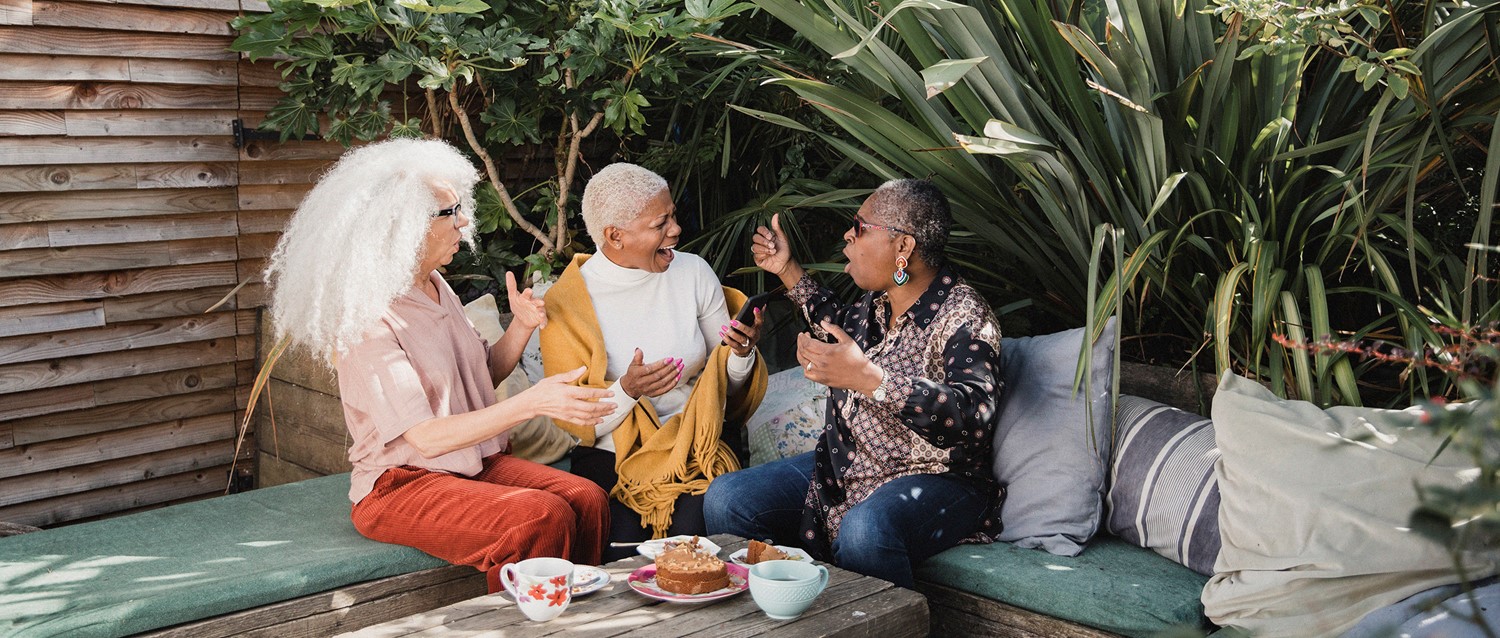
The secrets of living to 100 years old
Peer reviewed by Dr Hayley Willacy, FRCGP Authored by Dr Sarah JarvisOriginally published 31 Oct 2017
Meets Patient’s editorial guidelines
- DownloadDownload
- Share
- Language
- Discussion
- Ask Patient
- Audio Version
- Add to preferred sources on Google
There are some folk out there who prove that age doesn't have to be a barrier to anything. My great aunt, Mabel Iles, was most indignant that her employer (the local GP) took her bicycle away from her after she had a fall, so she couldn't get to work and had to retire. She was 86. When she turned 90, she decided to do something she'd never done before, and took a helicopter trip to the Scilly Isles ('Let's face it, dear, I've been Silly Iles all my life, so I'd like to see the real thing').
The Duke of Edinburgh was 95 when he stepped down from his royal duties, after 70 years or public service, and Jane Fonda, at 79, puts most 50 year-olds to shame. How can you follow in their footsteps? My top tip - it's never too young to start stacking the health odds in your favour!
Explore home heart health tests
Get expert healthcare advice from the comfort of home. Complete a quick online consultation, available 24/7, with your request reviewed by a UK-registered clinician. Next day delivery available on eligible treatments.

Video picks for AgeingVideo library
We're living for longer than ever
Life expectancy continues to rise in the UK - a boy born today could expect to live to over 79, and a girl to nearly 83. Of course, these are average figures - if half of men died at 89 and the other half at 69, the average would be 79.
By 2016, there were 14,900 people over 100 years old in the UK - 65% more than there were in 2005. 850 of these are over 105 - double the number a decade ago. As for the youngsters, there are over half a million over-90s living in the UK today. So how can you skew the odds in your favour?
Men vs. Women
You can't choose your family - sometimes living longer is about inheriting the right genes. Being a woman helps. On average, women live about four years longer than men - although they're closing the gap. This is largely because death rates from heart disease, which has always killed more men than women, have dropped so dramatically in the last 20 years. Part of this is down to better treatment when people have a heart attack. But much of it is down to prevention.
Your health is the most important thing
For a long and healthy life, it really helps to know your numbers - cholesterol as well as blood pressure. Despite all the improvements in heart attack rates, there's no room for complacency. High blood pressure is the single biggest risk factor for stroke and a major cause of heart attacks. You won't know you've got it unless you have it checked - at least every five years if you're over 40, and more often if your doctor advises. If your doctor recommends tablets, do take them.
Raised cholesterol is another problem you won't know you have unless it's checked - and lifestyle and statin tablets can dramatically cut its impact. A reassuring major study just last month showed that muscle pain, the most well-known side effect of statins, is usually due to a 'nocebo' effect - if you think you might get side effects, they'll happen, but they're down to mind over matter rather than the tablet itself. Except in rare cases of severe pain (always see your doctor) most muscle aches among patients taking statins are due to life's stresses and strains.
Quality vs. quantity
Of course, even if you live longer, it's not much fun if you're just spending longer in ill health. For many people, living with the consequences of a severe stroke is something they dread even more than cancer. Atrial fibrillation (AF), the most common abnormal heart rhythm in the UK, affects 1.2 million Britons, mostly older. You're five times more likely to have a stroke if you have AF unless you take blood-thinning medicines called anticoagulants. Lots of people used to be on regular aspirin (75 mg a day) as an alternative, but it simply doesn't do the job for AF. It is, however, extremely effective at cutting your risk of heart attack or stroke.
Osteoporosis, or 'thinning' of the bones, causes fractures in 1 in 3 women and 1 in 5 men over 50. They may not kill you, but fractures in your spine can cause severe, constant pain and a broken hip can rob you of your independence. These breaks are most common in your 70s and 80s, but you're never too young to start protecting your bones. Regular weight-bearing exercise, along with avoiding smoking and excess alcohol, and making sure you get enough calcium in your diet and vitamin D from sunshine or supplements, will all help.
Top tips for a long life
They're not rocket science!
Don't smoke. It accounts for nearly 1 in 5 deaths among over 35 year-olds
Watch your weight - being overweight raises your risk of cancer as well as type 2 diabetes and heart disease.
Get your immunisations - influenza and pneumococcal infections are more likely to carry you off as you get older.
Keep it Mediterranean - eat more fruit, veg, wholegrain foods, beans and lentils; swap butter for healthier oils and fish for red meat.
Have your blood pressure, cholesterol, blood sugar and pulse rhythm checked regularly - and take any treatment your doctor advises.
You're invited for screening for a reason! Mammograms, colon cancer screening and cervical smears pick up cancers early, when they're more treatable, or in some cases prevent them.
Stimulate your brain as well as your body - keep your mind active by learning new skills.
With thanks to 'My Weekly' where this article was originally published.
Patient picks for Ageing

General health and lifestyle
Do Blue Zones hold the secrets to a longer life?
Autumn may be growing colder in the UK, but there's nothing stopping us looking to warmer climates and asking why their inhabitants are living longer lives. No one can live forever or control what happens in the course of a life, but in some pockets of the world, the chances of living for longer are significantly higher. These places are known as Blue Zones, and there's a lot we can learn from their inhabitants.
by Amberley Davis

Senior health
How to speak to an older relative about their driving
Being able to drive makes it easier to get around and stay independent, so it's hard to imagine life without it. But what happens when you suspect someone you care about is no longer able to do it safely? Supporting and guiding an older relative through the decision to reduce or stop driving can be emotionally challenging. If you’re considering how to broach it, this article might help.
by Claire Kenny

Podcasts
The parental minefield
How often have you said something quite ordinary to a parent, or they’ve said something to you and suddenly the room feels like it’s about to explode? Welcome to the parental nightmare. It’s not just about conflict, it’s about what’s hidden underneath these relationships – family secrets, unspoken stories, patterns of behaviour passed from one generation to the next. In this episode Clare and Aileen explore the complex, often lifelong, relationship we have with our parents and discuss practical strategies to help you navigate this important relationship.
by Thomas Andrew Porteus, MBCS

Podcasts
Victims and villains
What happens when you argue with your partner? Clare and Janet explore the real reasons we fight and how to do conflict well.
by Thomas Andrew Porteus, MBCS
Podcasts
Surviving holidays
Holidays, thanksgiving, Christmas, birthdays - those special, wonderful moments we dream of. But if you’ve ever walked away from a Christmas dinner or a family holiday wondering what on earth went wrong - this podcast is for you.
by Thomas Andrew Porteus, MBCS
Podcasts
Me and myself
In this episode, Clare and Aileen turn their attention to what they describe as the primary relationship - the relationship we have with ourselves - and why it is so often the one we neglect, misunderstand or actively sideline.
by Thomas Andrew Porteus, MBCS
About the authorView full bio
Authored by

Dr Sarah Jarvis
Clinical Consultant
MA (Cantab), BM, BCh (Oxon), DRCOG, FRCGP, MBE
After training in medicine at Cambridge and Oxford, Dr Sarah Jarvis MBE became a GP.
About the reviewerView full bio

Dr Hayley Willacy, FRCGP
General Practitioner, Medical Author
MBChB (1992), DRCOG, DFFP, MRCOG (Part 1) MRCGP (2007), DFSRH (2013), MSc - medical education (2020)
Dr Hayley Willacy was an NHS GP working in northwest England, who retired from clinical practice in 2022 after 30 years.
Article history
Article also available in English, German, Spanish, French, Italian, Portuguese, Hindi, Hebrew, Arabic, and Swedish.
31 Oct 2017 | Originally published
Authored by:
Dr Sarah JarvisPeer reviewed by
Dr Hayley Willacy, FRCGP
Share your thoughts or experiences with others in our patient communities.
Sign up to the Patient newsletter
Your weekly dose of clear, trustworthy health advice - written to help you feel informed, confident and in control.
By subscribing you accept our Privacy Policy. You can unsubscribe at any time. We never sell your data.