Alpha-N-acetylgalactosaminidase deficiency
Last updated 14 Mar 2025
Meets Patient’s editorial guidelines
- DownloadDownload
- Share
- Language
- Discussion
- Ask Patient
- Audio Version
- Add to preferred sources on Google
Alpha-N-acetylgalactosaminidase deficiency, also known as Schindler disease, is an inherited disorder that can affect the development of the nervous system. People with alpha-N-acetylgalactosaminidase deficiency often have distinctive facial features that can be described as "coarse" and tooth abnormalities such as widely-spaced teeth and missing teeth (hypodontia).
Video picks for Genetic conditionsVideo library
Description
Alpha-N-acetylgalactosaminidase deficiency, also known as Schindler disease, is an inherited disorder that can affect the development of the nervous system. People with alpha-N-acetylgalactosaminidase deficiency often have distinctive facial features that can be described as "coarse" and tooth abnormalities such as widely-spaced teeth and missing teeth (hypodontia).
The three types of alpha-N-acetylgalactosaminidase deficiency differ in the severity of their signs and symptoms and the age at which they first appear. The signs and symptoms of alpha-N-acetylgalactosaminidase deficiency can vary, even among members of the same family.
Type I is the most severe form of this condition. Babies with alpha-N-acetylgalactosaminidase deficiency type I appear healthy at birth. However, by late infancy, these babies typically have trouble meeting normal developmental milestones. By the age of 2 years, individuals with type I begin to lose skills that they had already acquired (developmental regression). Individuals with type I often experience weak muscle tone (hypotonia), vision and hearing loss, and seizures. During early childhood, children with type I typically lose awareness of their surroundings and eventually become unresponsive.
Alpha-N-acetylgalactosaminidase deficiency type II is the least severe form. Type II is typically diagnosed in adulthood. Affected individuals may have mild cognitive impairment and hearing loss caused by abnormalities of the inner ear (sensorineural hearing loss). They may also experience a loss of sensation or muscle weakness in the extremities (peripheral neuropathy). Clusters of enlarged blood vessels that form small, dark red spots on the skin (angiokeratomas) are a characteristic feature of alpha-N-acetylgalactosaminidase deficiency type II.
Type III is the intermediate form of alpha-N-acetylgalactosaminidase deficiency. People with type III may show a variety of signs and symptoms, including developmental, speech, and language delays; seizures that begin in infancy; and features of autism spectrum disorder that appear in childhood. Autism spectrum disorder is characterised by impaired communication and socialization skills. People with type III may also have skeletal signs and symptoms, such as pain in the lower back, hips, and knees. Wear on the cartilage (disks) and bones of the neck (cervical spondylosis) and a cyst-like collection of cerebrospinal fluid that forms in the spinal cord (syringohydromyelia) have also been reported.
Inheritance patterns
The source lists the following possible inheritance patterns: Autosomal recessive. More than one pattern can apply in different cases.
Related genes
Other names
Alpha-galactosidase B deficiency
Alpha-galNAc deficiency, Schindler type
Alpha-N-acetylgalactosaminidase deficiency
Alpha-NAGA deficiency
Angiokeratoma corporis diffusum-glycopeptiduria
GALB deficiency
Kanzaki disease
Lysosomal glycoaminoacid storage disease-angiokeratoma corporis diffusum
NAGA deficiency type I
NAGA deficiency type II
NAGA deficiency type III
Neuroaxonal dystrophy, Schindler type
Neuronal axonal dystrophy, Schindler type
Schindler disease type I
Schindler disease type II
Schindler disease type III
Patient picks for Genetic conditions

Diet and nutrition
Vitamin C: benefits, sources, and deficiency
Most of us know vitamin C is good for us, but do you know all the ways that this essential nutrient benefits your health? Here you can find out how easy it is to get enough vitamin C, as well as what happens when you consume too little and too much.
by Lynn Stephen
Healthy living
Vitamin A deficiency
Vitamins are a group of substances needed in small amounts by the body to maintain health. Vitamin A cannot be made by the human body and so it is an essential part of the diet. Vitamin A is important for healthy eyes, good eyesight (vision), healthy skin and to help you fight infections. Vitamin A is sometimes also called retinol. Foods that contain vitamin A include liver, milk, eggs and fish-liver oils. Another substance called beta carotene (which is found in green leafy and orange/yellow vegetables and fruits) can also be converted by your body to vitamin A. Mild forms of vitamin A deficiency can usually be treated without any long-term problems. Vitamin A deficiency is much more common in low-income countries, where it is often very severe and can cause loss of vision and even death.
by Dr Toni Hazell, FRCGP
Treatment and medication
Alpha-blockers
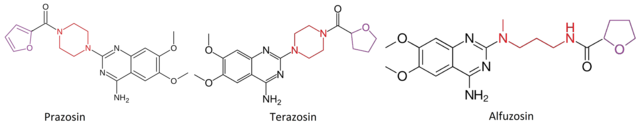
Alpha-blockers are medicines that are mainly used to treat high blood pressure (hypertension) and problems with passing urine in men who have enlargement of the prostate gland. Prostate gland enlargement is also called benign prostatic hyperplasia (BPH).
by Dr Doug McKechnie, MRCGP
Allergies, blood and immune system
Vitamin B12 deficiency and pernicious anaemia
Vitamin B12 is essential for life. It is needed to make new cells in the body, such as the many new red blood cells which are made every day. Vitamin B12 is found in meat, fish, eggs and milk - but not in fruit or vegetables. A normal balanced diet must contain enough vitamin B12. A lack of vitamin B12 leads to anaemia and sometimes to other problems.
by Dr Colin Tidy, MRCGP
Healthy living
Vitamin C deficiency
Vitamin C cannot be made by the human body and so is an essential component of the diet. It is needed for the health and repair of various tissues in the body, including skin, bone, teeth and cartilage. Persistent lack of dietary vitamin C in can lead to a condition called scurvy. Symptoms of scurvy include easy bruising, easy bleeding and joint and muscle pains. Vitamin C deficiency can be treated with supplements of vitamin C and a diet rich in vitamin C.
by Dr Philippa Vincent, MRCGP
Healthy living
Zinc deficiency, excess and supplementation
Zinc is needed for many of the chemical reactions which are going on inside us all the time at micro-level. We get zinc from our diets but not getting enough can cause a wide variety of symptoms, some of which are very vague.
by Dr Toni Hazell, FRCGP
Related patient information and medicines

Patient information leaflet
Liver function tests
Liver function tests are a set of blood tests commonly done to check on the health of your liver. Changes in liver function tests give a clue as to whether your liver is under strain, inflamed, infected or diseased, and how badly. The pattern of the liver function tests can give a clue to the cause and can allow early detection of unsuspected.
Patient information leaflet
Liver failure
Diseases of the veins in the liver Some diseases (for example, Budd-Chiari syndrom... Metabolic diseases Some rare metabolic diseases may cause acute liver failure. These include haemochromatosis Haemochromatosis , alpha-1 antitrypsin deficiency Alpha-1 antitrypsin deficiency , Wilson's disease Wilson's disease , fructose intolerance,.

Patient information leaflet
Restless legs syndrome
No treatment may be needed if symptom... Medication can ease symptoms if the condition is distressing. What is restless legs syndrome. Restless legs syndrome (RLS) is sometimes called Willis-Ekbom disease after the doctors who first described it. It is a condition where you have an urge to move your legs. This is usually caused by an uncomfortable.

Patient information leaflet
Gastrointestinal malabsorption
Gastrointestinal malabsorption syndrome means a failure to fully absorb digested foods from the gut (bowel) into your body. There are many different causes. Prolonged intestinal malabsorption may cause problems because of a lack of carbohydrates, proteins, fats, minerals and vitamins that are essential to keep you healthy. The treatment will.
Patient information leaflet
Bronchiectasis
Bronchiectasis is a problem with the lungs, where you cough up lots of phlegm, (sputum): far more than usual. It is usually caused by something that has already affected the lungs, like a bad infection; but sometimes no cause is found. It generally affects older people. There are some good treatments available to keep it under control..

Patient information leaflet
Can I take Folic acid and Glucosamine together?
It is generally considered safe to take these two supplements together. Why this happens Folic acid (a B vitamin) and glucosamine (an amino sugar) are processed by the body through different pathways. They do not compete for absorption in the gut, nor do they interfere with how the liver breaks down or the kidneys remove each substance. Our.
Further reading and references
- Alpha-N-acetylgalactosaminidase deficiency; MedlinePlus, National Library of Medicine.
- Bakker HD, de Sonnaville ML, Vreken P, Abeling NG, Groener JE, Keulemans JL, van Diggelen OP. Human alpha-N-acetylgalactosaminidase (alpha-NAGA) deficiency: no association with neuroaxonal dystrophy? Eur J Hum Genet. 2001 Feb;9(2):91-6. doi: 10.1038/sj.ejhg.5200598.
- Blanchon YC, Gay C, Gibert G, Lauras B. A case of N-acetyl galactosaminidase deficiency (Schindler disease) associated with autism. J Autism Dev Disord. 2002 Apr;32(2):145-6. doi: 10.1023/a:1017499407910. No abstract available.
- Castro RG, Perez AMG, Curto MCR, Alvarez JC, Ferreiros AC, Cuadros AV, Bueno DM, Fernandez AJC. A New Case of Schindler Disease. Eur J Case Rep Intern Med. 2019 Oct 25;6(11):001269. doi: 10.12890/2019_001269. eCollection 2019.
- Chabas A, Duque J, Gort L. A new infantile case of alpha-N-acetylgalactosaminidase deficiency. Cardiomyopathy as a presenting symptom. J Inherit Metab Dis. 2007 Feb;30(1):108. doi: 10.1007/s10545-006-0470-1. Epub 2006 Dec 14.
- Clark NE, Garman SC. The 1.9 a structure of human alpha-N-acetylgalactosaminidase: The molecular basis of Schindler and Kanzaki diseases. J Mol Biol. 2009 Oct 23;393(2):435-47. doi: 10.1016/j.jmb.2009.08.021. Epub 2009 Aug 14.
- Desnick RJ, Wang AM. Schindler disease: an inherited neuroaxonal dystrophy due to alpha-N-acetylgalactosaminidase deficiency. J Inherit Metab Dis. 1990;13(4):549-59. doi: 10.1007/BF01799512.
- Kanda A, Tsuyama S, Murata F, Kodama K, Hirabayashi Y, Kanzaki T. Immunoelectron microscopic analysis of lysosomal deposits in alpha-N-acetylgalactosaminidase deficiency with angiokeratoma corporis diffusum. J Dermatol Sci. 2002 May;29(1):42-8. doi: 10.1016/s0923-1811(02)00005-1.
- Kanekura T, Sakuraba H, Matsuzawa F, Aikawa S, Doi H, Hirabayashi Y, Yoshii N, Fukushige T, Kanzaki T. Three dimensional structural studies of alpha-N-acetylgalactosaminidase (alpha-NAGA) in alpha-NAGA deficiency (Kanzaki disease): different gene mutations cause peculiar structural changes in alpha-NAGAs resulting in different substrate specificities and clinical phenotypes. J Dermatol Sci. 2005 Jan;37(1):15-20. doi: 10.1016/j.jdermsci.2004.09.005. Epub 2004 Dec 8.
- Kanzaki T, Yokota M, Irie F, Hirabayashi Y, Wang AM, Desnick RJ. Angiokeratoma corporis diffusum with glycopeptiduria due to deficient lysosomal alpha-N-acetylgalactosaminidase activity. Clinical, morphologic, and biochemical studies. Arch Dermatol. 1993 Apr;129(4):460-5.
- Kodama K, Kobayashi H, Abe R, Ohkawara A, Yoshii N, Yotsumoto S, Fukushige T, Nagatsuka Y, Hirabayashi Y, Kanzaki T. A new case of alpha-N-acetylgalactosaminidase deficiency with angiokeratoma corporis diffusum, with Meniere's syndrome and without mental retardation. Br J Dermatol. 2001 Feb;144(2):363-8. doi: 10.1046/j.1365-2133.2001.04028.x.
- Michalski JC, Klein A. Glycoprotein lysosomal storage disorders: alpha- and beta-mannosidosis, fucosidosis and alpha-N-acetylgalactosaminidase deficiency. Biochim Biophys Acta. 1999 Oct 8;1455(2-3):69-84. doi: 10.1016/s0925-4439(99)00077-0.
- Mohamed FE, Al Sorkhy M, Ghattas MA, Al-Zaabi N, Al-Shamsi A, Almansoori TM, Al-Gazali L, Al-Dirbashi OY, Al-Jasmi F, Ali BR. A Novel Homozygous Missense Variant in the NAGA Gene with Extreme Intrafamilial Phenotypic Heterogeneity. J Mol Neurosci. 2020 Jan;70(1):45-55. doi: 10.1007/s12031-019-01398-6. Epub 2019 Aug 29.
- Sakuraba H, Matsuzawa F, Aikawa SI, Doi H, Kotani M, Nakada H, Fukushige T, Kanzaki T. Structural and immunocytochemical studies on alpha-N-acetylgalactosaminidase deficiency (Schindler/Kanzaki disease). J Hum Genet. 2004;49(1):1-8. doi: 10.1007/s10038-003-0098-z. Epub 2003 Dec 19.
- Umehara F, Matsumuro K, Kurono Y, Arimura K, Osame M, Kanzaki T. Neurologic manifestations of Kanzaki disease. Neurology. 2004 May 11;62(9):1604-6. doi: 10.1212/01.wnl.0000123116.96441.34.
Share your thoughts or experiences with others in our patient communities.
Simple access to trusted treatments and health services online.
Common conditions
Get help with common conditions through the NHS, without a GP appointment.





Sign up to the Patient newsletter
Your weekly dose of clear, trustworthy health advice - written to help you feel informed, confident and in control.
By subscribing you accept our Privacy Policy. You can unsubscribe at any time. We never sell your data.