Parents urged to vaccinate children as UK loses measles-free status
Peer reviewed by Natalie HealeyAuthored by Milly EvansOriginally published 20 Aug 2019
Meets Patient’s editorial guidelines
- DownloadDownload
- Share
- Language
- Discussion
- Audio Version
- Add to preferred sources on Google
The UK has lost its World Health Organization measles-free status and the public are being urged to vaccinate their children against the life-threatening disease.
Three years after the UK was declared measles-free, cases of the disease have increased so much that the status has been withdrawn by the World Health Organization (WHO).
Prime Minister Boris Johnson has called for renewed efforts to meet 95% coverage targets for both doses of MMR. Currently only 87% of children receive the second dose of the vaccine.
Public Health England is warning that an estimated one in seven 5-year-olds may not be up to date with their routine vaccinations, putting them at risk of catching serious diseases as they start primary school. In London, this figure could be as high as one in four.
Measles can be serious
Most children with measles are better within 7-10 days but complications can develop, especially in malnourished children or those with a poor immune system, such as those with HIV or leukaemia.
Many malnourished children around the world die when they get measles, usually from a secondary lung infection (pneumonia). In the UK, there are still reports of unvaccinated children who die from measles complications.
Missed vaccinations
A safe and effective MMR vaccine which protects against measles, mumps and rubella is usually given when a child turns one. A second booster dose is usually given to children before they start school at the same time as the 6-in-1 vaccine. Both doses are required for full protection against measles. If a dose of MMR is delayed for any reason, it can still be given at a later age. If necessary, the vaccine can be given at any age.
Around 30,000 (or more than 5%) of the 680,000 5-year-olds starting school this September have not received any MMR vaccine, putting them at a significantly higher risk of measles than children who have been fully protected.
90,000 5-year-olds still need to receive their second dose of the vaccine which is required for full protection. Uptake of other vaccines is also low, with around 100,000 or one in eight 5-year-olds having not received their 6-in-1 pre-school booster vaccine to protect against diphtheria, whooping cough, tetanus and polio.
In part, the reduced uptake of the vaccine has been attributed to a widespread belief that the measles risk is so low that it is not necessary to be vaccinated, according to Health Secretary Matt Hancock. "It's easy to forget how devastating measles can be precisely because vaccines are so effective at preventing it in the first place."
Other explanations for the drop include ongoing myths about vaccination, and anti-vaccination campaigners and organisations spreading misinformation to parents.
Dr Mary Ramsay, head of immunisation at Public Health England, stressed the importance of herd immunisation and boosting uptake of the vaccine for those who are eligible. "Elimination can only be sustained by maintaining and improving coverage of the MMR vaccine. Measles is one of the most infectious diseases known to man - only one person travelling back to an area with lower vaccination rates can lead to an outbreak. Anyone who has not received two doses of MMR vaccine is always at risk.”
Patient picks for Vaccinations
Children's health
Should your child get the chickenpox vaccine?
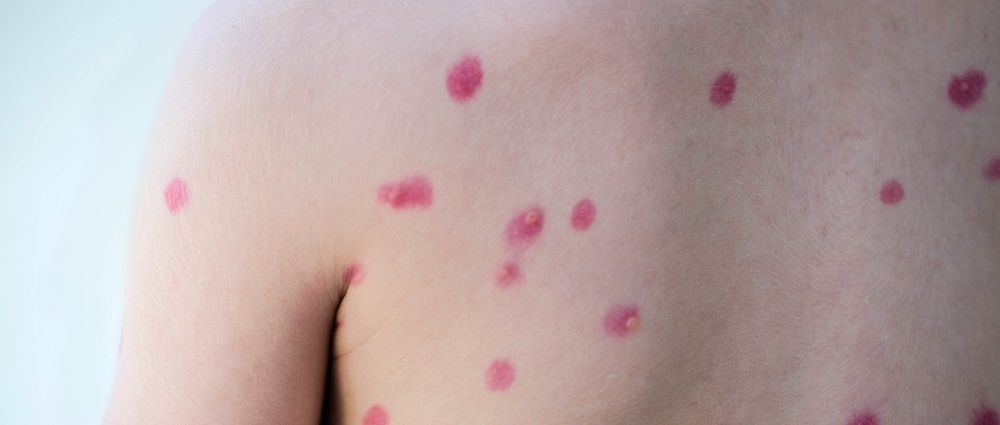
Many of us will remember having chickenpox as a child. The itchy red spots were almost impossible to stop scratching, but doing so could lead to scarring. In an attempt to soothe the itch, parents would douse us in calamine lotion and oatmeal baths. But now, instead of catching the virus to provide immunity, there’s another route parents can choose - the chickenpox vaccine.
by Lydia Smith

Children's health
Measles is back: why vaccines matter
Vaccines have been at the forefront in recent years, especially after the COVID-19 pandemic. While coronavirus vaccines have dominated the conversation, awareness of others, such as the MMR vaccine, which protects against measles, mumps, and rubella, has quietly declined.
by Victoria Raw
About the authorView full bio
Authored by

Milly Evans
Editor
Milly writes on a range of health topics, with a particular interest in health inequality and sexual health.
About the reviewerView full bio

Natalie Healey
Freelance journalist
BSc (Hons) Biomedical Science
She is a London-based health journalist who has been writing about science and medicine for several years. She is the former head of editorial at Patient.
Article history
Article also available in English, German, Spanish, French, Italian, Portuguese, Hindi, Hebrew, Arabic, and Swedish.
20 Aug 2019 | Originally published
Authored by:
Milly EvansPeer reviewed by
Natalie Healey
Join the conversation
Share your thoughts or experiences with others in our patient communities.

Ask, share, connect.
Browse discussions, ask questions, and share experiences across hundreds of health topics.

Feeling unwell?
Assess your symptoms online for free
Sign up to the Patient newsletter
Your weekly dose of clear, trustworthy health advice - written to help you feel informed, confident and in control.
By subscribing you accept our Privacy Policy. You can unsubscribe at any time. We never sell your data.