
Sleep diary
Peer reviewed by Dr Hayley Willacy, FRCGP Authored by Danny ChadburnOriginally published 11 Sept 2017
Meets Patient’s editorial guidelines
- DownloadDownload
- Share
- Language
- Discussion
- Audio Version
- Add to preferred sources on Google
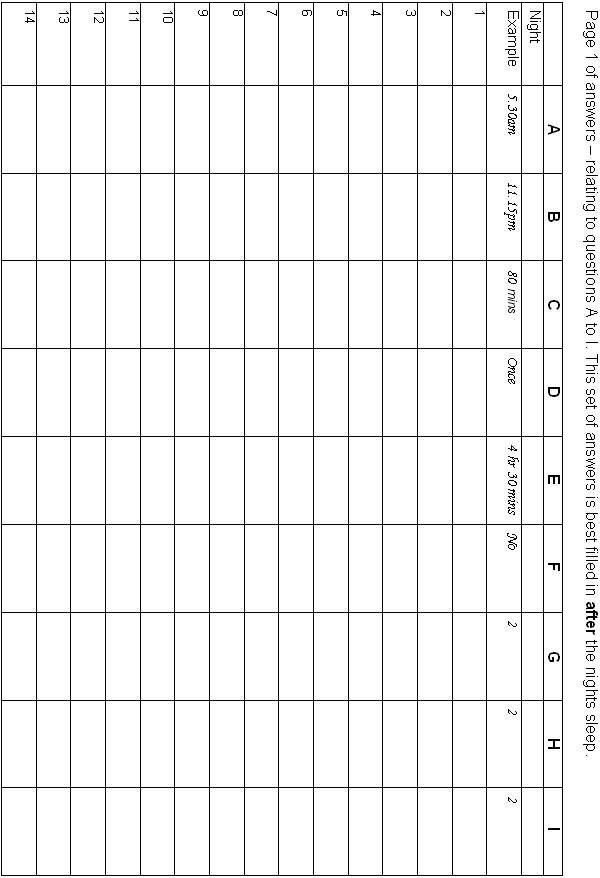
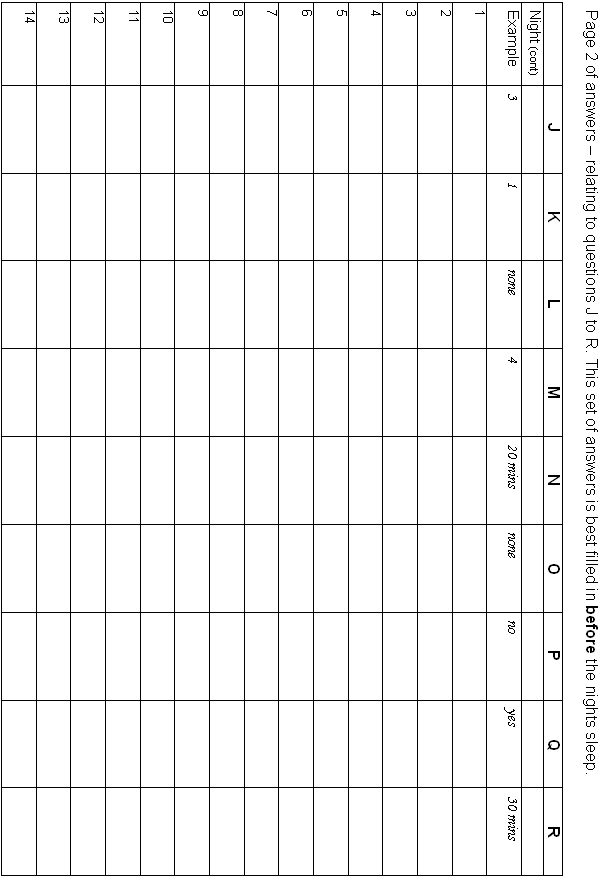
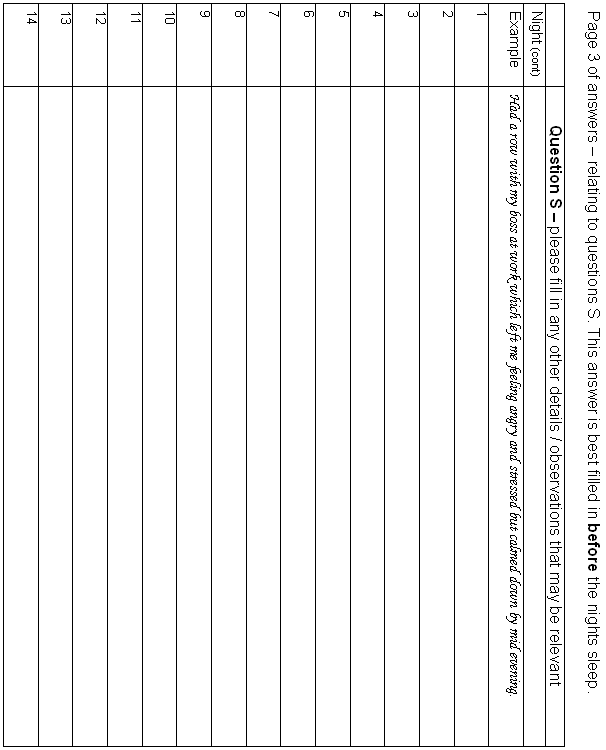
Please answer questions A to S each day over the next two weeks. There should be three sheets of paper for answers to be written in boxes. The aim is to measure the pattern and quality of your sleep, and factors that may affect your sleep over the course of two weeks.
Questions A to I relate to the night's sleep. Try to answer these soon after getting up each day when the details of the previous night are fresh in your mind.
Questions J to S relate to to the day leading up to the night's sleep. Try to answer these at least an hour before you go to bed when the details are fresh in your mind.
A. What time did you wake up this morning?
B. What time did you go to bed last night?
C. About how long did it take to first fall asleep? (Record in minutes - for example, 70 mins.)
D. How many times did you wake up during the night (enough to be fully aware)?
E. How long did you sleep last night in total? (In hours and minutes - for example, 4 hr 30 mins.)
F. Did you take any sleeping tablets last night to help you sleep?
G. How generally well do you feel today? Record on a scale 1-4. 1 - not well at all. 2 - just OK. 3 - fine. 4 - very well.
H. How energetic do you feel today? Record on a scale 1-4. 1 - lethargic. 2 - slow but OK. 3 - fine. 4 - very energetic.
I. How enjoyable was your sleep last night? Record on a scale 1-4. 1 - not at all. 2 - just OK. 3 - fine. 4 - very good.
J. How many cups of caffeine drinks (tea, coffee, cola, etc) did you have before 5 pm?
K. How many cups of caffeine drinks (tea, coffee, cola, etc) did you have after 5 pm?
L. How many units of alcohol did you have before 5 pm? One unit of alcohol is about equal to: half a pint of ordinary-strength beer/lager, or a small pub measure (25 ml) of spirits, or a standard pub measure (50 ml) of sherry or port, or a small glass of ordinary-strength wine.
M. How many units of alcohol did you have after 5 pm?
N. How much moderate or vigorous physical activity/exercise did you do before 9 pm? (Record in minutes - for example, 40 mins.) Moderate physical activity/exercise includes brisk walking, jogging, dancing, swimming, heavy DIY, gardening, etc.
O. How much moderate or vigorous physical activity/exercise did you do after 9 pm?
P. Did you take any street drugs (cocaine, amfetamines, heroin, etc)? Yes/No. If yes, write down which one(s).
Q. Did you have any naps during the day or evening? Yes/No.
R. If you did nap, how long in total were the naps? Record in minutes.
S. Fill in any other details that may be relevant. For example, if you were particularly stressed, anxious, depressed or ill.
sleep diary questions 1
Sleep diary question 2
Sleep diary questions 3
Patient picks for Sleep and insomnia

Healthy living
Does getting good sleep really improve your skin?
Sleep is where your body and mind recharges, restores, and heals itself. During good sleep, your body prevents and repairs skin cell damage, significantly improving not only your skin's appearance but its strength and ability to protect against harmful external elements. On the other hand, poor sleep can increase inflammation, which can make certain skin conditions worse.
by Lynn Stephen
Healthy living
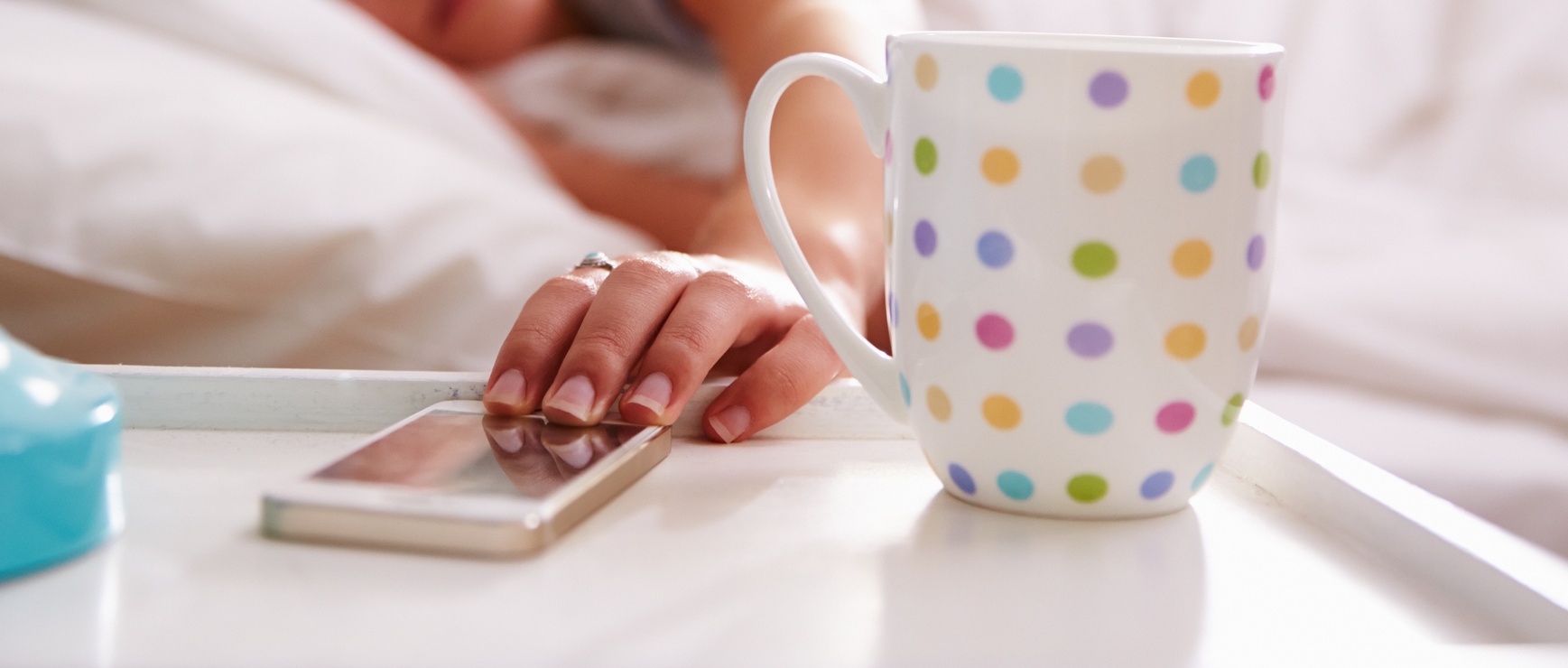
Why phones should be banned from the bedroom
If human evolution goes the way it has over the past few thousand years, it won’t be long before the first few babies are born with mobile phones in their hands. The relationship we have with our phones goes far beyond any reasonable need to establish telephonic communication. The theory is that what we have in our hands are not phones but syringes, ready to inject little packets of dopamine, the ‘pleasure chemical’.
by Dr Laurence Knott
About the author

Danny Chadburn
Head of Content
Danny was the previous Head of Content at Patient.
About the reviewerView full bio

Dr Hayley Willacy, FRCGP
General Practitioner, Medical Author
MBChB (1992), DRCOG, DFFP, MRCOG (Part 1) MRCGP (2007), DFSRH (2013), MSc - medical education (2020)
Dr Hayley Willacy was an NHS GP working in northwest England, who retired from clinical practice in 2022 after 30 years.
Article history
Article also available in English, German, Spanish, French, Italian, Portuguese, Hindi, Hebrew, Arabic, and Swedish.
11 Sept 2017 | Originally published
Authored by:
Danny Chadburn
Peer reviewed by
Dr Hayley Willacy, FRCGP
Join the conversation
Share your thoughts or experiences with others in our patient communities.

Ask, share, connect.
Browse discussions, ask questions, and share experiences across hundreds of health topics.

Feeling unwell?
Assess your symptoms online for free
Sign up to the Patient newsletter
Your weekly dose of clear, trustworthy health advice - written to help you feel informed, confident and in control.
By subscribing you accept our Privacy Policy. You can unsubscribe at any time. We never sell your data.
More in healthy living
- Do crash diets ever really work for healthy weight loss?
- Do you really need to walk 10,000 steps a day?
- How obesity affects joint health - and what you can do about it
- How to get into CrossFit exercise safely as a beginner
- How to sleep-proof your relationship
- How to work out without feeling like you're exercising
- Is bed rotting helping or harming our health?
- Is brain rot real - here's what brain health experts say
- Is Pilates good for weight loss?
- New Year, New Me: Why reinventing yourself in 2025 might be bad for your mental health
- What are the benefits of giving up alcohol?
- What are the long-term benefits of exercise?
- What is Tai Chi Walking - and is it worth a try?
- What to do if your weight is getting you down
- Why being kind helps others and benefits you too
- Why can't I sleep? 12 common causes and what to do
- Why do we use dark humour as a coping mechanism?
- Why our brains are hooked on bad news
- Why sitting ruins our health - and how 22 minutes of exercise could help