
Ovarian cancer symptoms diary
Peer reviewed by Patient clinician teamAuthored by Patient clinician teamOriginally published 10 Oct 2017
Meets Patient’s editorial guidelines
- DownloadDownload
- Share
- Language
- Discussion
- Audio Version
- Add to preferred sources on Google
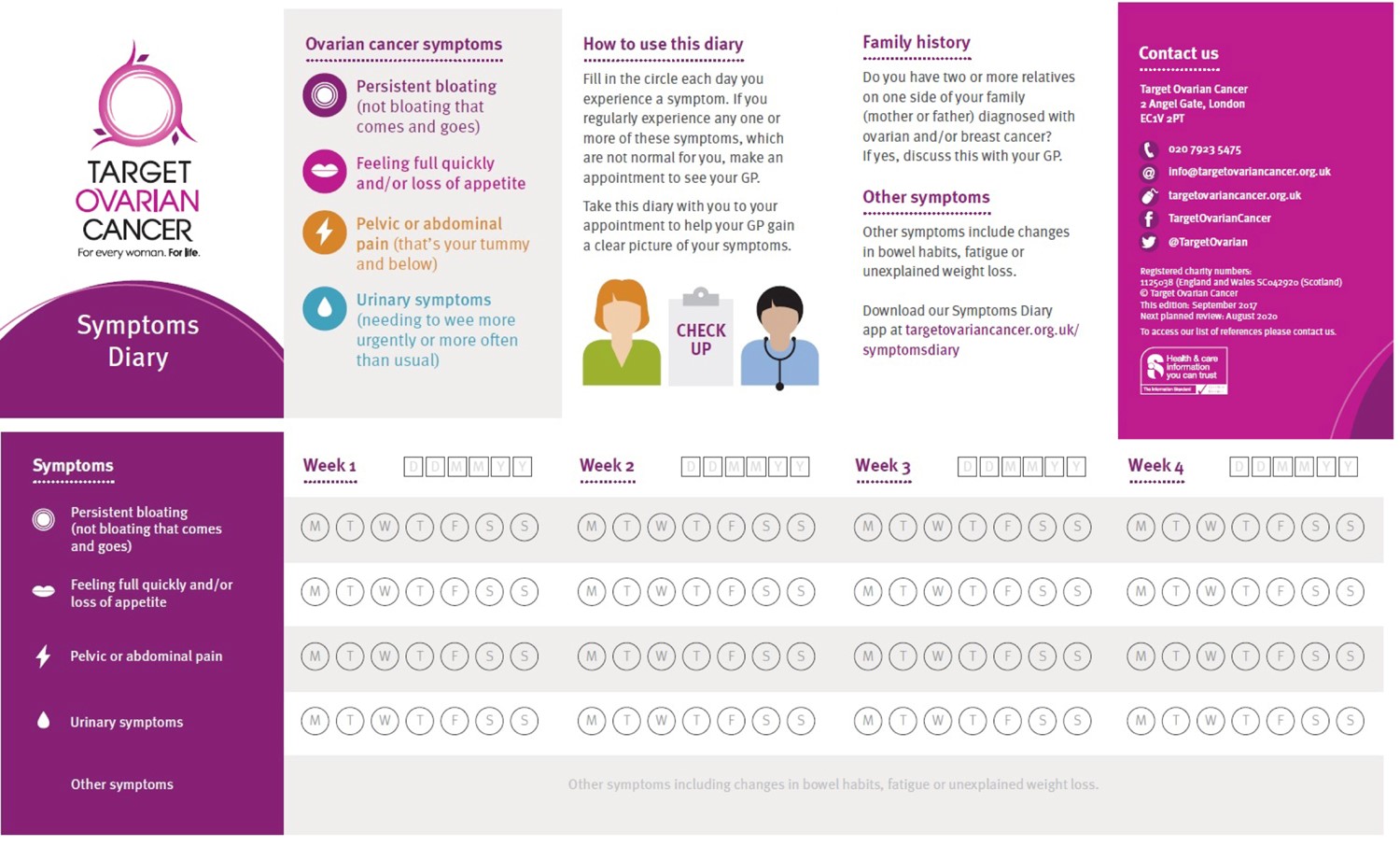
The ovarian cancer symptoms diary has been produced by Target Ovarian Cancer. This is a national ovarian cancer charity. It works to save lives and help women diagnosed with the condition live their lives to the full.
The diary is intended to provide an easy way for women who are concerned about ovarian cancer to accurately record symptoms for discussion with their doctor.
Ovarian cancer symptoms diary
Patient picks for Gynaecological cancer

Cancer
What are the common myths and facts about cervical screening?
Cervical screening is an essential way to reduce the risk of cervical cancer, but research shows many women and people with cervixes are delaying or not attending their screenings. Feeling embarrassed is a common obstacle, as is misinformation about what smear tests involve. So what are the common myths surrounding cervical screening - and what are the facts?
by Lydia Smith

Cancer
What affects your chances of surviving cervical cancer?
Despite the strong preventative measures in place, 3,200 cases of cervical cancer are diagnosed every year in the UK. And according to Cancer Research UK, more than 50% of those diagnosed survive for 10 years or more. Here we look at what can affect cervical cancer survival rates.
by Gillian Harvey
About the authorView full bio
Authored by

Patient clinician team
The Patient.info Clinical Team creates and reviews our health content to ensure it is accurate, evidence-based, and guided by trusted NHS and NICE standards.
About the reviewerView full bio
Patient clinician team
The Patient.info Clinical Team creates and reviews our health content to ensure it is accurate, evidence-based, and guided by trusted NHS and NICE standards.
Article history
Article also available in English, German, Spanish, French, Italian, Portuguese, Hindi, Hebrew, Arabic, and Swedish.
10 Oct 2017 | Originally published
Authored by:
Patient clinician teamPeer reviewed by
Patient clinician team
Join the conversation
Share your thoughts or experiences with others in our patient communities.

Ask, share, connect.
Browse discussions, ask questions, and share experiences across hundreds of health topics.

Feeling unwell?
Assess your symptoms online for free
Sign up to the Patient newsletter
Your weekly dose of clear, trustworthy health advice - written to help you feel informed, confident and in control.
By subscribing you accept our Privacy Policy. You can unsubscribe at any time. We never sell your data.