Do you know the early signs of ovarian cancer?
Peer reviewed by Dr Krishna Vakharia, MRCGPLast updated by Amberley DavisLast updated 16 Feb 2024
Meets Patient’s editorial guidelines
- DownloadDownload
- Share
- Language
- Discussion
- Audio Version
- Add to preferred sources on Google
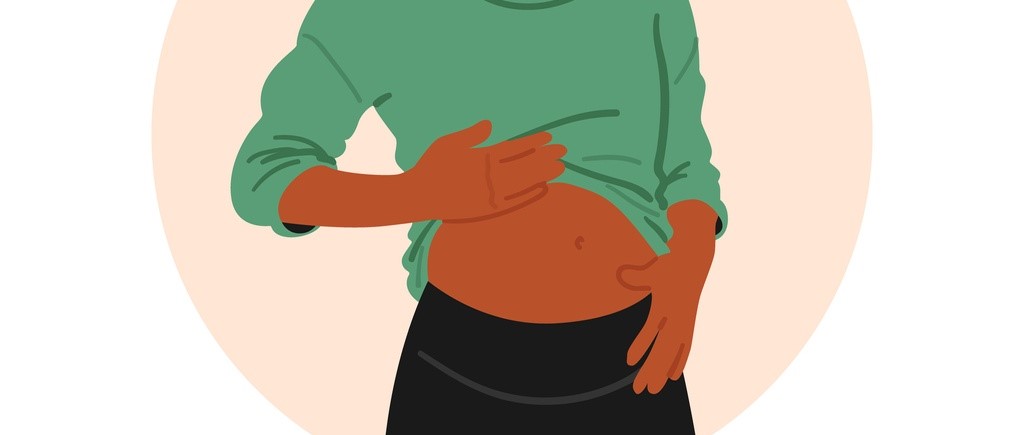
Just one in five women realise bloating is a symptom of ovarian cancer. Early diagnosis makes the disease easier to treat, so it's important to be aware of the signs.
Persistent and constant bloating could be a symptom of ovarian cancer - the sixth most common cancer among UK women.
Laura Everley, from West Sussex, was diagnosed with ovarian cancer in 2014, in her 30s.
She says: "Before I was diagnosed I was experiencing all of the symptoms of ovarian cancer, including bloating. I thought that I might have irritable bowel syndrome. I'd even tried going gluten-free, but it made no difference. The idea of cancer hadn't even entered my head. You just never dream this is going to happen to you."
Research produced in 2023 by Target Ovarian Cancer shows that, like Laura, more than 5 in 10 women would change their diet if they were concerned about bloating, but only around 3 in 10 would see a doctor about it1.
Luckily, a social media post may have saved Laura's life.
"I first realised I could have cancer when I saw a post on Facebook listing all the symptoms of the disease. A friend had shared a post from a friend of theirs about her experiences of cancer and what she'd been through. There was a list of symptoms and I was shocked to realise that I had them all," she reveals.
Currently two thirds of women are diagnosed with ovarian cancer once the cancer has spread, making it more difficult to treat.
But caught at an early stage, before it has spread from the ovaries, long-term survival rates are more than 90%2. This is why it's so important to be aware of the symptoms.
Early signs of ovarian cancer
Target Ovarian Cancer's research shows that just 1 in 5 women in the UK can name bloating as a major symptom of ovarian cancer2. And it's not the only sign of the disease women need to know about.
Symptoms of ovarian cancer include:
Persistent bloating - not the kind that comes and goes over the day.
Feeling full quickly and/or loss of appetite.
Urinary symptoms - needing to wee more urgently or more often than usual.
Annwen Jones, chief executive of the charity says: "If you’re experiencing any of the symptoms regularly, and they are not normal for you, it is important that you see your GP. Early diagnosis of ovarian cancer makes the disease easier to treat."
Gynaecological cancer charity The Eve Appeal is keen to champion this message too. Ovarian and other gynaecological cancers - that's cervical, vulval, vaginal and womb- are not talked about enough, leaving women confused about the signs and symptoms of each illness.
Athena Lamnisos, chief executive of the organisation, says: "Early detection is key, and with so few women in the UK confident of spotting a symptom of ovarian cancer, we've clearly got some work to do here.
That's one of the big jobs that we share with all the ovarian charities and support groups."
But don't panic
It is unlikely that your symptoms are caused by a serious problem, but it's still important to get checked out.
GP Dr Sarah Jarvis says: "Every woman needs to be aware of these symptoms and they need to be prepared to speak to their GP about them. But don't panic - in the vast majority of cases, the cause is much less worrying. It's important to realise that your GP may have good reason for reassuring you."
Be aware
At the moment, there isn't a national screening programme for ovarian cancer - like there is for cervical cancer or breast cancer. That means it's vitally important women be aware of the early signs of ovarian cancer
Laura was able to get a hysterectomy to treat the cancer: "I look back now and think, 'thank goodness for that Facebook post. Without that it could have been another two or three months before I got diagnosed. It might have been too late then. It can be so aggressive and it can spread so quickly that I think I was so lucky to catch it when I did."
Further reading
Patient picks for Gynaecological cancer

Cancer
Women with physical disabilities denied access to smear tests
Two thirds of women who have a physical disability have been unable to attend a cervical screening.
by Milly Evans

Cancer
Why you shouldn't skip your smear test
We've all done it - picked up a letter from the doormat and promised ourselves we'll get around to dealing with it. But all too many of us put off replying to those secretly unwanted letters until the 'due date' has passed. Here's where I get to make myself really unpopular by stating the obvious - health screening is designed to save your life.
by Dr Sarah Jarvis
About the authorView full bio
Updated by

Amberley Davis
Senior writer
BA (Hons), CPD
Amberley is a senior writer with Patient and has written extensively on a range of health and wellbeing topics.
Authored by

Natalie Healey
Freelance journalist
BSc (Hons) Biomedical Science
She is a London-based health journalist who has been writing about science and medicine for several years. She is the former head of editorial at Patient.
About the reviewerView full bio

Dr Krishna Vakharia, MRCGP
Chief Medical Officer for Health, Optum UK
MBChB, MRCGP(2013), BMedSci (hons), DFSRH, DRCOG, PGDipDerm (Distn)
Dr Krishna Vakharia is an NHS GP. She is also a regular examiner for the postgraduate Diploma in Practical Dermatology at Cardiff University as well as being the Chief Medical Officer for health at Optum UK.
Article history
Article also available in English, German, Spanish, French, Italian, Portuguese, Hindi, Hebrew, Arabic, and Swedish.
Next review due: 16 Feb 2027
16 Feb 2024 | Latest version
6 Mar 2018 | Originally published
Authored by:
Natalie Healey
Join the conversation
Share your thoughts or experiences with others in our patient communities.

Ask, share, connect.
Browse discussions, ask questions, and share experiences across hundreds of health topics.

Feeling unwell?
Assess your symptoms online for free
Sign up to the Patient newsletter
Your weekly dose of clear, trustworthy health advice - written to help you feel informed, confident and in control.
By subscribing you accept our Privacy Policy. You can unsubscribe at any time. We never sell your data.