
What is ashwagandha? Health benefits, uses, and side effects
Peer reviewed by Dr Colin Tidy, MRCGPLast updated 27 Sept 2026
Meets Patient’s editorial guidelines
- DownloadDownload
- Share
- Language
- Discussion
- Audio Version
- Add to preferred sources on Google
Ashwagandha (Withania somnifera) is a centuries-old herb that’s gaining popularity in today’s wellness world. Also known as Indian ginseng or winter cherry, it’s traditionally been used to help people feel calmer and more energised.
Here we look at what it is used for, evidence-backed benefits, and the side effects you should know about.
With so many of us juggling busy lives and looking for natural ways to support our health, it’s no surprise that ashwagandha is getting a lot of attention for its potential benefits - from easing stress to boosting energy and supporting overall wellbeing.
This ancient herb has been a key part of Ayurvedic medicine for thousands of years, and today, thanks to new scientific research, it is being rediscovered for its wide range of potential health effects.
Whether taken as a supplement, powder, or tea, ashwagandha is now one of the most talked-about herbs in modern wellness circles.
What is ashwagandha used for?
Ashwagandha is known as an adaptogen. This means it helps your body handle physical and mental stress better.
People use ashwagandha to feel calmer, more balanced, and better able to cope with anxiety and depression.1 Studies also show it may help improve sleep quality, lower cortisol levels (our main stress hormone), and even support muscle recovery after workouts.1 2
Ashwagandha is available as capsules, powders, or liquid extracts, and can be mixed into teas, smoothies, and water, or taken in tablet form.
What are the health benefits of ashwagandha?
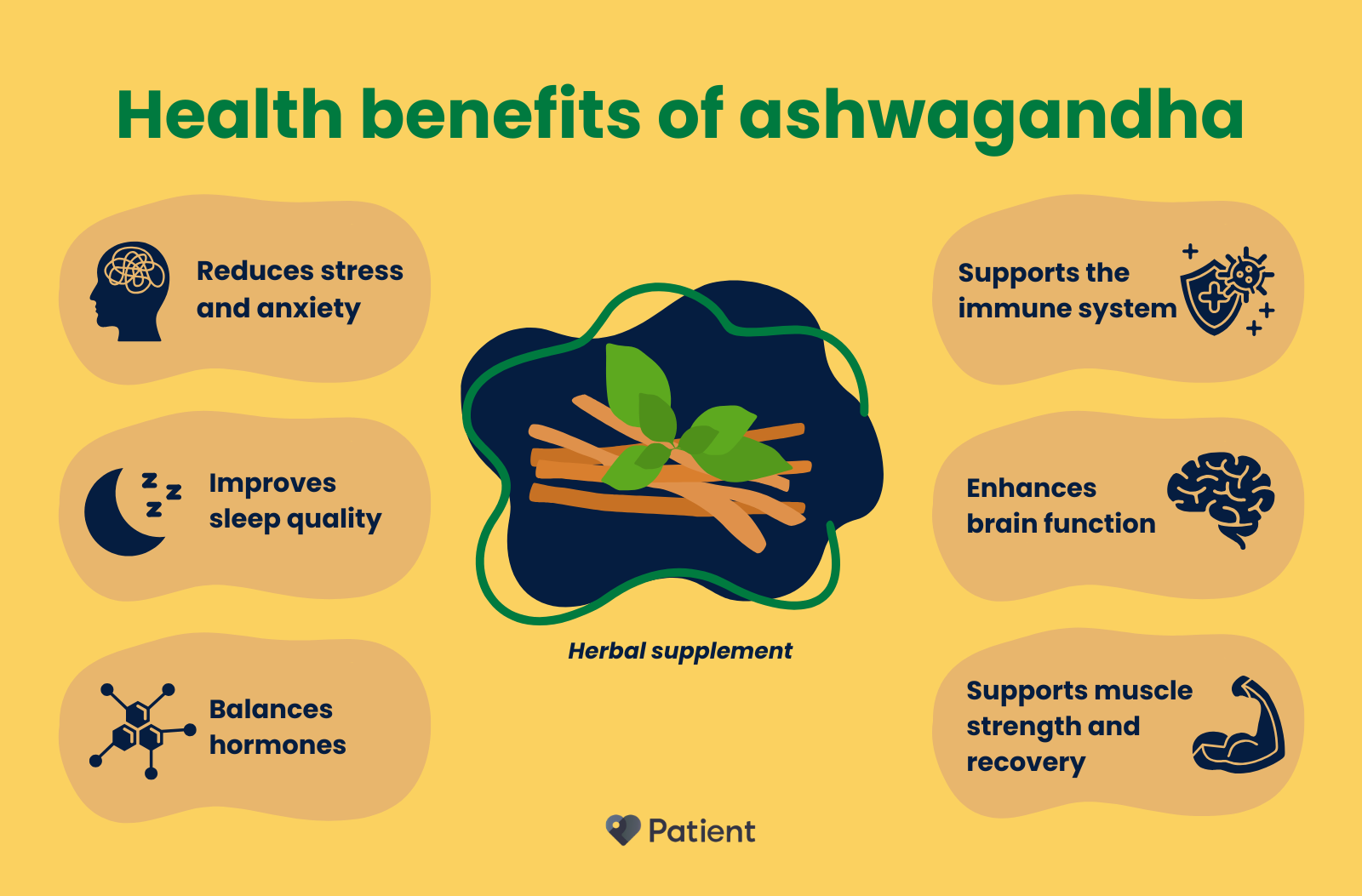
Ashwagandha has earned its reputation as a powerhouse herb thanks to its wide range of potential health benefits, many of which are now supported by scientific research.
1. Helps reduce stress and anxiety
One of its most well-known effects is its ability to reduce stress and anxiety. As an adaptogen, ashwagandha helps regulate cortisol levels leading to a calmer mind and improved emotional balance. 1
2. Improves sleep
Further research suggests that it can help with insomnia by calming the nervous system and promoting relaxation. 2 Ashwagandha may not only help people fall asleep faster but also improve the overall quality of sleep.
3. Supports physical performance and muscle recovery
Ashwagandha has been shown to enhance sports performance in athletes and fitness enthusiasts by increasing muscle strength, improving endurance, and promoting faster recovery. 3
4. Enhances brain function
Ashwagandha may enhance memory, attention, and overall brain function by reducing oxidative stress and supporting the health of nerve cells.4
5. Balances hormones
Further studies show that it may help boost testosterone levels and fertility, particularly in men, by supporting hormone balance and reproductive health. 5
6. Helps maintain a healthy immune system
Ashwagandha’s anti-inflammatory and antioxidant properties contribute to overall immune support and may help reduce some inflammation-related conditions over time. 67
What are the side effects of ashwagandha?
While ashwagandha is generally considered safe for most people to take short-term (up to 3 months), it’s important to be aware of potential side effects - especially if you're new to using herbal supplements or have taken a large dose.
Common side effects of ashwagandha are:
Diarrhoea.
Feeling sick (nausea)
Being sick (vomiting).
Drowsiness.
If side effects continue or worsen, stop taking ashwagandha immediately and contact a healthcare professional for advice.
Note: the long-term safety of ashwagandha is currently unknown and therefore it is advised to only be used short-term.
Who should not take ashwagandha?
Pregnant women – ashwagandha may stimulate the uterus and potentially cause miscarriage.
Breastfeeding women – there is insufficient research on its safety during breastfeeding and therefore it is advised that breastfeeding women do not take ashwagandha.
People with autoimmune diseases – ashwagandha can stimulate the immune system, which may worsen autoimmune conditions such as rheumatoid arthritis, lupus, and multiple sclerosis.
People taking medications for thyroid, blood pressure, anxiety, or sedatives – ashwagandha may interact with certain medicines, affecting their effectiveness.
As with any supplement, it is best to consult with a healthcare professional before starting ashwagandha - especially if you're on medication, have underlying health conditions, or are unsure about the proper dosage for your needs.
What else should you know about ashwagandha?
How long does it take for ashwagandha to work?
Ashwagandha may take between 2-8 weeks of regular use before benefits such as reduced stress, better sleep, and improved wellbeing become noticeable. Results can vary depending on the individual and the reason for taking it.
What is the best time of day to take ashwagandha?
There is no single best time to take ashwagandha. Some people prefer taking it in the evening because of its calming effects and potential sleep benefits, while others take it in the morning to support stress management throughout the day.
Can you take ashwagandha every day?
Ashwagandha is generally considered safe for daily use in healthy adults over the short term, with most research examining periods of up to three months. However, the long-term safety of taking it every day is still unclear, so it is best to seek medical advice if you plan to use it regularly.
What are the benefits of ashwagandha for men?
Ashwagandha may help reduce stress, improve sleep, and support exercise performance. Some studies also suggest it could increase testosterone levels and improve sperm quality in certain men.
Is ashwagandha addictive?
There is no evidence that ashwagandha is addictive or causes dependence. However, more research is needed into the effects of long-term use, so it is best to follow the recommended dose and speak to a healthcare professional if you have any concerns.
Summary
Ashwagandha is a traditional Ayurvedic herb known for reducing stress, boosting mental clarity, enhancing physical performance, and supporting sleep and immune health. Studies suggest it can also improve muscle strength, endurance, and recovery.
While generally safe for short-term use, it may cause side effects such as diarrhoea or drowsiness and isn’t suitable for everyone - so it’s important to check with a healthcare professional before trying it.
More research is needed to fully understand its benefits and risks. In the meantime, you might find our article Stress-relieving tips to try every day helpful - it offers expert advice and science-backed strategies to manage stress and anxiety.
Patient picks for Vitamins and supplements

Diet and nutrition
Is mushroom coffee really good for you?
Mushroom coffee has been brewing up a storm in the wellness world. Famed for its potential advantages over regular coffee, mushroom coffee includes a mix of supplemental mushrooms, each claiming to offer distinctive health perks. But what exactly is mushroom coffee? How is it made? And do its benefits live up to the hype?
by Victoria Raw

Diet and nutrition
Can probiotics treat obesity and diabetes?
It can take some big lifestyle changes to look after your health when you have obesity or diabetes. But what if probiotics can support your journey to healthy weight loss, lower cholesterol levels, and improve insulin sensitivity and blood sugar management?
by Victoria Raw
Further reading and references
- Salve et al: Adaptogenic and Anxiolytic Effects of Ashwagandha Root Extract in Healthy Adults
- Langade et al: Efficacy and Safety of Ashwagandha (Withania somnifera) Root Extract in Insomnia and Anxiety
- Sprengel et al: Withania somnifera (Ashwagandha) supplementation: a review of its mechanisms, health benefits, and role in sports performance
- Samadi Noshahr et al: Efficacy and Safety of Ashwagandha (Withania somnifera (L.) Dunal) Root Extract in Improving Memory and Cognitive Functions
- Ambiye et al: Clinical Evaluation of the Spermatogenic Activity of the Root Extract of Ashwagandha (Withania somnifera) in Oligospermic Males
- Tharakan et al: Immunomodulatory Effect of Withania somnifera (Ashwagandha) Extract
- Ramakanth et al: A randomized, double blind placebo controlled study of efficacy and tolerability of Withaina somnifera extracts in knee joint pain
About the authorView full bio
Authored by

Heather Ainsworth
SEO Manager
BA (Hons) Business and Marketing, IDM Cert DDM, MHFAider®
Heather is the SEO Manager at Patient and a trained Mental Health First Aider. She is also a regular health writer, covering a wide range of topics with a particular interest in mental wellbeing, women's health, and holistic health.
About the reviewerView full bio

Dr Colin Tidy, MRCGP
General Practitioner, Medical Author
MBBS, MRCGP, MRCP (Paediatrics), DCH
Dr Colin Tidy is an NHS Doctor, based in Oxfordshire.
Article history
Article also available in English, German, Spanish, French, Italian, Portuguese, Hindi, Hebrew, Arabic, and Swedish.
Next review due: 28 Sept 2029
27 Sept 2026 | Latest version
6 Nov 2025 | Originally published
Authored by:
Heather AinsworthPeer reviewed by
Dr Colin Tidy, MRCGP
Join the conversation
Share your thoughts or experiences with others in our patient communities.

Ask, share, connect.
Browse discussions, ask questions, and share experiences across hundreds of health topics.

Feeling unwell?
Assess your symptoms online for free
Sign up to the Patient newsletter
Your weekly dose of clear, trustworthy health advice - written to help you feel informed, confident and in control.
By subscribing you accept our Privacy Policy. You can unsubscribe at any time. We never sell your data.