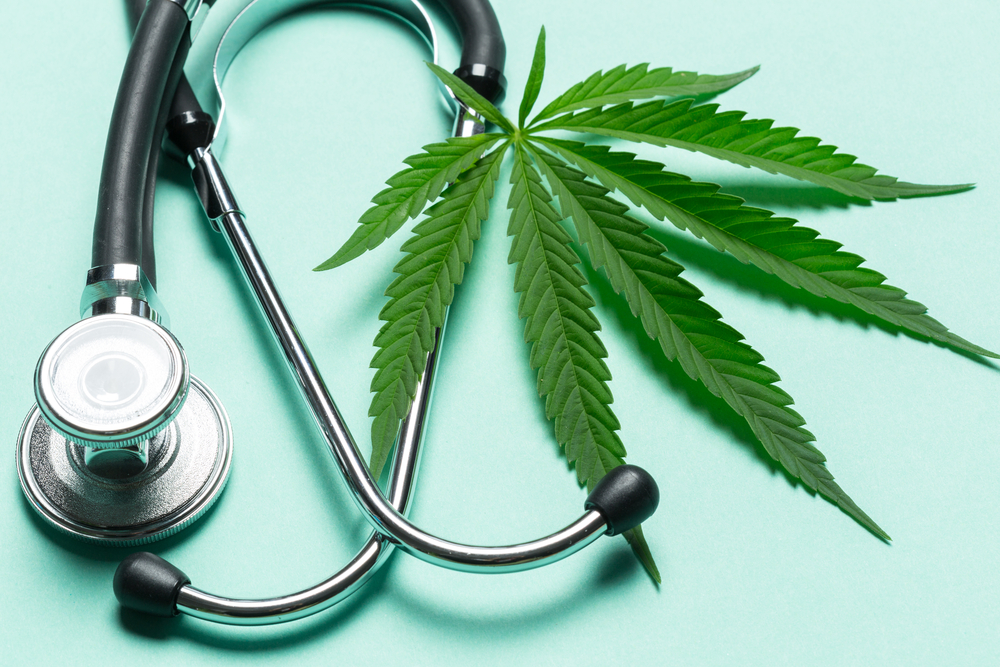
Why is medical cannabis so hard to access on the NHS?
Peer reviewed by Dr Colin Tidy, MRCGPLast updated by The Medical Cannabis Clinicians SocietyLast updated 6 May 2026
Meets Patient’s editorial guidelines
- DownloadDownload
- Share
- Language
- Discussion
- Audio Version
- Add to preferred sources on Google
Medical cannabis has been legal to prescribe in the UK for almost eight years, so why have only a handful of people been able to access it on the NHS?
Sponsored
Could medical cannabis be an option for you?
If you have a diagnosed condition and standard treatments haven’t worked, you may be eligible for specialist-prescribed medical cannabis in the UK. Check your eligibility
On 1 November 2018, medical cannabis was legalised in the UK following high-profile campaigns led by families of children with treatment-resistant epilepsy.
The change in legislation saw medical cannabis moved to Schedule 2 under the Misuse of Drugs Regulations, making it legal to prescribe by doctors on the GMC specialist register.
Specialists can prescribe cannabis-based products for medicinal use (CBPMs) for any indication where there is considered to be a genuine unmet clinical need, and are typically prescribed for chronic conditions that have not responded to at least two previous treatments.
Cannabis that is not prescribed by a healthcare professional remains illegal and a Class B drug under UK law.
CBD vs THC
The cannabis plant contains hundreds of different active compounds, which are known as cannabinoids.
The most common and widely studied for their medicinal properties are:
CBD - non-psychoactive.
THC - psychoactive and associated with the ‘high’.
Most products that are available on prescription in the UK contain a combination of CBD and THC, and usually other minor cannabinoids.
Prescribed CBD products are different to those which can be bought online or from high street retailers. These products may only contain up to 1 mg THC per container and have not been through the same testing processes as prescription products.
Licensed vs unlicensed cannabis medicines
There are currently three licensed cannabis products in the UK that have received market authorisation from the Medicines and Healthcare Regulatory Agency (MHRA) and have been recommended by the National Institute for Health and Care Excellence (NICE) for prescription on the NHS.
These are:
Sativex (CBD and THC) - to treat spasticity associated with multiple sclerosis (MS).
Epidyolex (CBD) - for seizure reduction in Lennox-Gastaut syndrome (LGS), Dravet syndrome, and tuberous sclerosis (TBS).
Nabilone (a synthetic THC) - for intractable nausea (feeling sick) and vomiting (being sick).
Unlicensed CBPMs have not received MHRA approval and are prescribed as ‘specials’. However, they are still subject to strict regulatory oversight and must be produced in line with EU-GMP standards.
NHS vs private prescriptions
In the seven years since the law change, fewer than six people have been able to obtain an NHS prescription for an unlicensed CBPM, and almost all of these have been for children with treatment-resistant epilepsy.1
But at the same time, the number of people obtaining private prescriptions has increased significantly. More than 42 specialist cannabis clinics are now registered with the Care Quality Commission in England, prescribing CBPMs to an estimated 90,000-100,000 people.2
In its 2025 annual update, the CQC reported 130% increase in private prescriptions with over 300,000 items dispensed between 2023 and 2024.3
Barriers to accessing NHS prescriptions
Lack of ‘high-quality’ research and randomised controlled trials
The vast majority of unlicensed CBPMs have not undergone randomised control trials to determine their safety and efficacy. As a result, many professional medical bodies have called for more high-quality evidence before these can be widely prescribed on the NHS.4
Regulators such as NICE and the MHRA require medications to have gone through ‘gold standard’ randomised controlled trials (RCTs) to receive market authorisation and recommendation for prescription on the NHS.
And during a debate in the House of Commons on 31 January 2025, Health Minister Karin Smyth said the NHS must have “greater assurance on the clinical and cost-effectiveness of these medicines” before routine prescribing.5
A 2019 review into the barriers to prescribing made 10 recommendations designed to widen access, including initiating clinical trials, an observational study, and the establishment of an NHS patient registry, to collect evidence for the safety and efficacy of CBPMs.
In November 2024, the NHS, in collaboration with University College London, announced the first two RCTs investigating isolated forms of CBD and THC in people with severe epilepsy, as recommended in the 2019 review, but these have since been delayed again.6
Meanwhile, experts have highlighted the challenges and limitations of conducting RCTs on cannabis.
“Double-blind controlled trials work well for studying the effects of one active component in one condition, [but] cannabis is a multi-compound plant with 500-plus active components,” says Professor Mike Barnes, chair of the Medical Cannabis Clinicians Society.
“It has a highly variable dose and is very hard to compare against a placebo. You cannot subject cannabis to a pharmaceutical approach when it’s a botanical product.”
Real-world evidence collected through patient registries like Drug Science’s T21 suggests people are reporting significant improvements in symptoms and quality of life following treatment with CBPMs, in a range of different conditions.
Lack of training and education for clinicians
Less than one percent of doctors who are eligible to prescribe CBPMs are actively doing so, and almost all of these are prescribing privately.7
Whilst it is not uncommon to prescribe other unlicensed medicines on the NHS, factors such as the lack of a clear funding pathway, limited education and training, and a lack of guidance and peer support from medical bodies, prevent many from doing so.
Cannabinoids like CBD and THC work by interacting with receptors in the body’s endocannabinoid system (ECS), which plays a crucial role in regulating physiological systems such as pain, mood, temperature, and immune response.
Yet despite the important role of the ECS in bodily function, it is still not widely taught in medical school. The only training most doctors receive on cannabis is in relation to its use as an illegal, recreational drug.
“Training is vital for cannabis prescribing, which is unlike most other medicine,” explains Barnes.
“It requires a highly personalised approach and a detailed understanding not only of the effects of THC and CBD but also the other ‘minor’ cannabinoids and the terpenes, which give cannabis its smell but also add to its medical value.”
Stigma related to cannabis
This lack of education also contributes to the prevailing stigma around cannabis and its use, even medicinally, which can be linked to longstanding prohibitive drug policies and conservative attitudes towards illegal drugs.
In a survey of 400 cannabis patients at Sapphire Medical Clinics, 84% believed they had been subject to stigma from society.8 This includes healthcare professionals, with less than one in four of participants believing their clinicians approved of their CBPM prescription.
“It’s sad that so few doctors are prepared to overcome stigma and prejudice. I simply do not understand why clinicians are not fascinated by this plant, which has a plethora of medical properties.
We should embrace it, be excited about it, prescribe it where appropriate and learn more about it," Barnes adds.
Concerns over safety and side effects
Due to the lack of clinical research on medical cannabis, many still have concerns about long-term safety and adverse effects. Most of the existing studies have been conducted on illegally-sourced cannabis, which hasn’t been tested for strength or other contaminants.
With some studies showing that cannabis can alter the developing brain, the British Paediatric Neurology Association guidelines only recommend the prescription of licensed products like Epidyolex, and do not advise the use of THC in children with treatment-resistant epilepsy.
Although according to Barnes there is a lack of evidence for their concerns, and clinicians must make decisions in the best interests of the patient, after weighing up both the benefits and the risks.
“Like any medicine clinicians need to take into account the risks associated with the medicine compared to the potential benefits,” he says.
“However, cannabis is incredibly safe and has an extremely high Therapeutic Ratio. This compares the effective dose to the fatal dose. As an example, alcohol has a Ratio of 1:20 that means that 1 shot can have an effect but 20 shots might kill you. The Ratio in cannabis is 1:20000. No one has died from a cannabis overdose.”
The way forward
These barriers mean that many more people who could potentially benefit from CBPMs are unable to access them due to the cost of a private prescription, with an estimated 1.4 million people using illegal cannabis to manage medical conditions.
Many of the families of children with epilepsy, whose stories were instrumental in the law change, have still not been able access CBPMs as was promised in 2018. Others are forced to continue spending tens of thousands a year on private prescriptions.
“We need to see an acceptance of the safety and efficacy of cannabis and an understanding that it should be assessed as a botanical product and not a pharmaceutical product,” Barnes adds.
“Certainly, we need more studies and more evidence of efficacy and safety in many differing conditions but we know enough to prescribe it for many chronic conditions that have not responded to alternative licensed medicines, and learn from that prescription. Clinicians need to rise above the ignorance and stigma.”
Patient picks for GP surgery and NHS services

General health and lifestyle
NHS opens walk-in clinics for FGM survivors
The NHS is launching specialist clinics across England to support survivors of female genital mutilation (FGM).
by Milly Evans

General health and lifestyle
What is a fit note and when do you need one?
If you’re too unwell or injured to work, your employer may ask for a fit note. In this article we explain what a fit note is, when you need one, and how to get it.
by Heather Ainsworth
Frequently asked questions
What are the common conditions for which medical cannabis is prescribed in the UK?
Medical cannabis is typically prescribed for chronic conditions that have not responded to at least two previous treatments. Although the article does not provide specific conditions for most prescriptions, it does mention that Sativex is used for spasticity associated with multiple sclerosis (MS), Epidyolex is for seizure reduction in Lennox-Gastaut syndrome (LGS), Dravet syndrome, and tuberous sclerosis (TBS), and Nabilone is prescribed for intractable nausea and vomiting.
How do medical cannabis products interact with the body?
Cannabinoids like CBD and THC work by interacting with receptors in the body’s endocannabinoid system (ECS). This system plays a crucial role in regulating various physiological functions such as pain, mood, temperature, and immune response.
What is meant by 'unlicensed CBPMs prescribed as specials'?
Unlicensed Cannabis-Based Products for Medicinal Use (CBPMs) have not received market authorisation from the MHRA for general use. However, they can still be prescribed as 'specials' by doctors on the GMC specialist register when there is an unmet clinical need, and they must meet strict regulatory oversight and be produced according to EU-GMP standards.
How do clinicians determine whether to prescribe medical cannabis given the concerns about safety and side effects?
Clinicians must consider the potential benefits of medical cannabis against the associated risks for each individual patient. While some studies on illegally-sourced cannabis have raised safety concerns, particularly regarding the developing brain, experts like Professor Barnes highlight that medical cannabis has a very high Therapeutic Ratio, indicating a wide margin of safety when prescribed appropriately.
What are terpenes and why are they relevant to medical cannabis?
Terpenes are compounds that give cannabis its smell, but they also contribute to its medical value. Along with THC and CBD, understanding the role of terpenes and other 'minor' cannabinoids is considered important for a highly personalised approach to cannabis prescribing, according to Professor Barnes.
Further reading and references
- NHS Business Services Authority: FOI-01304 Request
- Thorpe K: Medical cannabis prescriptions – the facts behind the headlines
- Care Quality Commission: The safer management of controlled drugs: Annual update 2024
- British Pain Society: position statement on the use of medical cannabis and cannabis-based products in the management of chronic pain
- UK Parliament: Medicinal Cannabis
- NHS England: Barriers to accessing cannabis-based products for medicinal use on NHS prescription
- Heeg et al: An exploration of medical professionals’ attitudes, perceived knowledge and concerns around medical cannabis in the United Kingdom
- Troup et al: Perceived Stigma of Patients Undergoing Treatment with Cannabis-Based Medicinal Products
About the authorView full bio
Updated by
The Medical Cannabis Clinicians Society
The Medical Cannabis Clinicians Society gives clinicians the opportunity to share practical knowledge, develop transparent and independent guidance and lead the conversation as clinicians in the sector.
Authored by

Ashwin Bhandari
Medical Writer
BA Journalism
About the reviewerView full bio

Dr Colin Tidy, MRCGP
General Practitioner, Medical Author
MBBS, MRCGP, MRCP (Paediatrics), DCH
Dr Colin Tidy is an NHS Doctor, based in Oxfordshire.
Article history
Article also available in English, German, Spanish, French, Italian, Portuguese, Hindi, Hebrew, Arabic, and Swedish.
Next review due: 5 May 2029
6 May 2026 | Latest version
1 Aug 2019 | Originally published
Authored by:
Ashwin Bhandari
Join the conversation
Share your thoughts or experiences with others in our patient communities.

Ask, share, connect.
Browse discussions, ask questions, and share experiences across hundreds of health topics.

Feeling unwell?
Assess your symptoms online for free
Sign up to the Patient newsletter
Your weekly dose of clear, trustworthy health advice - written to help you feel informed, confident and in control.
By subscribing you accept our Privacy Policy. You can unsubscribe at any time. We never sell your data.