Rise in scabies cases across the UK
Peer reviewed by Dr Krishna Vakharia, MRCGPAuthored by Amberley DavisOriginally published 4 Jan 2024
Meets Patient’s editorial guidelines
- DownloadDownload
- Share
- Language
- Discussion
- Audio Version
- Add to preferred sources on Google
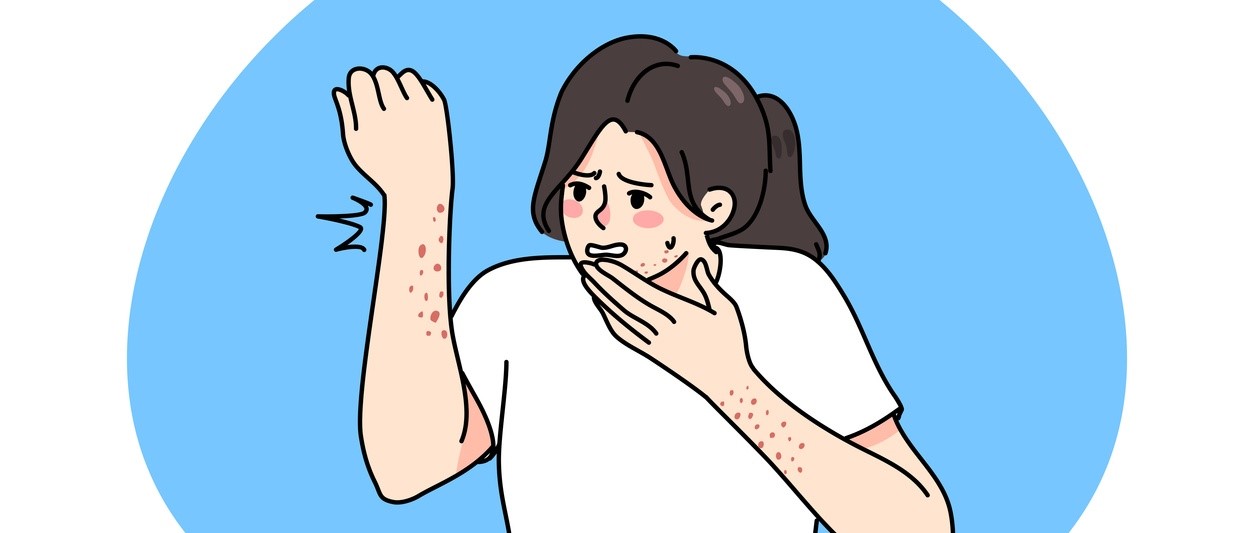
The number of people with scabies is around double the expected amount for this time of year. We explain what scabies is, how to spot it, and what to do about it.
Doctors report surge in scabies
According to a new report from the British Association of Dermatologists (BAD), 8 out of the 9 regions across the UK have seen an increase in scabies this year.
Professor Kamila Hawthorne, chair at the Royal College of General Practitioners (RCGP) commented on the surge: "Since July, GPs have seen a growing rate of scabies - at a consistently higher level than the five-year average and the seasonal norm. At the end of November, the rate of scabies was double the seasonal average."
The North of England appears to be most affected. Due to the highly contagious nature of scabies, outbreaks in nursing homes, care homes, and university accommodation are more common, where people are closer together.
How to prevent scabies
Scabies is an intensely itchy skin condition caused by tiny insects known as mites, which are almost invisible to the naked eye. It can spread between people through close skin contact.
Therefore, the best way to protect yourself against scabies is to:
Avoid touching someone who shows the symptoms below.
Avoid sharing clothes, towels, and bedsheets with them.
Hot wash your bedding and towels at 50°C or above if they have been used by them.
Anyone can get scabies, so it's important to know the signs so it can be treated and prevented from spreading.
How to spot scabies
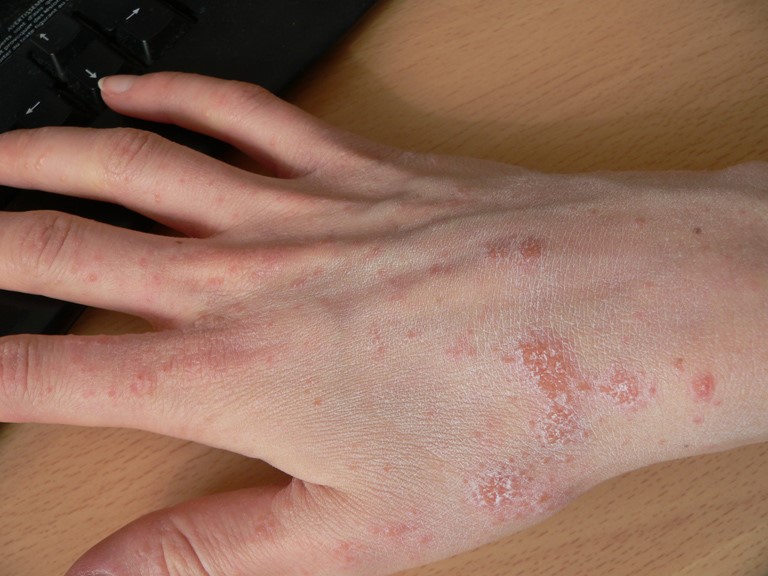
Scabies appears as blotchy, lumpy red rashes. It's common to first notice them on your hands, and they also tend to form on the stomach, lower back, and thighs - although they can appear anywhere on your body.
These rashes are often very itchy and cause you to scratch the affected areas, which can further damage your skin. It might be that this itchiness starts in one place, and then spreads to other areas you touch.
You might also see small dark-grey lines on your skin, most commonly in between your fingers, on your wrists, and in the palms of your hands. However, these aren't always visible.
Scabies rash on hand
What to do if you have scabies
If you think you might have scabies:
It's important to get treatment to help prevent the condition spreading to others.
Try and avoid skin contact with other people as much as possible.
Either your pharmacist or GP can diagnose this condition based on how your rash looks.
Treatment involves a cream or lotion you apply to your skin.
In the UK, the two main treatment creams are called permethrin and malathion. These are usually available in pharmacies and GP surgeries, however the surge in scabies cases comes during a shortage of both medicines.
This is thought to be due to the increase in demand, supply chain issues, a rise in the cost of raw materials, and the war in Ukraine, according to BAD1.
Currently, the availability of scabies treatment will depend on where you are, so it's important that you try your pharmacist or doctor, instead of suffering this uncomfortable condition and possibly passing it on to others.
If you have problems getting treatment, home remedies like neem, tea tree oil, and clove oil may help ease your itching in the meantime but it won't get rid of the mites.
Further reading
Patient picks for Skin rashes

Skin, nail and hair health
Common skin complaints: understanding tinea versicolor
If you've noticed a rash of patchy colours develop on your skin, you may have tinea versicolor - which also goes by the name pityriasis versicolor. This common skin condition can happen to anyone, no matter how healthy and fit they are, and can be managed with various treatments.
by Amberley Davis

Skin, nail and hair health
What causes our skin to break out in hives?
Hives - also known as urticaria - is a relatively common itchy rash that causes red or white bumps on the skin. According to the British Association of Dermatologists (BAD), it affects around one in five people at some point in their lives, and in around half of cases the trigger is unknown. But, if you're breaking out in hives, here's what could be behind those itchy bumps.
by Sarah Graham
About the authorView full bio
Authored by

Amberley Davis
Senior writer
BA (Hons), CPD
Amberley is a senior writer with Patient and has written extensively on a range of health and wellbeing topics.
About the reviewerView full bio

Dr Krishna Vakharia, MRCGP
Chief Medical Officer for Health, Optum UK
MBChB, MRCGP(2013), BMedSci (hons), DFSRH, DRCOG, PGDipDerm (Distn)
Dr Krishna Vakharia is an NHS GP. She is also a regular examiner for the postgraduate Diploma in Practical Dermatology at Cardiff University as well as being the Chief Medical Officer for health at Optum UK.
Article history
Article also available in English, German, Spanish, French, Italian, Portuguese, Hindi, Hebrew, Arabic, and Swedish.
4 Jan 2024 | Originally published
Authored by:
Amberley DavisPeer reviewed by
Dr Krishna Vakharia, MRCGP
Join the conversation
Share your thoughts or experiences with others in our patient communities.

Ask, share, connect.
Browse discussions, ask questions, and share experiences across hundreds of health topics.

Feeling unwell?
Assess your symptoms online for free
Sign up to the Patient newsletter
Your weekly dose of clear, trustworthy health advice - written to help you feel informed, confident and in control.
By subscribing you accept our Privacy Policy. You can unsubscribe at any time. We never sell your data.