
Ovarian cancer symptoms diary
Peer reviewed by Patient clinician teamAuthored by Patient clinician teamOriginally published 10 Oct 2017
Meets Patient’s editorial guidelines
- DownloadDownload
- Share
- Language
- Discussion
- Audio Version
- Add to preferred sources on Google
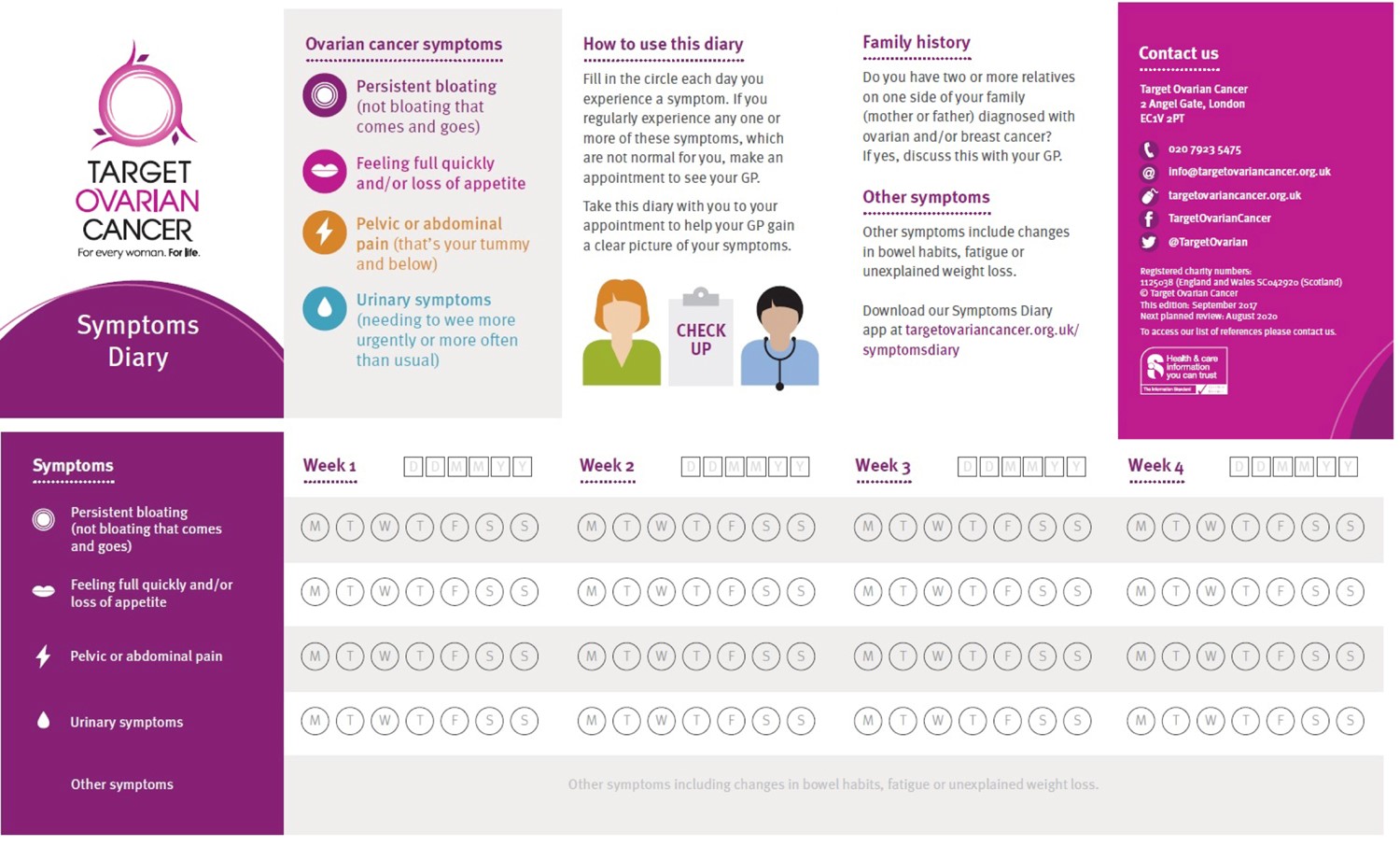
The ovarian cancer symptoms diary has been produced by Target Ovarian Cancer. This is a national ovarian cancer charity. It works to save lives and help women diagnosed with the condition live their lives to the full.
The diary is intended to provide an easy way for women who are concerned about ovarian cancer to accurately record symptoms for discussion with their doctor.
Ovarian cancer symptoms diary
Patient picks for Gynaecological cancer

Cancer
How my Ovarian Cancer was missed: Natasha tells her story
Across the UK, thousands of women each year are only diagnosed with ovarian cancer once they reach emergency care. Among them is Natasha Reynolds, who was just 22 when she began noticing the first signs of the disease. Despite repeatedly seeking help, her concerns were dismissed, even as her symptoms worsened. It was only after she sought emergency care that she finally received a diagnosis - stage one germ cell ovarian cancer, an extremely rare form of the disease that primarily affects young people. Natasha’s story is a powerful reminder of the importance of taking women’s symptoms seriously and of how many lives could be saved through earlier detection of ovarian cancer.
by Victoria Raw

Cancer
What an abnormal smear test result could mean
Routine cervical screening is the most effective way to prevent cervical cancer. But what happens when you get an 'abnormal' result? We chat to 29-year-old Isha who found out she had abnormal cells after her second screening. She highlights the importance of attending your appointments and how she kept positive throughout the experience.
by Georgia Gallant
About the authorView full bio

Patient clinician team
The Patient.info Clinical Team creates and reviews our health content to ensure it is accurate, evidence-based, and guided by trusted NHS and NICE standards.
About the reviewerView full bio
Patient clinician team
The Patient.info Clinical Team creates and reviews our health content to ensure it is accurate, evidence-based, and guided by trusted NHS and NICE standards.
Article history
The information on this page is peer reviewed by qualified clinicians.
Article also available in English, German, Spanish, French, Italian, Portuguese, Hindi, Hebrew, Arabic, and Swedish.
10 Oct 2017 | Originally published
Authored by:
Patient clinician teamPeer reviewed by
Patient clinician team
Join the conversation
Share your thoughts or experiences with others in our patient communities.

Ask, share, connect.
Browse discussions, ask questions, and share experiences across hundreds of health topics.

Feeling unwell?
Assess your symptoms online for free
Sign up to the Patient newsletter
Your weekly dose of clear, trustworthy health advice - written to help you feel informed, confident and in control.
By subscribing you accept our Privacy Policy. You can unsubscribe at any time. We never sell your data.
More in cancer
- 8 tips to help reduce your cancer risk at any age
- Being a 'morning person' lowers risk of breast cancer
- Can you be too old for a smear test?
- Coping strategies for life after cancer treatment
- Does alcohol cause cancer?
- How cancer can affect your mental health
- How to check for breast cancer and what a lump feels like
- How to spot the signs of mouth cancer
- Is it prostate cancer or something else?
- New insight into breast cancer risk after stopping HRT
- NHS to roll out world-first blood test for cancer
- Supporting a loved one with a cancer diagnosis
- Ways to help reduce your chance of bowel cancer
- What affects your chances of surviving cervical cancer?
- What are the early warning signs of bowel cancer?
- What happens when you find out you’re BRCA positive?
- What is bowel cancer screening - and why do you need it?
- What is cancer 'prehabilitation'?
- What you need to know about end of life care
- Your essential skin cancer checklist