
How to use nose drops
Peer reviewed by Dr Hannah Gronow, MBACPAuthored by Dr Mary Harding, MRCGPOriginally published 11 Oct 2017
Meets Patient’s editorial guidelines
- DownloadDownload
- Share
- Language
- Discussion
- Audio Version
- Add to preferred sources on Google
The following advice is for nose drops only and not for nose sprays which are used differently. Ask your pharmacist if you have any queries.
How to use nose drops
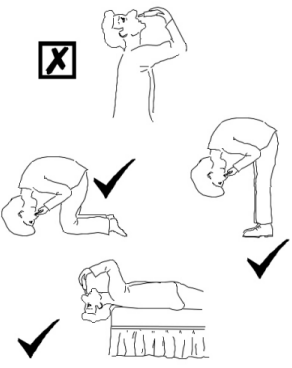
Blow your nose gently.
Drop the required number of drops into each nostril.
The aim is to get the liquid to spread over all the inside surface of the nose - including the upper surface.
A good position is to lie on a bed with your head hanging back over the edge. Stay like this for two minutes after putting in the drops before getting up. This is so that the liquid does not immediately run out of your nose or down the back of your throat but stays for a while in the nasal cavity.
Kneeling or bending forwards is an alternative, but it is harder to stay like this for two minutes after putting in the drops.
Replace the top on the bottle after using.
Wash your hands after using the drops.
Some points about nose drops
Sometimes the nose drops leave an odd taste as they trickle down your throat after you have applied them to your nose. If this happens, have a drink to wash the taste away.
Between doses, keep the bottle closed and store in a cool, dark place (unless otherwise advised).
Do not let anyone else use your drops and do not use anyone else's drops yourself.
Do not use nose drops more often or for longer than advised. Some nose drops must only be used for a short time. Some 'go off' and need replacing after a certain time.
Throw out the bottle (and get a new one if required) after the recommended time. (One tip is to write the date that you opened the bottle on the label so you will know when it is time to throw it out.)
Keep the drops out of children's reach.
The above advice is general advice for most nose drops. You may be given specific instructions which may vary from the above.
Patient picks for Nose

Ear, nose and throat
How long should you use a decongestant nasal spray? The new five-day warning explained
Winter brings many reasons to reach for a nasal spray, from seasonal viruses and allergies to dry nasal passages. However, health professionals are urging people not to overuse them, as they can cause unwanted side effects. We explain how long you should use nasal sprays for, the potential downsides of overuse, and why it’s important to take care while using them.
by Victoria Raw

Ear, nose and throat
What does your snot say about your health?
No one enjoys having a runny nose or the mountain of discarded tissues that result from the common cold. But could your snot tell you clues about your health? We ask a GP.
by Natalie Healey
About the authorView full bio
Authored by

Dr Mary Harding, MRCGP
General Practitioner, Medical Author
BA, MA, MB, BChir, MRCGP, DFFP
Dr Mary Harding qualified from Cambridge University medical school in 1989.
About the reviewerView full bio

Dr Hannah Gronow, MBACP
General Practitioner
MB, ChB, MBACP
Hannah qualified as a GP in 1997. She joined EMIS (Patient) as a peer reviewer in August 2006.
Article history
Article also available in English, German, Spanish, French, Italian, Portuguese, Hindi, Hebrew, Arabic, and Swedish.
11 Oct 2017 | Originally published
Authored by:
Dr Mary Harding, MRCGPPeer reviewed by
Dr Hannah Gronow, MBACP
Join the conversation
Share your thoughts or experiences with others in our patient communities.

Ask, share, connect.
Browse discussions, ask questions, and share experiences across hundreds of health topics.

Feeling unwell?
Assess your symptoms online for free
Sign up to the Patient newsletter
Your weekly dose of clear, trustworthy health advice - written to help you feel informed, confident and in control.
By subscribing you accept our Privacy Policy. You can unsubscribe at any time. We never sell your data.