What is Skeeter syndrome? When a mosquito bite is more than just an itch
Peer reviewed by Dr Colin Tidy, MRCGPAuthored by Heather AinsworthOriginally published 7 Sept 2026
Meets Patient’s editorial guidelines
- DownloadDownload
- Share
- Language
- Discussion
- Audio Version
- Add to preferred sources on Google
For most people, a mosquito bite is no more than an itchy nuisance. But for some people, a bite can trigger a much more dramatic reaction, with extensive swelling, redness, warmth, and itching that can last for several days.
This reaction is known as Skeeter syndrome.
What is Skeeter syndrome?
Skeeter syndrome is a large local reaction to a mosquito bite caused by the immune system reacting to proteins in mosquito saliva.
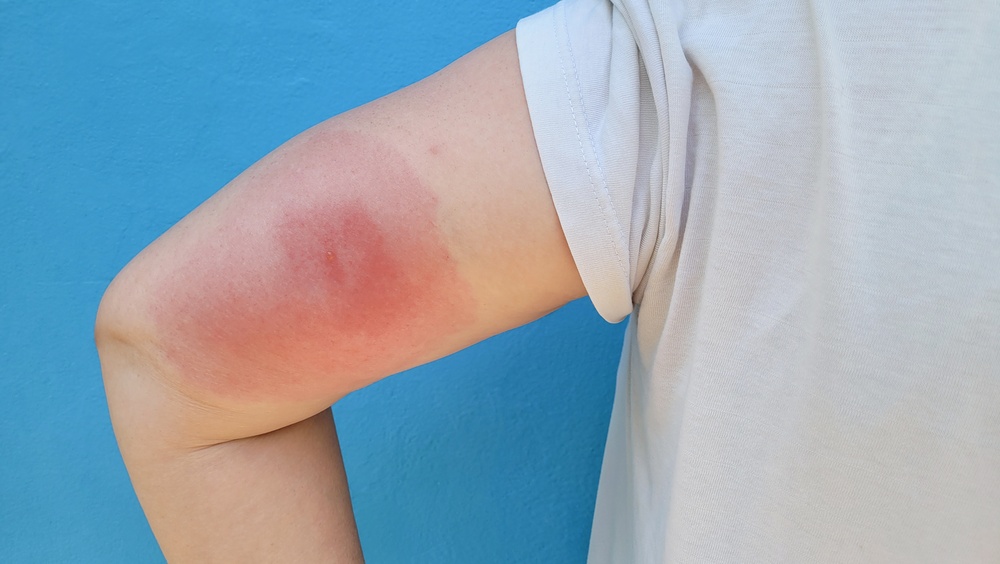
A normal mosquito bite can cause a small, itchy, raised area of skin. With Skeeter syndrome, the reaction is more severe. The affected area can become very swollen, red, warm, and itchy, and the reaction can sometimes cover a large area of skin.
Skeeter syndrome is sometimes described as a mosquito bite allergy.
What causes Skeeter syndrome?
Skeeter syndrome is caused by a strong immune response to substances in mosquito saliva.
When a female mosquito bites, it injects saliva into the skin. This helps the mosquito feed but can also trigger an immune response. For most people, this causes a small, itchy, swollen area around the bite.
For people with mosquito hypersensitivity, the immune response is much stronger. This causes more inflammation, itching, and swelling, resulting in the larger reaction seen with Skeeter syndrome.
What does Skeeter syndrome look like?
Skeeter syndrome tends to cause a much stronger reaction than a typical mosquito bite, with the most common sign being a large area of swelling and redness around the bite.
Symptoms can include:
A large area of swelling around the bite.
Red or discoloured skin.
Warmth around the affected area.
Intense itching.
Pain or tenderness.
A raised or firm area of skin.
Blisters or fluid-filled areas in more pronounced reactions.
Swelling of an entire limb in severe local reactions.
Flu-like symptoms.
Occasionally, swollen lymph nodes.
The reaction typically develops within hours of the bite and may become increasingly noticeable over the following day. Symptoms usually take several days to settle.
Skeeter syndrome vs a normal mosquito bite
The main differences between a typical mosquito bite and Skeeter syndrome are:
Normal mosquito bite | Skeeter syndrome |
|---|---|
Small, itchy bump | Large area of swelling |
Mild redness | More extensive redness or skin discolouration |
Mild swelling | Significant swelling and inflammation |
Usually manageable at home | May require medical assessment or prescription treatment |
Usually settles within several days | Can remain for several days or longer |
Usually no other symptoms | Some people develop fever or other symptoms |
How common is Skeeter syndrome?
Skeeter syndrome appears to be more common in children than adults, although adults can also develop it.
People who have repeated exposure to mosquitoes may also develop different patterns of sensitivity over time.
Although Skeeter syndrome is sometimes described as rare, large reactions to mosquito bites are known to occur.
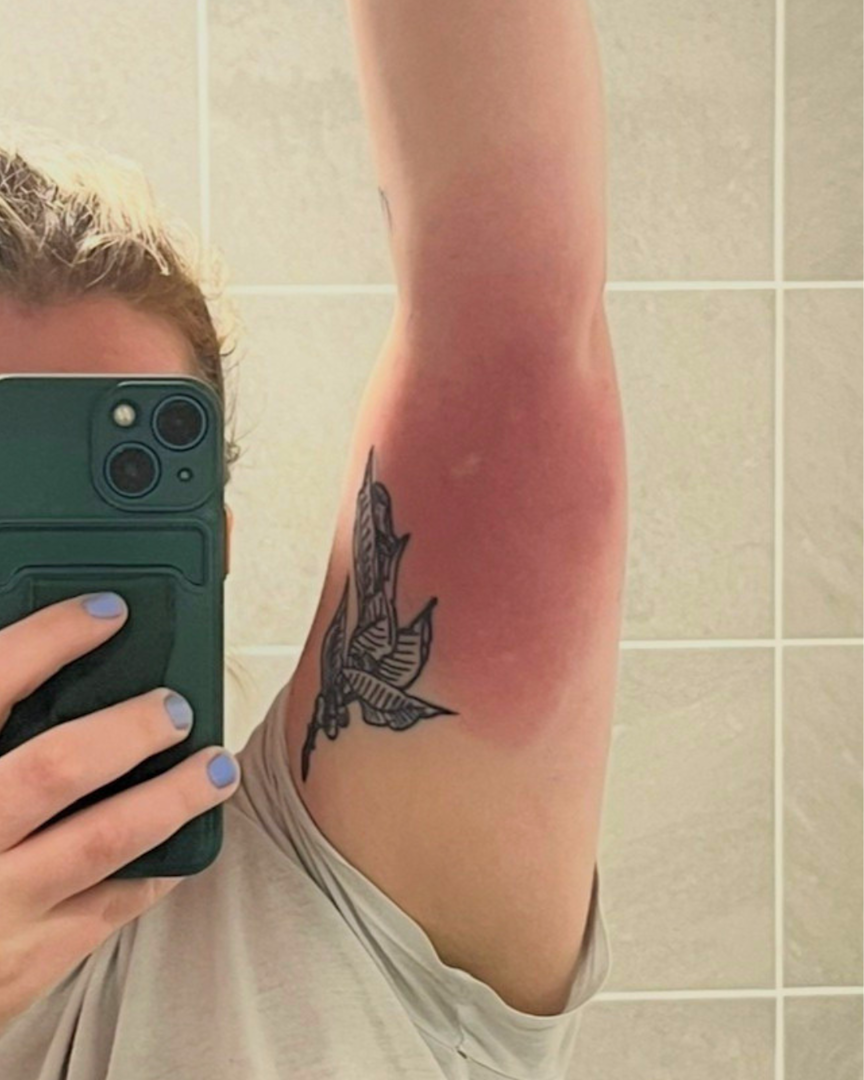
"After years of being bitten by mosquitoes without any serious problems, I developed Skeeter syndrome at the age of 30. Until then, I had no idea that you could develop such a strong reaction to mosquito bites.
Within 24 hours, a bite on my arm had become increasingly swollen and hot to the touch, and I began to feel unwell with flu-like symptoms. I rang 111 who advised me to see a pharmacist.
I was treated with oral corticosteroids, which helped to reduce the swelling, and after 7 days the reaction and discolouring finally improved.
I’d never experienced anything like it before, and I was surprised to learn that I had developed such a strong sensitivity to mosquito bites.”
Is Skeeter syndrome dangerous?
Skeeter syndrome itself is usually not dangerous, although the swelling and itching can be severe and uncomfortable.
However, mosquito bites can occasionally trigger a more widespread allergic reaction, including anaphylaxis. This is very uncommon but can be life-threatening.
Call 999 or go to A&E immediately if a mosquito bite is followed by symptoms such as:
Difficulty breathing or wheezing.
Swelling of the lips, mouth, tongue, or throat.
Difficulty swallowing.
Feeling faint, dizzy, or confused.
A rapid deterioration in your symptoms.
Widespread hives or swelling affecting areas away from the bite.
These symptoms can indicate a serious allergic reaction and should not be assumed to be part of an ordinary local reaction.
How is Skeeter syndrome treated?
Treatment for Skeeter syndrome depends on how severe the reaction is.
For a mild to moderate local reaction, treatment may include:
Cold compresses to help reduce swelling and itching.
Antihistamines to reduce itching and other allergy symptoms.
Topical corticosteroids, where recommended, to reduce inflammation.
Pain relief if the area is painful or uncomfortable.
More severe reactions may require stronger treatment. A healthcare professional may prescribe a short course of oral corticosteroids or, in some circumstances, administer corticosteroid treatment.
You should avoid scratching as it can break the skin and allow bacteria to enter, resulting in a secondary infection such as cellulitis. This will need to be treated with antibiotics.
When to seek medical help for Skeeter syndrome
Call 999 or go to A&E immediately if you develop difficulty breathing, swelling of the mouth or throat, difficulty swallowing, severe dizziness, fainting, or other symptoms suggesting anaphylaxis.
You should also seek medical advice if:
The swelling is severe or continues to increase.
The affected skin becomes increasingly painful or hot.
Pus or other discharge develops.
You develop a high temperature or feel generally unwell.
Redness or swelling continues to spread.
Symptoms are not improving.
You develop a particularly large blister or extensive skin changes.
These symptoms can sometimes indicate a bacterial infection rather than, or in addition to, Skeeter syndrome.
If you are unsure whether your symptoms require urgent assessment, NHS 111 can provide advice.
Can Skeeter syndrome be prevented?
The most effective way to prevent Skeeter syndrome is to avoid getting mosquito bites.
There are several measures which can help reduce your risk.
These include:
Using insect repellent.
Covering exposed skin.
Keeping windows and doors closed when inside.
Eliminating standing water in plant pots and other containers.
Key points
Skeeter syndrome is a severe reaction to a mosquito bite that can cause extensive swelling, redness, warmth, and intense itching around the bite.
Most cases are not dangerous and can usually be treated with antihistamines, topical corticosteroids, and other treatments to relieve symptoms.
The best way to prevent Skeeter syndrome is to avoid mosquito bites using insect repellent, protective clothing, and other bite-prevention measures.
Seek emergency medical help after a mosquito bite if you develop difficulty breathing, swelling of the mouth or throat, dizziness, or fainting.
Patient picks for Allergies

Skin, nail and hair health
Could you be allergic to the sun?
We all know that sun exposure without adequate protection can be harmful to our skin, and may lead to sunburn, skin damage and an increase in the risk of skin cancer. But for some, exposure to the sun's rays can result in a more extreme reaction - known as photosensitivity or sun allergy.
by Gillian Harvey

Allergies, blood and immune system
What are the signs of a cow's milk allergy in babies?
Feeding and nursing a baby can be a difficult enough without the added challenge of an allergy. Cow's milk allergy (CMA), or cow's milk protein allergy (CMPA), is one of the most common food allergies in children. However, there's a lot of misinformation about allergies. So, what exactly is a cow's milk allergy and what are the symptoms in babies?
by Lawrence Higgins
About the authorView full bio
Authored by

Heather Ainsworth
SEO Manager
BA (Hons) Business and Marketing, IDM Cert DDM, MHFAider®
Heather is the SEO Manager at Patient and a trained Mental Health First Aider. She is also a regular health writer, covering a wide range of topics with a particular interest in mental wellbeing, women's health, and holistic health.
About the reviewerView full bio

Dr Colin Tidy, MRCGP
General Practitioner, Medical Author
MBBS, MRCGP, MRCP (Paediatrics), DCH
Dr Colin Tidy is an NHS Doctor, based in Oxfordshire.
Article history
Article also available in English, German, Spanish, French, Italian, Portuguese, Hindi, Hebrew, Arabic, and Swedish.
Next review due: 7 Sept 2029
7 Sept 2026 | Originally published
Authored by:
Heather AinsworthPeer reviewed by
Dr Colin Tidy, MRCGP
Join the conversation
Share your thoughts or experiences with others in our patient communities.

Ask, share, connect.
Browse discussions, ask questions, and share experiences across hundreds of health topics.

Feeling unwell?
Assess your symptoms online for free
Sign up to the Patient newsletter
Your weekly dose of clear, trustworthy health advice - written to help you feel informed, confident and in control.
By subscribing you accept our Privacy Policy. You can unsubscribe at any time. We never sell your data.