ADHD Diagnosis: How to get diagnosed and what to expect
Peer reviewed by Dr Colin Tidy, MRCGPAuthored by Heather AinsworthOriginally published 16 Apr 2026
Meets Patient’s editorial guidelines
- DownloadDownload
- Share
- Language
- Discussion
- Audio Version
- Add to preferred sources on Google
If you’ve ever suspected you might have ADHD, the idea of getting diagnosed can feel both relieving and intimidating at the same time.
In this article, we speak to Dr Khan, an ADHD expert from Well Life Clinic, about the diagnosis process and what to expect if you think you may have ADHD.
Sponsored
Well Life ADHD Clinic
Get access to a FREE consultant-led NHS ADHD service with faster assessment times, full diagnosis, and ongoing treatment - all free on the NHS.
For many people, the journey towards an ADHD diagnosis begins with noticing patterns in how they think, focus, and manage daily life.
Dr Hijab Khan, Clinical Lead for ADHD at Well Life Clinic, explains:
“If you have a long‑standing pattern of difficulties with attention, organisation, time management, emotional regulation, or task initiation that began in childhood and continues to impact adult life, assessment is worth considering.
Many patients describe feeling that they work harder than others for the same outcomes, experience cycles of hyperfocus and burnout, or struggle to meet everyday demands even when motivation is high.
The key sign is not occasional forgetfulness, but persistent impairment across multiple areas of life. This is when a diagnosis and treatment plan would be beneficial.”
So how do you move from recognising these patterns to getting a formal ADHD diagnosis?
How to get diagnosed with ADHD
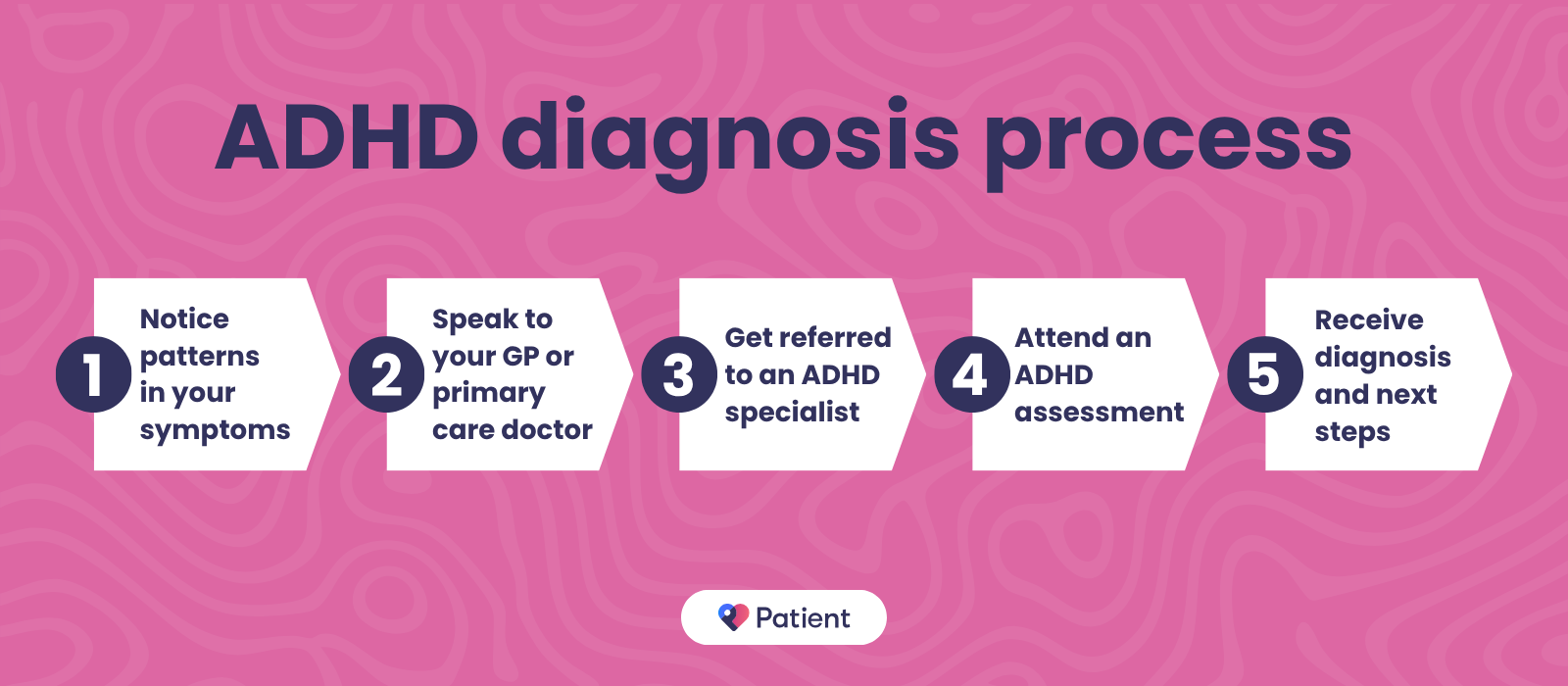
Step 1: Notice patterns in your symptoms
Track recurring difficulties in attention, organisation, time management, emotional regulation, or impulsivity over time, rather than focusing on isolated experiences.
Reflect on how these patterns impact different areas of life, such as work, education, relationships, and daily routines.
Use online ADHD screening tools as a starting point for reflection, understanding that they are not diagnostic and cannot confirm ADHD.
Dr Khan warns, “Many people accurately recognise their own symptoms, and this self-awareness is often what prompts an assessment, but ADHD shares features with anxiety, depression, trauma, sleep disorders, and burnout, so without a formal diagnosis, it is possible to mistake ADHD for something else.
So whilst you can recognise ADHD traits within your own behaviour, it is not possible to formally diagnose ADHD yourself."
Step 2: Speak to your GP / primary care doctor
Book an appointment with your GP if your symptoms are persistent and impacting daily life.
Describe your difficulties clearly, using real-life examples (for example, work, study, home life, relationships).
Mention how long you’ve experienced these challenges and whether they were present in childhood.
Prepare notes in advance to help structure what you want to say during the appointment.
Ask for a referral to an NHS ADHD assessment provider.
You can also download this referral form from Well Life ADHD clinic to give to your doctor when requesting a referral for a free NHS ADHD assessment.
Step 3: Get referred to an ADHD specialist
Your GP may refer you to an NHS ADHD service, such as Well Life ADHD Clinic or a private specialist clinic, depending on availability and preference.
The NHS now offers Right to Choose, which means you can pick a provider based on what is important to you.
Referrals typically go to psychiatrists or multidisciplinary ADHD assessment services.
Waiting times can vary significantly on the NHS waitlist, which is why some people explore NHS Right to Choose or private assessment options.
You may be placed on a waiting list or asked to complete initial screening questionnaires.
Dr Khan adds, “If you choose to go via the NHS for an ADHD assessment, then you will need a referral from your GP who acts as the gateway to specialist services. If you opt for a private assessment, then you’re able to self-refer.”
Step 4: Attend an ADHD assessment
Assessments typically last between 1-3 hours and may take place over one or more sessions.
A specialist will conduct a structured clinical interview covering current symptoms and life history.
You may be asked about childhood behaviour, education, work history, and daily functioning.
Standardised questionnaires and diagnostic criteria (such as DSM-5 or ICD-11) are often used.
In some cases, input from family members, partners, or school reports may be requested.
Step 5: Receive diagnosis and next steps
You will receive a diagnostic outcome based on clinical criteria and assessment findings.
If diagnosed, you will be offered a treatment plan tailored to your needs.
Treatment may include medication, psychological therapy, coaching, or lifestyle-based support strategies.
If ADHD is not diagnosed, the clinician may explore alternative explanations for your symptoms and suggest further support or assessment if needed.
Dr Khan adds, “The absence of a formal diagnosis does not invalidate your difficulties or mean you should go without help. People can still demonstrate some ADHD traits, however, to get a formal diagnosis you need to meet the criteria for validated assessment tools.
If at the end of your assessment you end up not being diagnosed with ADHD, the assessor should still offer support and coping mechanisms.
Many strategies used for ADHD such as structured routines, psychological therapy, coaching, and adjustments at work can be helpful regardless of diagnostic status.
Doctors focus on functional impairment, not just labels, and overlapping issues such as anxiety and depression or sleep problems, can and should still be treated. The goal is managing symptoms and improving wellbeing, not simply meeting diagnostic criteria.”
How long does it take to get an ADHD diagnosis?
Timelines for ADHD assessment are highly variable. In public healthcare systems such as the NHS, waiting times often range from a few months to several years depending on local demand.
Some regions may offer faster access through right-to-choose pathways or specialist services, but delays are still common due to high referral volumes.
Private ADHD assessments are typically much quicker, often taking a few weeks from referral to appointment, although this depends on clinic availability.
Demand for ADHD services continues to rise, which has contributed to longer waiting lists across many areas.
How much does an ADHD assessment cost?
NHS ADHD assessments are free as they are funded through public healthcare systems, although waiting times can be lengthy.
Private ADHD assessments typically range from around £300 to £1,500 depending on the provider, complexity of assessment, and whether follow-up appointments are included.
Is an ADHD diagnosis worth it?
For many people considering assessment, a key question is whether getting a diagnosis is actually worth it.
Dr Khan explains: “Many people find an ADHD diagnosis helpful, especially if symptoms are significantly affecting daily functioning, relationships, mental health, or your general wellbeing.
A diagnosis can provide access to evidence-based treatment, workplace or educational adjustments, and a clearer understanding of lifelong difficulties that are often misattributed to laziness or lack of effort.
It also opens up the opportunity to access medication, which can help to manage symptoms of ADHD and improve motivation and productivity.”
Summary
ADHD diagnosis usually begins by noticing ongoing symptoms like poor focus, impulsivity, or disorganisation that affect daily life.
A GP can refer you for an ADHD assessment, where a specialist reviews your symptoms, history, and overall wellbeing.
If diagnosed, treatment may include medication, therapy, and practical support. Adults can be diagnosed even if they were missed in childhood.
Patient picks for ADHD

Brain and nerves
What are the symptoms of ADHD and autism (AuDHD)? Signs, differences and overlap
Attention Deficit Hyperactivity Disorder (ADHD) and Autism Spectrum Disorder (ASD) are neurodevelopmental conditions that can often coexist. When both conditions are present, this is sometimes referred to as AuDHD (ADHD and Autism). Though, not a term used by doctors when giving diagnoses, people commonly use it to signify they have both conditions. In this feature, the symptoms of ADHD and autism will be explored separately and then what the combination presents as.
by Dr Rachna Rajput, Psychiatry UK

Brain and nerves
How to cope with ADHD: practical tips for everyday living
Attention deficit hyperactivity disorder (ADHD) is a neurological condition that affects those who have it in different ways. If you have ADHD it may cause symptoms like restlessness, impulsive behaviour, and difficulty concentrating. It's important to address ADHD early to help you manage your symptoms, improve your wellbeing and strengthen your relationships.
by Victoria Raw
Frequently asked questions
Can I self-diagnose ADHD?
No, you cannot formally diagnose ADHD yourself. While you might recognise ADHD traits in your own behaviour, ADHD shares features with other conditions like anxiety, depression, trauma, sleep disorders, and burnout. A formal diagnosis requires assessment by a specialist using validated assessment tools and clinical criteria.
What if I don't get an ADHD diagnosis after my assessment?
If you are not diagnosed with ADHD, the clinician should still offer support and suggest coping mechanisms. Many strategies helpful for ADHD, such as structured routines, psychological therapy, coaching, and workplace adjustments, can be beneficial regardless of a diagnosis. Clinicians focus on managing symptoms and improving your wellbeing, and will explore alternative explanations for your difficulties or overlapping issues like anxiety and depression that can and should still be treated.
How do I ensure my GP takes my concerns seriously and refers me for an ADHD assessment?
To help your GP understand your difficulties, it's beneficial to prepare notes in advance, describing your symptoms clearly with real-life examples from various areas of your life like work, study, home, and relationships. Mention how long you've experienced these challenges and if they were present in childhood. You can also bring a referral form, such as one from a clinic like Well Life ADHD Clinic, to give to your doctor.
Can I choose which clinic assesses me for ADHD?
Yes, if you choose the NHS pathway in England, you have a 'Right to Choose'. This means you can pick a provider based on what is important to you, though referrals still typically go to psychiatrists or multidisciplinary ADHD assessment services.
What happens after an ADHD diagnosis if I need treatment?
If diagnosed with ADHD, you will be offered a treatment plan tailored to your needs. This plan may include medication, psychological therapy, coaching, or lifestyle-based support strategies to help manage your symptoms and improve your overall wellbeing.
About the authorView full bio

Heather Ainsworth
SEO Manager
BA (Hons) Business and Marketing, IDM Cert DDM, MHFAider®
Heather is the SEO Manager at Patient and a trained Mental Health First Aider. She is also a regular health writer, covering a wide range of topics with a particular interest in mental wellbeing, women's health, and holistic health.
About the reviewerView full bio

Dr Colin Tidy, MRCGP
General Practitioner, Medical Author
MBBS, MRCGP, MRCP (Paediatrics), DCH
Dr Colin Tidy is an NHS Doctor, based in Oxfordshire.
Article history
The information on this page is peer reviewed by qualified clinicians.
Article also available in English, German, Spanish, French, Italian, Portuguese, Hindi, Hebrew, Arabic, and Swedish.
Next review due: 16 Apr 2029
16 Apr 2026 | Originally published
Authored by:
Heather AinsworthPeer reviewed by
Dr Colin Tidy, MRCGP

Ask, share, connect.
Browse discussions, ask questions, and share experiences across hundreds of health topics.

Feeling unwell?
Assess your symptoms online for free
Sign up to the Patient newsletter
Your weekly dose of clear, trustworthy health advice - written to help you feel informed, confident and in control.
By subscribing you accept our Privacy Policy. You can unsubscribe at any time. We never sell your data.
More in brain and nerves
- 7 ways to help protect your brain from dementia
- Brain food: what to eat, when to eat, recipes
- Can the MIND diet help keep our brains healthy?
- Could histamine be the cause of your migraines?
- Dispelling common ADHD myths and stereotypes
- Healthy brain ageing - experts tips
- How diet can reduce your risk of stroke and heart attack
- How gut bacteria affect mood, focus and brain health
- How should we support children with autism?
- How to tackle eating problems in children with autism
- Is ADHD in adult women underdiagnosed?
- Is your period causing your migraines?
- Living with Motor Neurone Disease - Louise's story
- Popcorn brain: what it is, why it happens, and how to reset your focus
- Should you avoid the pill if you get migraines?
- Simple advice could improve long-term health for people with MS
- The best brain exercises to sharpen your mind
- Vyepti: a new drug for preventing migraines
- What are the symptoms of ADHD and autism (AuDHD)? Signs, differences and overlap
- Why have I been offered the shingles vaccine?