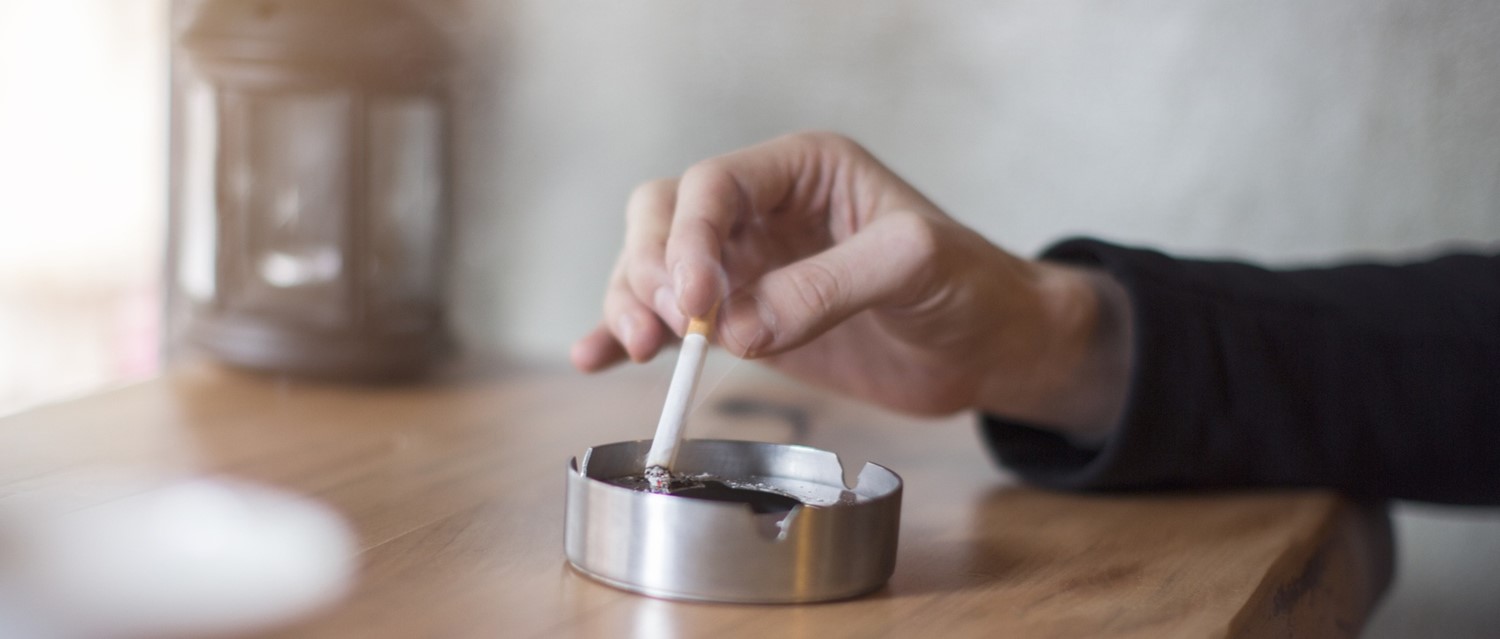
The best ways to quit smoking for good
Peer reviewed by Dr Sarah JarvisAuthored by Natalie HealeyOriginally published 31 Dec 2020
Meets Patient’s editorial guidelines
- DownloadDownload
- Share
- Language
- Discussion
- Audio Version
- Add to preferred sources on Google
It's never too late to quit smoking, but that doesn't make it an easy thing to do. Luckily, there are loads of support options for those who want to stop. We speak to the experts about the best ways to quit, and chat with television presenter Jeremy Kyle about his journey to a smoke-free life.
Jeremy Kyle, 53, has made a television career out of helping people solve their problems, but there was an issue in his own life he wanted to tackle too.
A 35-year addiction to cigarettes had been plaguing his conscience. He wanted to quit for the sake of his children, grandkids and future wife. But after numerous failed attempts, he thought he was stuck with the habit for life.
"I'd tried to quit loads of times over the years, probably about 10 times in total. I'd gone cold turkey, which never worked. There was always a reason to take it up again," he reveals.
Quitting is the single best thing a smoker can do for their health. Most know this; six out of ten want to quit. But the majority, like Kyle, choose to go cold turkey. What you might not know is that this is actually the least effective method when it comes to giving up.
GP Dr Sarah Jarvis, Patient’s clinical director, says: "I see many people in my surgery who want to quit smoking but far too many try without support and they end up going back to smoking after a short period. Stop smoking aids and face-to-face support from local stop smoking services are proven methods of support that help many thousands of people to quit each year."
Last year, nearly 400,000 smokers in England quit successfully - the equivalent to 1,069 smokers each day.
Using an e-cigarette has made a huge difference for Jeremy Kyle

How to choose the method for you
This year Public Health England (PHE) has launched the Personal Quit Plan. This free online tool is designed to help smokers find the right stop smoking support for them.
The platform asks a number of questions to then provide smokers with a suggested combination of support based on their level of tobacco dependency.
Some of the suggested options are:
Face-to-face support
If you think you could benefit from one-to-one sessions or even group support, your GP may be able to refer you to local stop smoking services. Alternatively, you can find details on Public Health England's Stoptober website, or many pharmacies also offer this service. Your adviser will talk to you about why you smoke, and what's stopped you quitting in the past, and will help you find a method that will work best for you.
Prescription tablets
A medicine called varenicline can help reduce cravings. Evidence suggests it more than doubles the chances of successfully quitting. Another medication that's slightly less effective is bupropion. These medicines are only available on prescription though, so you'll have to see your GP to find out if they might be suitable for you.
Nicotine replacement therapy
Nicotine replacement therapy (NRT) covers patches, gum, inhalers and even e-cigarettes. These products contain nicotine to relieve cravings but don't contain any of the harmful substances you'd find in cigarettes.
Many quitters see NRT products as counter-intuitive when it comes to stopping smoking. Why keep feeding the addiction? But actually, evidence has shown, time and time again, that NRT products are effective, especially when used in combination. For instance, an all-day patch with a fast-acting option such as an inhaler or lozenges can help quitters deal with immediate cravings.
Kyle is currently experiencing success with an e-cigarette.
"Before, I'd crave a cigarette when I was working, or when out for dinner. I'd often be leaving the dinner table to have one. It is only once you quit smoking that you notice how unsociable it is! An e-cigarette worked for me and I'm still using it now, although I will stop when I am ready."
He's in good company. E-cigarettes remain the nation's favourite stop smoking aid, with an estimated 3.2 million adult users in Great Britain.
Don't give up on quitting
Dr Jenny Harries, deputy medical director at Public Health England, says it's vital smokers aren't discouraged from trying to quit.
"There are many different types of stop smoking support available, so it can be difficult for a smoker to know what will work best for them. The important thing is not to be put off trying to quit even if you have not managed to in the past."
Kyle, like so many others, had no idea cold turkey wasn't the best way to quit. He's now keen to spread the word about getting free support from the experts and for smokers to find a quit aid that works best for them.
"Since quitting I've learned just how important using support is and for people not to go 'cold turkey' - that certainly didn't work for me in the past. If I can quit, I honestly believe anyone can if you just have the right support," he adds.
Patient picks for Smoking and vaping

Healthy living
Are e-cigarettes a safe way to quit smoking?
If you're looking to stop smoking for Stoptober, you may have considered using e-cigarettes as a quitting tool. Small battery-powered devices, which allow you to inhale nicotine through a vapour, they have become increasingly popular among smokers and ex-smokers alike. According to a survey by Action on Smoking and Health (ASH), around 2.9 million British adults used e-cigarettes in 2017.
by Abi Millar

Healthy living
Will making e-cigarettes available on prescription encourage teenagers to smoke?
The government is hoping to make England smoke-free by 2030. They're implementing various strategies, including the possibility of offering e-cigarettes on prescription. However, there are concerns that e-cigarettes look 'trendy', and therefore encourage teenagers to take up smoking. Is this true, or are prescribed e-cigarettes a step in the right direction?
by Emily Jane Bashforth
About the authorView full bio
Authored by

Natalie Healey
Freelance journalist
BSc (Hons) Biomedical Science
She is a London-based health journalist who has been writing about science and medicine for several years. She is the former head of editorial at Patient.
About the reviewerView full bio

Dr Sarah Jarvis
Clinical Consultant
MA (Cantab), BM, BCh (Oxon), DRCOG, FRCGP, MBE
After training in medicine at Cambridge and Oxford, Dr Sarah Jarvis MBE became a GP.
Article history
Article also available in English, German, Spanish, French, Italian, Portuguese, Hindi, Hebrew, Arabic, and Swedish.
31 Dec 2020 | Originally published
Authored by:
Natalie HealeyPeer reviewed by
Dr Sarah Jarvis
Join the conversation
Share your thoughts or experiences with others in our patient communities.

Ask, share, connect.
Browse discussions, ask questions, and share experiences across hundreds of health topics.

Feeling unwell?
Assess your symptoms online for free
Sign up to the Patient newsletter
Your weekly dose of clear, trustworthy health advice - written to help you feel informed, confident and in control.
By subscribing you accept our Privacy Policy. You can unsubscribe at any time. We never sell your data.