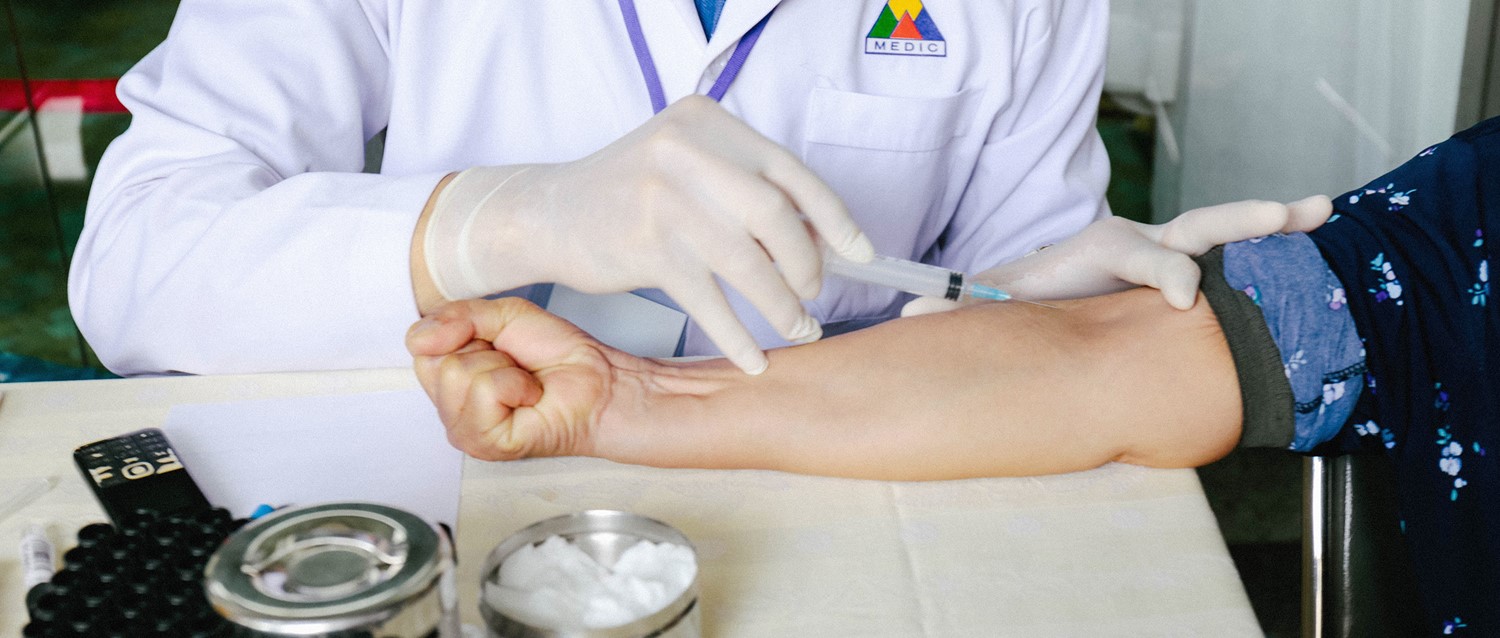
New blood test could diagnose heart failure earlier
Peer reviewed by Milly EvansAuthored by Milly EvansOriginally published 4 Jun 2019
Meets Patient’s editorial guidelines
- DownloadDownload
- Share
- Language
- Discussion
- Audio Version
- Add to preferred sources on Google
A new test that looks at proteins in the blood could offer a more accurate diagnosis of heart failure.
Currently, the NHS blood test for heart failure looks at a single protein called BNP (B-type natriuretic peptide) but measuring levels for a further 25 types of protein can give a far more accurate measure of heart failure. High levels of BNP can indicate an increased risk of the disease, but other factors such as age, obesity and some medications can also increase levels which skews the test's reliability.
The research, conducted at Queen's University Belfast, involved developing a method to test for the 25 other proteins simultaneously. The team looked at over 400 blood samples from participants with and without heart failure. They were then able to test if the protein levels could identify the disease. More blood samples are being collected from across the world to confirm the accuracy of the research.
Dr Claire Tonry, research fellow at the university and one of the study's lead authors, said: "There's an urgent need to develop tests that can diagnose heart failure at an earlier stage and with greater accuracy in order to improve outcomes for patients with the disease."
Heart failure, a long-term condition which occurs when the heart cannot pump blood around the body as efficiently as it should, affects around 920,000 people in the UK. It can affect day-to-day life, particularly in patients with severe heart failure as daily activities like using stairs become impossible.
Not only is the research encouraging due to its ability to more accurately measure heart disease, but it has also created a way to measure multiple biomarkers in a single blood test which is a difficult process.
Despite being in its early stages, the blood test shows promise for earlier treatment as it can detect signs of heart failure before patients report serious symptoms, which in turn can prevent longer-term heart damage.
Dr Sonya Babu-Narayan, associate medical director of British Heart Foundation, said: "It is early days but if new blood tests like this yield earlier and more accurate heart failure diagnosis, people living with heart failure could receive treatment sooner. This will help them to better manage their symptoms so they can live full and active lives for longer."
The research was presented at the British Cardiovascular Society Conference.
Patient picks for Heart disease
Heart health and blood vessels
Who should take aspirin every day?
When I first became a GP, most of the medicines I prescribed were to treat symptoms, not to stop people getting them. But these days we have a host of medicines designed to keep you in good health, even if you feel fine. But which ones, if any, should you be taking?
by Dr Sarah Jarvis

Heart health and blood vessels
Can you die from a broken heart?
People the world over talk about dying of a broken heart. There is actually a condition called broken heart syndrome. Its official title is 'takotsubo cardiomyopathy' and it was first described in Japan in 1990.
by Dr Sarah Jarvis
About the authorView full bio
Authored by

Milly Evans
Editor
Milly writes on a range of health topics, with a particular interest in health inequality and sexual health.
About the reviewerView full bio
Milly Evans
Editor
Milly writes on a range of health topics, with a particular interest in health inequality and sexual health.
Article history
Article also available in English, German, Spanish, French, Italian, Portuguese, Hindi, Hebrew, Arabic, and Swedish.
4 Jun 2019 | Originally published
Authored by:
Milly EvansPeer reviewed by
Milly Evans
Join the conversation
Share your thoughts or experiences with others in our patient communities.

Ask, share, connect.
Browse discussions, ask questions, and share experiences across hundreds of health topics.

Feeling unwell?
Assess your symptoms online for free
Sign up to the Patient newsletter
Your weekly dose of clear, trustworthy health advice - written to help you feel informed, confident and in control.
By subscribing you accept our Privacy Policy. You can unsubscribe at any time. We never sell your data.