The mental health impact of skin conditions
Peer reviewed by Dr Sarah JarvisAuthored by Milly EvansOriginally published 6 Feb 2020
Meets Patient’s editorial guidelines
- DownloadDownload
- Share
- Language
- Discussion
- Audio Version
- Add to preferred sources on Google
As the body's largest organ, the skin is vitally important to our well-being. And as with other organs, it can be affected by a range of conditions, many of which can be both physically and emotionally debilitating.
Mental health support for adults and children
Online CBT and psychological therapy for adults and children aged 8–17. Onebright’s accredited clinicians support people experiencing anxiety, depression and other emotional challenges.
"Chronic skin conditions are well recognised to cause problems with self-esteem and low confidence," says Dr Anjali Mahto, consultant dermatologist and British Skin Foundation spokesperson. Those with visible skin conditions may find themselves becoming withdrawn or avoiding certain social situations or types of clothing as a result of their appearance, she explains.
"As issues with the skin are so outwardly visible to others, it is not surprising that those who suffer may also feel embarrassment and psychological distress. That's in addition to potential physical pain that skin conditions like eczema and acne can cause."
More than appearance
"The symptoms of skin disease, which can be severe, are often underestimated by those not directly affected. The preoccupation society and social media have with self-image, and their stigmatisation of perceived imperfections, only creates further pressure," says Mahto.
Liam, who has been living with eczema since he was a baby, knows all too well how a skin condition impacts various areas of your life. During his teenage years both the eczema and its impact on his mental health were particularly acute, he explains.
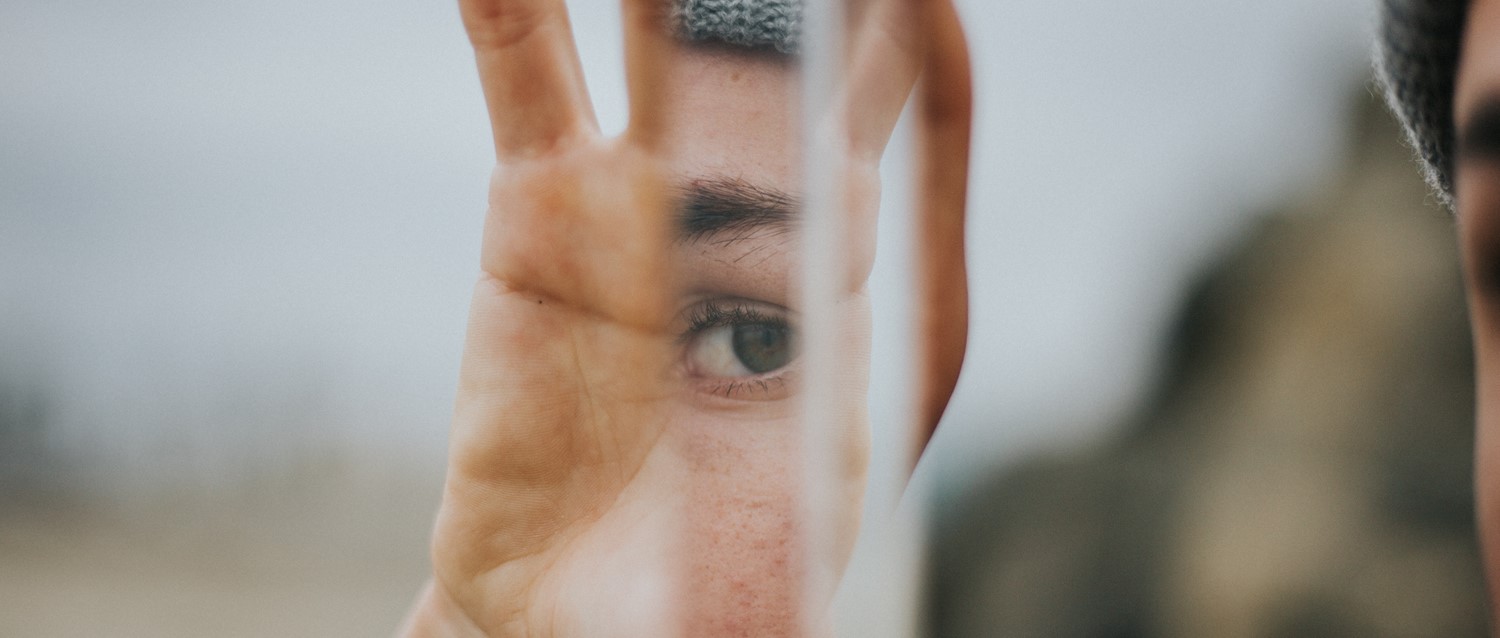
"I'd avoid looking at myself in the mirror. I couldn't bring myself to do PE lessons - I used to hate doing country dancing at school because then you'd have to hold someone's hand. My skin would hurt so much, my self-esteem would be so low. At times my eczema was so bad that I couldn't actually pick up a pen in school."
Eczema became a source of discomfort, embarrassment and shame for Liam. "I'd go to school and insist on wearing a jumper even when it was very warm because my arms would be covered in scratch marks. Sometimes I'd sit in class and scratch my arms so much they would end up bleeding. Having a jumper on top was the only way I could hide those marks," he says.
Scratching his eczema to relieve the itch caused Liam to become withdrawn, even from his parents, he explains.
"I would have that initial relief - the itch would be gone - which would last for about five minutes. Then there'd be this wave of physical pain, then emotional pain about what I'd just done. There'd be weekends when my parents wouldn't see me because I couldn’t bring myself to leave my bedroom. In other cases, I wouldn't want to look at myself in the mirror. There are still times to this day where I struggle to look at myself in the mirror if I still have eczema on my face."
Over the years, his skin has even impacted Liam's ability to be stay at friends' or partners' houses when his eczema has been worse. "What will they think of me, lying next to someone scratching until they're bleeding? There'd be times where I'd just want to avoid having someone around," he says.
Trapped in a cycle
The link between skin and mental health is so profound that a whole field of scientific interest, called psychodermatology, exists to understand it. Yet, according to a survey, nine in ten dermatologists don't think enough importance is placed on the psychological effects of skin conditions.
As well as skin conditions affecting mental health, mental health affects skin too. Stress, in particular, possibly caused by a skin condition, may make some skin conditions worse. "There is a lot of anecdotal evidence that stress will make inflammatory skin disorders such as eczema, psoriasis, acne, and rosacea worse," says Mahto.
For Heather, who also has eczema, the state of her skin is an indicator of her mental well-being. "My eczema is usually the first physical sign my anxiety is flaring up. I'll be scratching a lot more, especially at night," she says. "My skin is usually a good way to track my mood. When things become too difficult to manage, my skincare routine is the first to go out of the window, so the problem gets worse quickly, which then becomes a stick to beat myself with.
"Having bad skin can also lead to worsening anxiety. It makes me feel so out of control and trapped within a 'misbehaving' and painful body."
Scratching or damaging her eczema has become a form of self-harm for Heather, one which she says doesn't register in the same way as other methods, both for her and for healthcare professionals. "Sometimes I feel a bit dismissed when I talk to GPs about my misuse of my skin condition in a way I feel they wouldn't with other forms of self-harm. It's one of the many reasons I really want access to therapy, with someone who sees the holistic impact my anxiety disorder has on my body."
Learning to cope
It's important to come up with personal coping mechanisms to make living with a skin condition easier.
Myra, who has epidermolysis bullosa (EB), has found ways to deal with the emotional effects of her rare, very severe skin condition which causes the skin to become extremely fragile. "I have the equivalent of second-degree burns all over my body that never heal," she explains. "This, of course, impacts my mental health. At times you feel really down and think: Will I ever be pain-free? Why do I have to go through this?"
A change of mindset has helped her to live with the day-to-day effects of EB. "The condition makes me quite dependent on people as I've lost the dexterity of my hands due to scarring, so I need a lot of help from my family or nurses who come to my house every day," she says.
"I have coped by acknowledging that my condition could always be worse and practising gratitude. Despite the difficulties associated with my skin condition, I manage to live a good life doing a job I love as a journalist. I'm grateful I have a supportive family and incredible medical team."
Seeking the right help
When it comes to distress caused by a skin condition, should you be looking for support from your dermatologist or a therapist? Depending on the person, both may be necessary.
"I've had counselling in the past when, in my 20s, I became depressed due to my condition and it really helped," says Myra. "I feel it's so important to get the right help and support to get you through the periods where you feel low. Alongside professional counsellors, even talking to a priest or an Imam (Muslim religious leader) has helped me a lot too."
Your GP and dermatologist are integral to helping you find the right support, be that treatment for your skin condition or talking therapy to copy with the emotional impact, says Mahto. You can even self-refer to talking therapies in your area if you think you may have a mental health problem or find private sessions on Patient Access.
"Do not suffer in silence. If your skin condition is making you feel low, stopping you doing things or holding you back from the things you want, it is vital to let your doctor or dermatologist know. They will work things through with you or enlist the help of a clinical psychologist with an interest in skin disease."
Patient picks for Mental wellbeing
Mental health
What to do if you're struggling with your mental health at Christmas
It may be a time of celebration, but the festive season can also be a stressful period for many. And if you have a mental health condition it can be even harder. We look at practical ways to cope over Christmas.
by Sally Turner

Mental health
What is the difference between mental health and mental illness?
'Mental health' and 'mental illness' are terms that are often used interchangeably. This seems to happen more frequently as the conversation around mental well-being becomes more open and the stigma around mental illness eases. However, the two do not have the same meaning. While everyone has mental health, not every person has a mental illness.
by Emily Jane Bashforth
About the authorView full bio
Authored by

Milly Evans
Editor
Milly writes on a range of health topics, with a particular interest in health inequality and sexual health.
About the reviewerView full bio

Dr Sarah Jarvis
Clinical Consultant
MA (Cantab), BM, BCh (Oxon), DRCOG, FRCGP, MBE
After training in medicine at Cambridge and Oxford, Dr Sarah Jarvis MBE became a GP.
Article history
Article also available in English, German, Spanish, French, Italian, Portuguese, Hindi, Hebrew, Arabic, and Swedish.
6 Feb 2020 | Originally published
Authored by:
Milly EvansPeer reviewed by
Dr Sarah Jarvis
Join the conversation
Share your thoughts or experiences with others in our patient communities.

Ask, share, connect.
Browse discussions, ask questions, and share experiences across hundreds of health topics.

Feeling unwell?
Assess your symptoms online for free
Sign up to the Patient newsletter
Your weekly dose of clear, trustworthy health advice - written to help you feel informed, confident and in control.
By subscribing you accept our Privacy Policy. You can unsubscribe at any time. We never sell your data.