Estimated glomerular filtration rate
Peer reviewed by Dr Hayley Willacy, FRCGP Last updated by Dr Colin Tidy, MRCGPLast updated 10 Feb 2023
Meets Patient’s editorial guidelines
- DownloadDownload
- Share
- Language
- Discussion
- Audio Version
- Add to preferred sources on Google
In this series:Chronic kidney diseaseRoutine kidney function blood testKidney transplantProteinuriaDiet in chronic kidney diseasePolycystic kidney disease
The estimated glomerular filtration rate (eGFR) does not diagnose any specific kidney disease but is a test to assess how well your kidneys are working.
At a glance
The estimated glomerular filtration rate (eGFR) is a blood test to assess how well your kidneys are working.
It calculates the volume of blood filtered by your kidneys over a period of time.
The test measures a chemical called creatinine in your blood.
Your age, sex, and blood creatinine level are used to calculate your eGFR.
An eGFR reading above 90 ml/min/1.73 m2 is considered normal.
The eGFR test is commonly used to monitor people with kidney conditions.
Various different diseases, conditions and medicines can affect the function of the kidneys. A reading of greater than 90 ml/min/1.73 m2 is normal.
The estimated glomerular filtration rate (eGFR) blood test is commonly done as a routine part of monitoring people with kidney diseases or with conditions that can affect the kidneys, such as diabetes or high blood pressure. It is also often done as a routine test in many medical situations. If you are found to have chronic kidney disease (CKD) then the eGFR test is usually done at regular intervals to monitor your kidney function.
What is the estimated glomerular filtration rate?
The eGFR is a test that is used to assess how well your kidneys are working. The test estimates the volume of blood that is filtered by your kidneys over a given period of time. The test is called the estimated glomerular filtration rate because the glomeruli are the tiny filters in the kidneys. If these filters do not do their job properly then the kidney is said to have reduced or impaired kidney function.
The eGFR test involves a blood test which measures a chemical called creatinine. Creatinine is a breakdown product of muscle. Creatinine is normally cleared from the blood by the kidneys. If your kidneys are not working properly, the level of creatinine in the blood goes up. The eGFR is then calculated from your age, sex and blood creatinine level.
An adjustment to the calculation is needed for people with African-Caribbean origin. In the UK this adjustment is made by multiplying the eGFR calculation by 1.21. However, the correction needed may vary depending on how the eGFR has been calculated by your local laboratory.
eGFR calculations have not been fully validated in other ethnic groups (for example, Indo-Asians) or in subjects of mixed race. eGFR is also less reliable in Chinese patients.
Note: it is not possible to assess the eGFR accurately in people with abnormal amounts of muscle and in people who have conditions that can affect the level of creatinine. This includes:
People with muscle wasting conditions.
People who have had an amputation of an arm or leg.
Malnourished people.
Pregnancy.
People with acute kidney injury.
People with a lot of fluid retention (oedema).
Children.
How to calculate the estimated glomerular filtration rate
eGFR is calculated using a formula which includes the blood level for creatinine. as well as age, gender and race. In England and Wales, the National Institute for Health and Care Excellence (NICE) recommends the Chronic Kidney Disease Epidemiology Collaboration (CKD-EPI) creatinine equation because it is more accurate than other equations, particularly for people aged 75 years and over.
Patient picks for Blood tests

Tests and investigations
Hyponatraemia
Hyponatraemia is a low level of sodium in the blood. Sodium levels in the blood have to be tightly controlled. Various chemical messengers (hormones) and organs are involved in this process. For example, hormones involved include antidiuretic hormone and cortisol, and organs involved include the brain and kidneys. There is a very close relationship between body sodium and body fluid levels.
by Dr Hayley Willacy, FRCGP
Tests and investigations
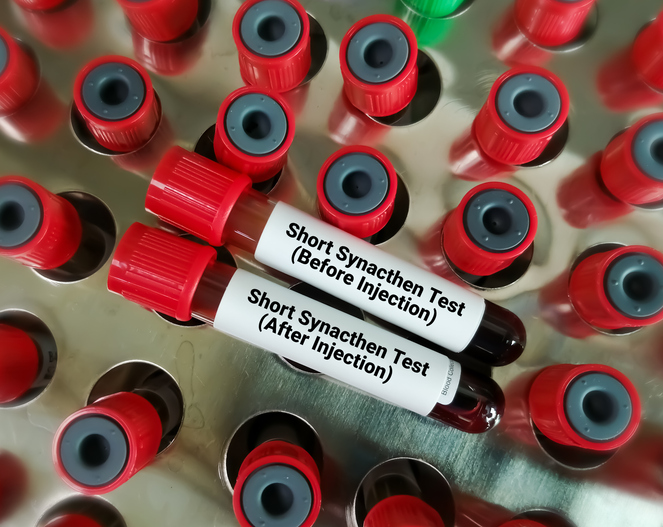
Synacthen test
A synacthen test checks the function of the adrenal glands. It can help to see whether the adrenal glands are producing enough steroid hormone (cortisol). Note: the information below is a general guide only. The arrangements, and the way tests are performed, often vary between different hospitals. Always follow the instructions given by your doctor or local hospital.
by Dr Philippa Vincent, MRCGP
Frequently asked questions
What is creatinine and why is it measured in the eGFR test?
Creatinine is a chemical that is a breakdown product of muscle. It is normally removed from the blood by the kidneys. The eGFR test measures creatinine levels because if your kidneys are not working properly, the amount of creatinine in your blood increases.
Are there any factors that can make eGFR results less accurate?
Yes, eGFR calculations may not be fully accurate in certain situations. These include people with abnormal muscle mass, such as those with muscle wasting conditions or limb amputations, malnourished individuals, and pregnant women. It is also less reliable in people with acute kidney injury, significant fluid retention (oedema), and in children. Additionally, eGFR calculations have not been fully validated in some ethnic groups like Indo-Asians or people of mixed race, and they are less reliable in Chinese patients.
Why is an adjustment made to the eGFR calculation for people of African-Caribbean origin?
An adjustment is made for people of African-Caribbean origin because the eGFR calculation needs to be modified for this group. In the UK, this usually involves multiplying the eGFR calculation by 1.21. However, the specific correction factor might vary depending on how a local laboratory calculates eGFR.
Which formula is recommended for calculating eGFR in the UK?
In England and Wales, the National Institute for Health and Care Excellence (NICE) recommends using the Chronic Kidney Disease Epidemiology Collaboration (CKD-EPI) creatinine equation. This formula is suggested because it provides more accurate results, especially for individuals aged 75 years and older.
What is considered a normal eGFR reading?
A normal eGFR reading is considered to be greater than 90 ml/min/1.73 m2.
Further reading and references
- Levey AS, Inker LA, Coresh J; GFR estimation: from physiology to public health. Am J Kidney Dis. 2014 May;63(5):820-34. doi: 10.1053/j.ajkd.2013.12.006. Epub 2014 Jan 28.
- Blann A; Routine blood tests 1: why do we test for urea and electrolytes? Nursing Times; 110: 5, 19-21, 2014.
- Fraser SD, Blakeman T; Chronic kidney disease: identification and management in primary care. Pragmat Obs Res. 2016 Aug 17;7:21-32. eCollection 2016.
- Alaini A, Malhotra D, Rondon-Berrios H, et al; Establishing the presence or absence of chronic kidney disease: Uses and limitations of formulas estimating the glomerular filtration rate. World J Methodol. 2017 Sep 26;7(3):73-92. doi: 10.5662/wjm.v7.i3.73. eCollection 2017 Sep 26.
- Chronic kidney disease; NICE CKS, March 2024 (UK access only).
- Chronic kidney disease: assessment and management; NICE guideline (last updated November 2021)
About the authorView full bio
Updated by

Dr Colin Tidy, MRCGP
General Practitioner, Medical Author
MBBS, MRCGP, MRCP (Paediatrics), DCH
Dr Colin Tidy is an NHS Doctor, based in Oxfordshire.
About the reviewerView full bio

Dr Hayley Willacy, FRCGP
General Practitioner, Medical Author
MBChB (1992), DRCOG, DFFP, MRCOG (Part 1) MRCGP (2007), DFSRH (2013), MSc - medical education (2020)
Dr Hayley Willacy was an NHS GP working in northwest England, who retired from clinical practice in 2022 after 30 years.
Join the conversation
Share your thoughts or experiences with others in our patient communities.

Ask, share, connect.
Browse discussions, ask questions, and share experiences across hundreds of health topics.

Feeling unwell?
Assess your symptoms online for free
Sign up to the Patient newsletter
Your weekly dose of clear, trustworthy health advice - written to help you feel informed, confident and in control.
By subscribing you accept our Privacy Policy. You can unsubscribe at any time. We never sell your data.