Primary cold sore infection
Symptoms and treatment
Peer reviewed by Dr Toni Hazell, FRCGPLast updated by Dr Philippa Vincent, MRCGPLast updated 10 Apr 2025
Meets Patient’s editorial guidelines
- DownloadDownload
- Share
- Language
- Discussion
- Audio Version
- Add to preferred sources on Google
Your first (primary) infection with the cold sore virus can seem different to the repeated (recurring) cold sores which many people have. There may be no symptoms but sometimes there can be a significant infection of your mouth. Treatment aims to ease symptoms while the infection gradually settles over 1-3 weeks.
At a glance
A primary cold sore infection is the first time you are infected with the herpes simplex virus.
Symptoms can range from none to severe blisters and ulcers in and around the mouth.
Pain, swollen neck glands, fever, and general aches can also occur.
Painkillers, mouthwashes, and keeping hydrated can help manage symptoms.
Seek medical advice if symptoms are severe, not settling, or if you have a weakened immune system.
Babies, very young children, and pregnant women should also seek prompt medical help.
Explore cold sore treatments
Get expert healthcare advice from the comfort of home. Complete a quick online consultation, available 24/7, with your request reviewed by a UK-registered clinician. Next day delivery available on eligible treatments.

What is a primary cold sore infection?
Cold sores are caused by the herpes simplex virus (HSV). The first time you are infected with this virus is called the primary infection. The mouth is the area most commonly affected. This is because normal skin is resistant to the virus but the moist inner skin of the mouth is not. The first (primary) infection is often in childhood. It is often caught by kisses from a family member who has a cold sore.
The primary cold sore infection can be worse than recurrent cold sores but some people don't experience any symptoms at all. It tends to fall at either end of the spectrum (significant symptoms or no symptoms).
This leaflet will deal with primary cold sore infection. See the separate leaflet called Cold sores for more details on recurrent cold sores.
What are the symptoms of a primary cold sore infection?
Symptoms of the first (primary) infection are often different to recurring cold sores.
No symptoms. You may have no symptoms, or only trivial ones. For example, you may not realise that a tiny spot on the tongue is a first cold sore. However, you may then develop typical cold sores from time to time in the future.
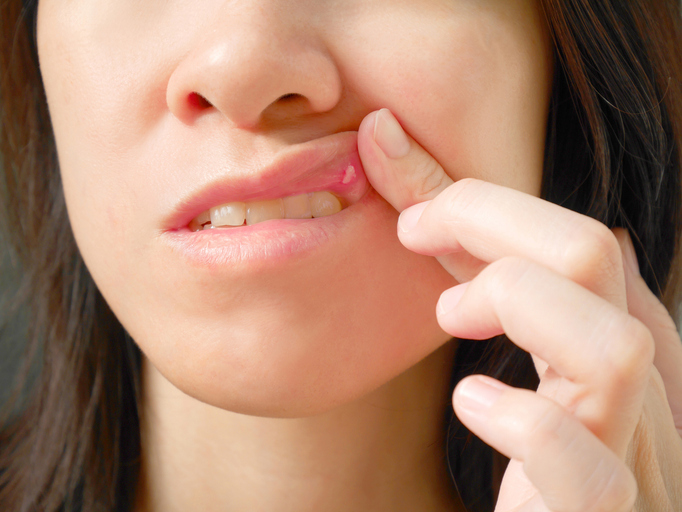
Blisters. You may have a more severe infection in and around the mouth. Small blisters or ulcers may develop on the mouth, tongue, gums, lips, or throat. This is called gingivostomatitis. There may be only a few blisters but sometimes there are lots.
Pain. The blisters and ulcers are often painful. Swallowing or eating may become quite painful. The pain may cause saliva to pool in your mouth and children may drool (dribble).
Glands. The glands in your neck may swell and become tender.
Fever. You may develop a high temperature (fever) and general aches and pains.
The infection gradually subsides and goes within 1-3 weeks.
What are the treatments for a primary cold sore infection?
Painkillers such as paracetamol or ibuprofen can ease the pain for primary cold sore infection.
Benzydamine mouthwash or spray may be useful in relieving the pain from a sore ulcerated mouth.
Choline salicylate gel (Bonjela dental gel) can be used in the mouth to reduce pain. Bonjela should not be used in children under the age of 16, due to a potential risk of Reye's syndrome. This is the same reason why aspirin cannot be used in children too. Note: Bonjela teething gel no longer contains choline salicylate and has been reformulated with lidocaine, a local anaesthetic (to cause temporary numbing). This means that Bonjela teething gel® can be used in children.
Keep hydrated. Have plenty to drink. It may be painful to drink but it is important to drink to prevent dehydration.
Mouthwash. If it is too painful to clean your teeth, chlorhexidine mouthwash (brand name Corsodyl® or Chlorohex®) can be used in place of brushing. It may help adults or children old enough to use it to keep the mouth and teeth clean, to prevent plaque build-up and secondary infection with germs (bacteria).
Soft foods such as yoghurts and soups are easier to eat when your mouth is painful. Cold or cool foods may be less painful than hot foods.
An antiviral medicine (such as aciclovir) is sometimes prescribed if the symptoms are severe or if you have an existing medical condition which means that your immune system does not work properly. It is taken by mouth, rather than the topical creams used to rub on cold sores. It does not clear the virus but prevents the virus from multiplying. It may not have much effect once the blisters and ulcers are well developed. However, if taken early in the infection, it may reduce the duration of the pain and speed recovery a little.
Lip barrier preparations such as Vaseline or Lypsyl may make the lips feel more comfortable and may stop them from sticking or scabbing together.
General measures include trying to reduce the chances of passing the cold sore virus on to others. It is very important to wash your hands carefully with soap and water after touching the mouth and cold sores. You should avoid touching cold sores or ulcers in the mouth associated with first (primary) infection, except when applying medication. You should not have oral sex when you have either a primary cold sore infection or an individual cold sore. Finally, it is important not to share items that come into contact with infected areas - this would include lipsticks and lip balms and eating utensils.
Children
Young children may be distressed with the pain and refuse to take medicine or drinks. Tips to help include:
Try using a syringe (which you can buy at pharmacies) to squirt medicine into the side of the mouth slowly. Do not squirt into the back of the mouth.
Keep offering cool drinks. You can also use a syringe to give some drinks. Again, slowly squirt into the side of the mouth, not towards the back of the mouth.
Sucking ice pops or ice cubes may help to ease the pain and are also a way of giving fluids.
Occasionally, a child stops drinking because of the pain in their mouth. They are then in danger of becoming dehydrated. If your child has significantly reduced urine, or if their urine is dark in colour and strong-smelling, they are likely to be dehydrated. Seek medical advice if you are concerned that your child is not drinking enough and is becoming dehydrated. Some children who are at risk of dehydration are admitted to hospital for a short while until the infection settles and they are drinking normally again. In hospital they can have their fluid intake monitored and they can be given an intravenous drip if needed.
If your child is generally well with a primary herpes virus infection, they do not need to be kept off school or nursery.
When should I consult a doctor for a primary cold sore infection?
You should seek medical advice at any time if you are particularly worried about yourself or your child. This may be the case if you have a weakened immune system (immunocompromised). Immunocompromised people include those with conditions such as AIDS, or those receiving chemotherapy or other medicines which lower the body's resistance to infections. Pregnant women should also seek prompt medical attention. Very young children and babies with a primary cold sore infection should also seek medical help. Anyone with a primary cold sore infection where the symptoms are not settling after ten days, should see their GP.
Recurrent cold sores
After a first (primary) infection has cleared, the virus remains dormant (inactive) in a nerve sheath. Most of the time this causes no problems. In some people the virus 'activates' from time to time to cause cold sores around the mouth and nose. Repeated (recurrent) cold sores may be unpleasant but do not usually cause severe mouth infections like some primary infections. About 1 in 5 people in the UK have recurrent cold sores.
Explore cold sore treatments
Get expert healthcare advice from the comfort of home. Complete a quick online consultation, available 24/7, with your request reviewed by a UK-registered clinician. Next day delivery available on eligible treatments.
Patient picks for Oral care and problems
Oral and dental care
Cold sores
About 1 in 5 people in the UK have recurring cold sores. Cold sores usually resolve on their own without treatment in 7-10 days. Antiviral creams may help to reduce the severity of cold sore symptoms, and they are most effective the earlier they are used when a cold sore is starting to develop.
by Dr Philippa Vincent, MRCGP
Oral and dental care
Mouth ulcers
Mouth ulcers are common, painful sores inside the mouth that can make eating and drinking uncomfortable. They are usually harmless and often heal on their own, however, stress, hormones, or certain foods can trigger them. This leaflet discusses the different types, causes, treatments, and when to see a doctor.
by Dr Philippa Vincent, MRCGP
Frequently asked questions
Can Bonjela be used for cold sores on the lips?
Bonjela dental gel, which contains choline salicylate, can be used in the mouth to reduce pain from ulcers and blisters associated with primary cold sore infection. However, this same formulation should not be applied to children under 16 due to the risk of Reye's syndrome. Bonjela teething gel has a different formulation (with lidocaine) and is suitable for children's teething pain, but the article does not specify its use for cold sores on lips.
What is the difference between a primary cold sore infection and recurring cold sores?
A primary cold sore infection is the very first time you are infected with the herpes simplex virus. It can sometimes be quite severe, causing widespread blisters and ulcers in the mouth, fever, and swollen glands, although some people have no symptoms at all. Recurring cold sores, however, happen when the virus reactivates from its dormant state. These typically appear around the mouth and nose and, while unpleasant, are generally not as severe as the primary infection.
Is it safe to go to school or nursery if my child has a primary cold sore infection?
Yes, if your child is generally well with a primary herpes virus infection, there is no need for them to be kept off school or nursery. It's important to maintain good hygiene, such as washing hands thoroughly, to reduce the chance of spreading the virus.
What is Reye's syndrome, and why is it mentioned with Bonjela?
Reye's syndrome is a rare but serious condition that causes swelling in the liver and brain. It is associated with the use of aspirin in children, and because choline salicylate (an ingredient in Bonjela dental gel) is chemically similar to aspirin, it carries a similar potential risk. This is why Bonjela dental gel is not recommended for children under 16.
How can I help a child who is in pain and refusing to drink or take medicine due to a primary cold sore infection?
For children refusing to drink or take medicine due to pain, try using a syringe to slowly squirt medicine or cool drinks into the side of their mouth, avoiding the back. Giving ice pops or ice cubes can also help ease pain and provide fluids. If you are concerned about dehydration, especially if their urine is significantly reduced, dark, or strong-smelling, seek medical advice.
Are there any specific situations where a primary cold sore infection might require immediate medical attention?
Yes, you should seek prompt medical attention if you are pregnant, have a weakened immune system (due to conditions like AIDS or treatments like chemotherapy), or if it's a very young child or baby. Also, if symptoms do not improve after ten days, you should see a GP.
Further reading and references
- Guidance on infection control in schools and other childcare settings; UK Health Security Agency (September 2017 - last updated February 2023)
- Herpes simplex - oral; NICE CKS, May 2024 (UK access only)
About the authorView full bio
Updated by

Dr Philippa Vincent, MRCGP
General Practitioner, Medical Author
MB BS, Bsc, MRCGP (2000), DCH, DFSRH, DRCOG
Dr Philippa Vincent is an NHS GP working in North London.
About the reviewerView full bio

Dr Toni Hazell, FRCGP
MBBS, BSc, FRCGP, DFSRH, Dip GU med, DRCOG, DCH (London, UK, 2000)
Dr. Toni Hazell qualified from St. Mary’s Hospital Medical School and did her VTS at Northwick Park Hospital.
Join the conversation
Share your thoughts or experiences with others in our patient communities.

Ask, share, connect.
Browse discussions, ask questions, and share experiences across hundreds of health topics.

Feeling unwell?
Assess your symptoms online for free
Sign up to the Patient newsletter
Your weekly dose of clear, trustworthy health advice - written to help you feel informed, confident and in control.
By subscribing you accept our Privacy Policy. You can unsubscribe at any time. We never sell your data.