What is scromiting? The cannabis side effect few people know about
Peer reviewed by Dr Colin Tidy, MRCGPAuthored by Heather AinsworthOriginally published 19 Jan 2026
Meets Patient’s editorial guidelines
- DownloadDownload
- Share
- Language
- Discussion
- Audio Version
- Add to preferred sources on Google
Meet scromiting: a mix of screaming and vomiting that can hit long-term cannabis users. It's intense, confusing, and on the rise, but knowing why it happens can help you avoid the worst of it.
Sponsored
Could medical cannabis be an option for you?
If you have a diagnosed condition and standard treatments haven’t worked, you may be eligible for specialist-prescribed medical cannabis in the UK. Check your eligibility
What is scromiting?
Scromiting is severe, uncontrollable sickness (vomiting) caused by heavy or long-term cannabis use, often accompanied by intense stomach pain and distress.1
The term comes from combining screaming and vomiting, and it describes a serious symptom of Cannabis Hyperemesis Syndrome (CHS).
What is Cannabinoid Hyperemesis Syndrome?
CHS is a newly recognised condition linked to long-term cannabis use, causing cycles of nausea, vomiting, and frequent hot baths or showers.2
Extreme vomiting during CHS is called "scromiting", and with the number of cannabis users on the rise, this unknown side effect is likely to become more common amongst users.
In simple terms, scromiting is an extreme and painful symptom that can occur as part of CHS - not a separate condition on its own.
What causes scromiting?
Scromiting is caused by long-term or heavy cannabis use, especially with products high in tetrahydrocannabinol (THC) - the compound that causes a “high”. Cannabis products that contain only cannabidiol (CBD) rarely cause scromiting.
While cannabis can help with feeling sick (nausea) at first,3 regular use over time can have the opposite effect.
THC can disrupt your body’s natural systems that control digestion and vomiting, which, for reasons not fully understood, can eventually lead to uncontrollable nausea and vomiting.
Why does scromiting happen only after long-term cannabis use?
Scromiting usually happens only after long-term cannabis use because your body’s response to cannabis changes over time.
Regular use can disrupt the brain and gut systems that control nausea and digestion, so what once helped the stomach can eventually make it worse.
That’s why many people can use cannabis for years without issues before suddenly developing symptoms, making CHS surprising and confusing.
Does scromiting happen to everyone who uses cannabis?
No, it usually only shows up in people who use cannabis heavily or for a long time, especially products high in THC.
Some people can use cannabis for years without ever experiencing it, while others may be more sensitive to its effects on the stomach and digestive system.
Scromiting symptoms
What are the symptoms of scromiting?
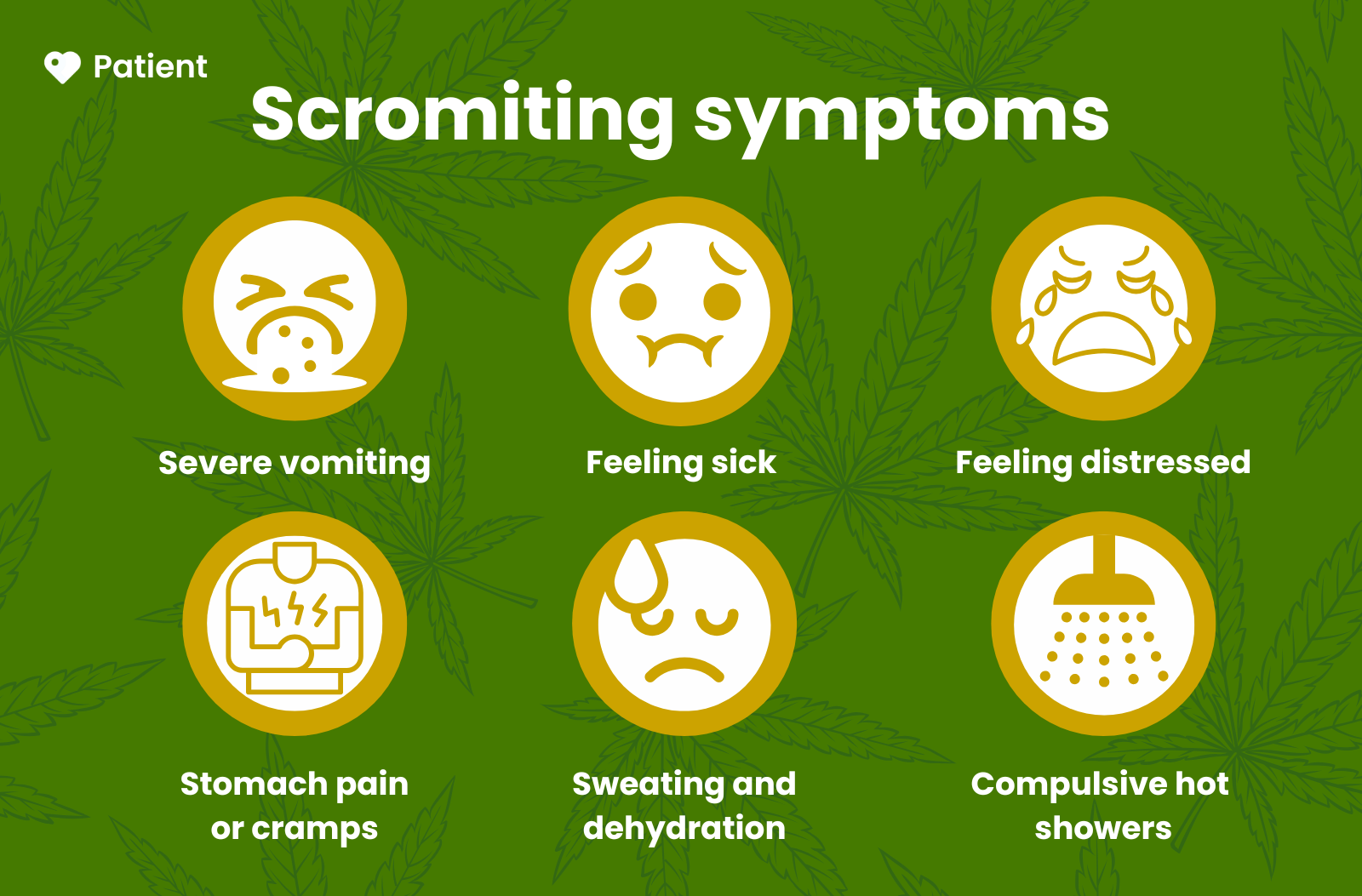
You may be experiencing scromiting if you have symptoms such as:
Severe, repeated vomiting.
Intense nausea.
Stomach pain or cramping.
Sweating and dehydration.
Distress, crying, or screaming.
Temporary relief from hot showers or baths.
How long does scromiting last?
Scromiting can last anywhere from a few hours to several days, depending on how severe it is. If cannabis use continues, symptoms may repeat and become harder to manage.
The good news is that many people start to see improvement after stopping cannabis completely - sometimes within a few days, though full relief can take weeks as their body gradually recovers and resets.
Is scromiting dangerous?
Yes, scromiting can be dangerous.
The constant, severe vomiting can lead to:
Electrolyte imbalances.
Extreme exhaustion.
In some cases, you may need medical care to recover safely.
It’s not something to ignore - if it’s happening, stopping cannabis and getting medical help is the safest way to protect your health.
How is scromiting treated?
Treating scromiting usually starts with stopping cannabis completely.
You can also help manage symptoms at home by:
Staying hydrated.
Drinking electrolyte drinks.
Eating light foods.
Resting as much as possible.
Taking warm showers or baths to help with nausea.
Note: see a doctor immediately if vomiting is relentless, you can’t keep fluids down, or you notice signs of dehydration such as dizziness, very dark urine, or extreme fatigue.
In a medical setting, doctors may provide:
IV fluids to rehydrate.
Medicines to control nausea.
Monitoring for complications.
Severe cases may require hospitalisation until symptoms improve.
Key takeaway
Scromiting is a severe symptom of long-term cannabis use, usually linked to high-THC products, and can cause uncontrollable vomiting, dehydration, and extreme discomfort.
The best way to prevent it is to monitor your cannabis use, limit high-THC products, and stop using cannabis if symptoms such as recurring nausea or vomiting appear.
Patient picks for General signs and symptoms

Signs and symptoms
What could be causing your pins and needles?
Everyone might experience them occasionally, but the causes behind pins and needles aren't always down to lying awkwardly on an arm or leg. Here we look at what causes pins and needles and when to worry about them.
by Lawrence Higgins

Signs and symptoms
Causes of nausea
Feeling sick - nausea - or being sick is a miserable experience. We tend to think of feeling sick as being a gut problem, but there are lots of other reasons. You have a 'vomiting centre' in your brain and it's often here that the issue lies. In addition, your inner ears play an important role in balance, and an issue affecting the inner ear can often lead to vomiting or feeling sick in addition to dizziness. The other symptoms that go along with feeling or being sick often give clues to the cause.
by Dr Sarah Jarvis
Frequently asked questions
What is the difference between "scromiting" and Cannabinoid Hyperemesis Syndrome (CHS)?
Scromiting is an extreme symptom of Cannabinoid Hyperemesis Syndrome (CHS). CHS is the broader condition causing cycles of nausea and vomiting due to long-term cannabis use. Scromiting specifically refers to the severe, uncontrollable vomiting experienced during CHS episodes, which is often accompanied by intense pain and distress.
Are certain types of cannabis products more likely to cause scromiting?
Yes, scromiting is especially linked to cannabis products that have a high concentration of tetrahydrocannabinol (THC), which is the psychoactive component that causes a 'high'. Products that contain only cannabidiol (CBD) are rarely associated with scromiting.
Why do hot baths or showers offer temporary relief from scromiting symptoms?
The article mentions that temporary relief from scromiting symptoms, particularly nausea, can be found through hot showers or baths. While the exact reason isn't fully explained, it is a recognised symptom and a self-management technique for those experiencing CHS and scromiting.
Can scromiting occur if I use cannabis only occasionally, or for a short period?
No, scromiting typically only occurs in individuals who use cannabis heavily or for a long time. It is a symptom of Cannabinoid Hyperemesis Syndrome (CHS), which usually develops after prolonged cannabis use, as the body's response to cannabis changes over time and disrupts normal digestive processes.
What should I do if I suspect I am experiencing scromiting?
If you suspect you are experiencing scromiting, the first step in treatment is to stop using cannabis completely. You should also try to stay hydrated, drink electrolyte solutions, eat light foods, and rest. In a medical setting, doctors may provide IV fluids, anti-nausea medications, and monitor for complications, with severe cases sometimes requiring hospitalisation. It's important to seek medical help if vomiting is relentless, you cannot keep fluids down, or you show signs of dehydration.
Further reading and references
- Randall K, Hayward K; Emergent Medical Illnesses Related to Cannabis Use. Mo Med. 2019 May-Jun;116(3):226-228.
- Galli JA, Sawaya RA, Friedenberg FK; Cannabinoid hyperemesis syndrome. Curr Drug Abuse Rev. 2011 Dec;4(4):241-9. doi: 10.2174/1874473711104040241.
- ONS; Drug misuse in England and Wales: year ending March 2025
About the authorView full bio
Authored by

Heather Ainsworth
SEO Manager
BA (Hons) Business and Marketing, IDM Cert DDM, MHFAider®
Heather is the SEO Manager at Patient and a trained Mental Health First Aider. She is also a regular health writer, covering a wide range of topics with a particular interest in mental wellbeing, women's health, and holistic health.
About the reviewerView full bio

Dr Colin Tidy, MRCGP
General Practitioner, Medical Author
MBBS, MRCGP, MRCP (Paediatrics), DCH
Dr Colin Tidy is an NHS Doctor, based in Oxfordshire.
Article history
Article also available in English, German, Spanish, French, Italian, Portuguese, Hindi, Hebrew, Arabic, and Swedish.
Next review due: 19 Jan 2029
19 Jan 2026 | Originally published
Authored by:
Heather AinsworthPeer reviewed by
Dr Colin Tidy, MRCGP
Join the conversation
Share your thoughts or experiences with others in our patient communities.

Ask, share, connect.
Browse discussions, ask questions, and share experiences across hundreds of health topics.

Feeling unwell?
Assess your symptoms online for free
Sign up to the Patient newsletter
Your weekly dose of clear, trustworthy health advice - written to help you feel informed, confident and in control.
By subscribing you accept our Privacy Policy. You can unsubscribe at any time. We never sell your data.