
Peak flow diary
Peer reviewed by Prof Cathy Jackson, MRCGPAuthored by Dr Colin Tidy, MRCGPOriginally published 5 Jan 2018
Meets Patient’s editorial guidelines
- DownloadDownload
- Share
- Language
- Discussion
- Audio Version
- Add to preferred sources on Google
This leaflet is designed to be printed out for people to record their peak flow reading.
Get help managing your asthma
Get expert healthcare advice from the comfort of home. Complete a quick online consultation, available 24/7, with your request reviewed by a UK-registered clinician. Next day delivery available on eligible treatments.

Peak flow diary for printing off
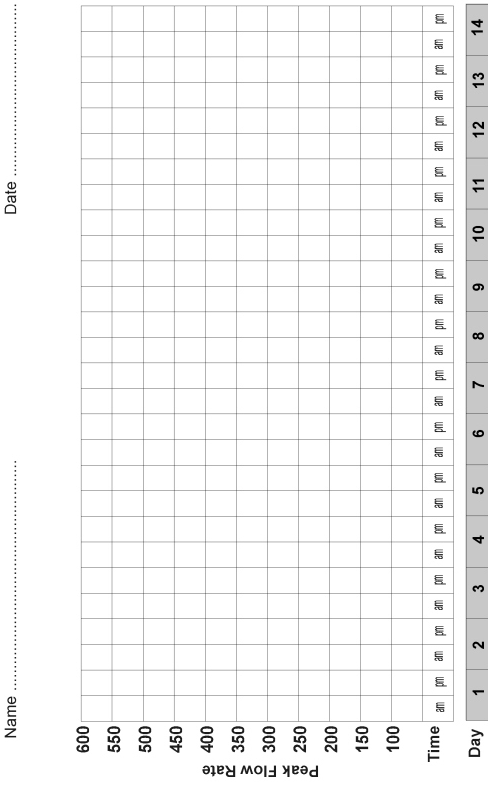
To take a peak flow reading
Put the marker to zero.
Take a deep breath.
Seal your lips around the mouthpiece.
Blow as hard and as fast as you can into the device.
Note the reading.
Repeat three times.
The 'best of the three' is the reading to record on the chart.
What are normal and abnormal peak flow readings?
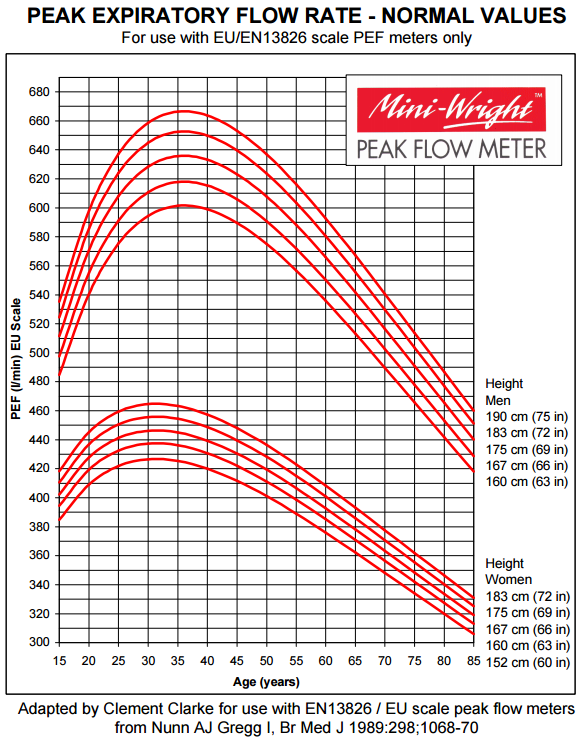
Normal peak flow readings vary, depending on your age, size, and sex. The range of normal peak flow readings is published on a chart, and doctors and nurses refer to the chart when they check your peak flow reading. In healthy people, peak flow readings vary slightly from time to time. The reading is often slightly higher in the evening compared with the morning.
Peak flow normal values
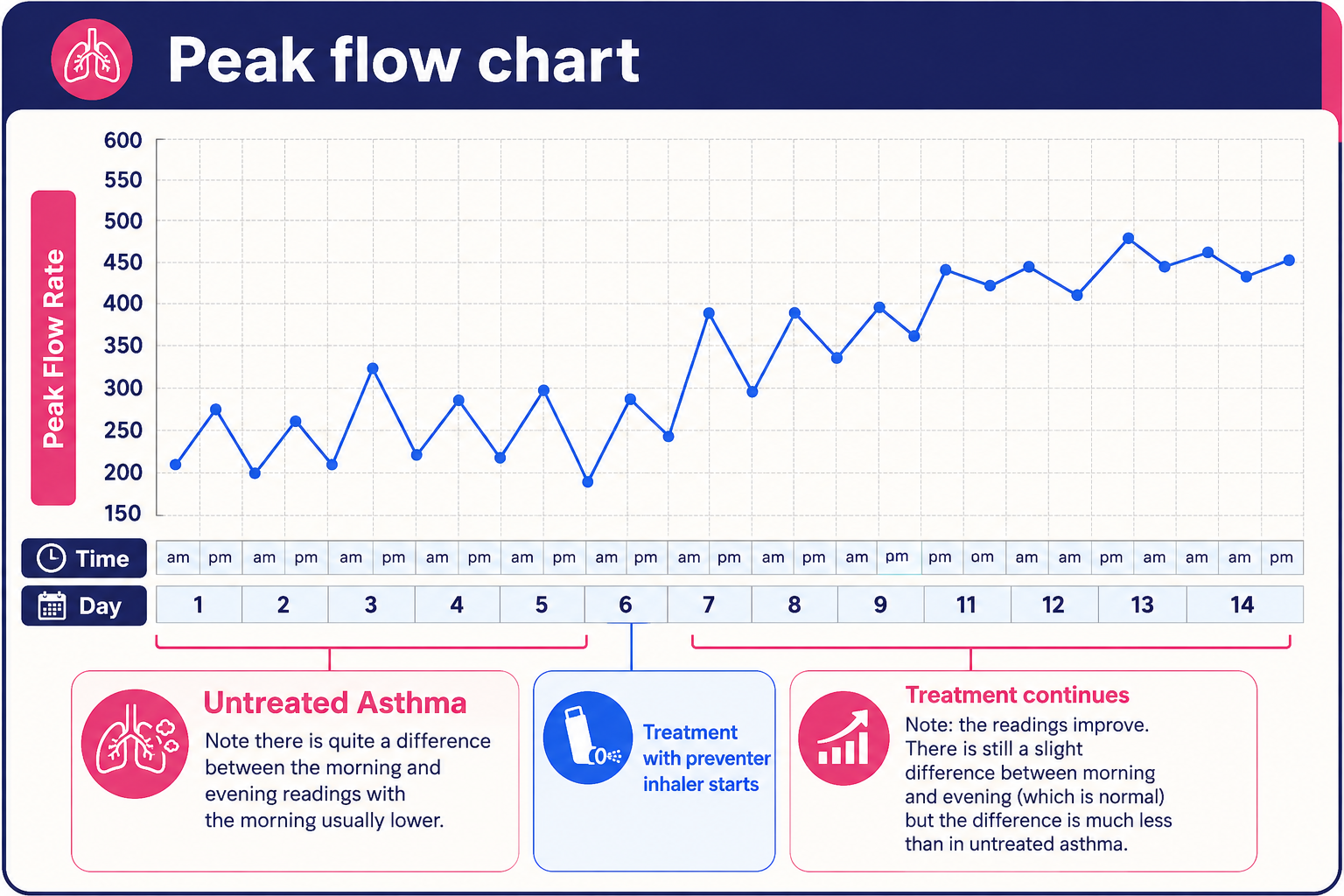
Below is an example of a two-week diary of peak flow readings done by a child who has quite bad asthma.
Peak flow graph
Get help managing your asthma
Get expert healthcare advice from the comfort of home. Complete a quick online consultation, available 24/7, with your request reviewed by a UK-registered clinician. Next day delivery available on eligible treatments.
Patient picks for Asthma
Chest and lungs
What are the main causes of asthma and asthma attacks?
Asthma is a long-term lung condition that around 12% of UK population have been diagnosed as having, according to the British Lung Foundation. While some people with asthma in childhood eventually grow out of it, others require ongoing management into adulthood. The good news is, there are ways to better manage asthma and significantly improve someone's quality of life.
by Amberley Davis

Chest and lungs
How to look after your child's asthma this summer
School's out for the summer and children across the UK are rejoicing. But if your child has asthma, it's important to keep up their prevention routine during the break. We ask an expert for their top tips for a safer summer.
by Natalie Healey
About the authorView full bio
Authored by

Dr Colin Tidy, MRCGP
General Practitioner, Medical Author
MBBS, MRCGP, MRCP (Paediatrics), DCH
Dr Colin Tidy is an NHS Doctor, based in Oxfordshire.
About the reviewerView full bio

Prof Cathy Jackson, MRCGP
Medical Author
BSc (Hons) Physiology, MB, ChB, MRCGP, MD
Professor Cathy Jackson graduated from Manchester Medical School having gained a first-class honours degree in physiology along the way.
Article history
Article also available in English, German, Spanish, French, Italian, Portuguese, Hindi, Hebrew, Arabic, and Swedish.
5 Jan 2018 | Originally published
Authored by:
Dr Colin Tidy, MRCGPPeer reviewed by
Prof Cathy Jackson, MRCGP
Join the conversation
Share your thoughts or experiences with others in our patient communities.

Ask, share, connect.
Browse discussions, ask questions, and share experiences across hundreds of health topics.

Feeling unwell?
Assess your symptoms online for free
Sign up to the Patient newsletter
Your weekly dose of clear, trustworthy health advice - written to help you feel informed, confident and in control.
By subscribing you accept our Privacy Policy. You can unsubscribe at any time. We never sell your data.