
5 natural ways to reduce inflammation
Peer reviewed by Dr Colin Tidy, MRCGPLast updated by Victoria RawLast updated 2 Sept 2026
Meets Patient’s editorial guidelines
- DownloadDownload
- Share
- Language
- Discussion
- Audio Version
- Add to preferred sources on Google
Inflammation is your body's way of protecting itself against injury or infection - causing swelling, redness, and heat. Short-term inflammation is vital for healing, but long-term inflammation can lead to serious health issues.
We look into the underlying causes of long-term inflammation and ways to prevent it.
What is inflammation?
Inflammation is your body's natural defence mechanism and is crucial for a healthy immune system. It helps safeguard against harmful germs (pathogens), boosts tissue repair, and clears away damaged cells.
Sebnem Unluisler, genetic engineer and Chief Longevity Officer, London Regenerative Institute, says this protective response is kick-started when your immune cells recognise harmful stimuli. This triggers the release of molecules such as cytokines - chemical messengers which promote blood flow - to recruit more immune cells to the affected site.
"While this response is essential for short-term healing, unresolved inflammation can lead to health issues," she says. "Long-term inflammation occurs when this immune response doesn’t turn off."
Over time, this can lead to conditions such as:
Certain cancers.
Neurodegenerative diseases.
She adds that long-term inflammation is also associated with ageing. This is because it harms your cells, and weakens your muscle function.
Symptoms of inflammation
Short-term (acute) and long-term (chronic) inflammation come with different symptoms.
These include:
Short-term inflammation - pain, redness, heat, swelling, occasional loss of function depending on the body part affected.
Long-term inflammation - fatigue, digestive issues, joint pain, mental fog.
Unluisler says: "Recognising these signs early can help address potential underlying causes."
5 natural ways to reduce inflammation
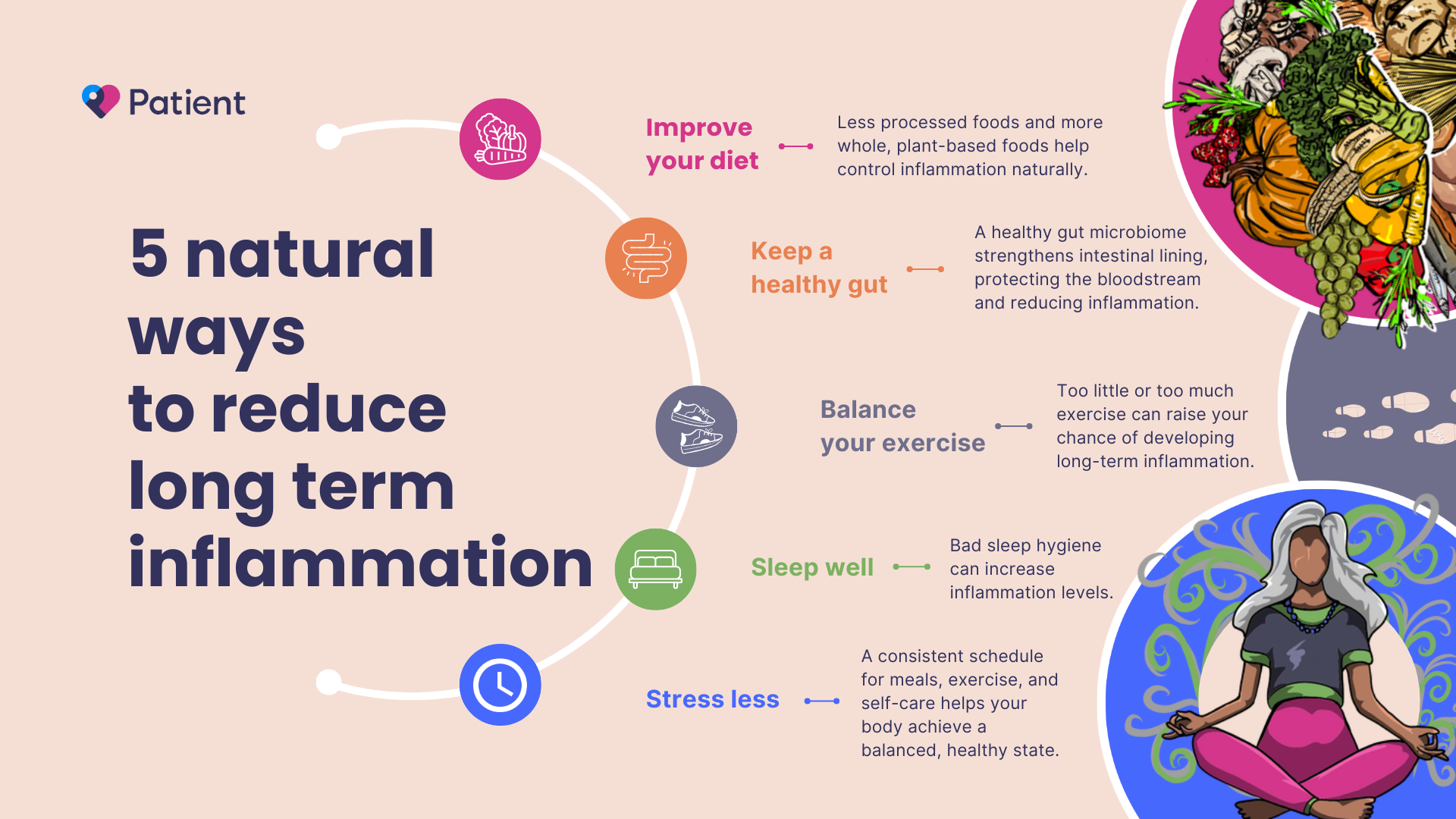
Graphic: Ben Hudson
How to reduce inflammation
Although inflammation can be caused by infections, autoimmune reactions, or injuries, it may also be triggered by other factors.
According to Unluisler, these can include lifestyle choices, such as poor diet, stress, lack of sleep, and environmental exposures to pollution, chemicals, or allergens.
"High-sugar and processed foods, sedentary lifestyles, long-term stress, and environmental toxins can all contribute to ongoing low-grade inflammation," she explains. "This can disrupt your immune function and metabolic health."
1. Improve your diet
Cut back on processed foods - especially those high in red meat and simple carbohydrate sugars - and add more whole, plant-based foods to your diet to help control inflammation naturally.
Dr Steven Shamah, gastroenterologist and metabolic health expert, New York, USA, suggests following the Mediterranean diet, as it's packed with inflammation-fighting nutrients.
He says: "This primarily plant-based eating pattern emphasises fruits, vegetables, whole grains, beans, nuts, and olive oil. It includes moderate amounts of fish, poultry, and dairy while limiting processed foods, added sugars, and saturated fats."
He adds that studies show a colourful diet, filled with natural fruits and vegetables, can help decrease gut inflammation and reduce your chance of health conditions such as heart disease, stroke, obesity, diabetes, high cholesterol, and high blood pressure.
Dr Resham Uttamchandani, a double board-certified integrative medicine physician, based in California USA, recommends the following foods as helpful for lowering inflammation.
Turmeric - with curcumin as its active ingredient, turmeric is one of the most powerful anti-inflammatory agents.
Ginger - known for its digestive and warming properties, ginger can reduce inflammation, particularly in your gut.
Leafy greens - spinach, kale, and other dark greens provide essential vitamins and minerals, supporting detoxification.
Berries - blueberries, raspberries, and blackberries are high in antioxidants that neutralise free radicals contributing to inflammation.
Healthy fats - Omega-3-rich foods such as flaxseeds, chia seeds, and walnuts offer essential fatty acids to counter inflammation.
Amla (Indian gooseberry) - this fruit is high in vitamin C, known for reducing oxidative stress and supporting immunity.
Curcumin with black pepper - this is a highly potent anti-inflammatory, that helps achieve therapeutic effects.
Omega-3 fatty acids - flaxseed oil, or fish oil, offer anti-inflammatory benefits, especially for heart and joint health.
"Staying hydrated with water infused with mint, cucumber, or lemon also helps detoxify your body," she adds.
2. Keep a healthy gut
Having a healthy gut microbiome strengthens your intestinal lining. This prevents harmful substances from leaking out into your bloodstream and causing inflammation.
Shamah says: "The gut is a crucial organ, connected to your brain, heart, and lungs. It’s the gateway for nutrition and a significant defence against toxins. Your diet plays a huge role in maintaining gut health."
He recommends incorporating probiotics - fermented foods filled with good bacteria - into your diet to help restore your gut microbiome.
Natural sources of probiotics include:
Sauerkraut.
"Look for products that have been well-researched, such as Lactobacillus acidophilus, Lactobacillus rhamnosus GG, Saccharomyces boulardii, and Bifidobacterium longum," he advises. "If a product doesn’t have high amounts of these strains, it’s probably best to skip it."
3. Balance your exercise
A lack of exercise can raise your chance of developing long-term inflammation. This also applies to people who exercise too much.
Thomas Olsen, Director and Physiotherapist, EmbdyHealth, Greater Sydney, Australia, recommends finding a happy medium between these two extremes. He suggests engaging in low-impact yoga, Pilates, or aerobics, which have been shown to help reduce inflammation.
"This will increase the activity of your immune system which, in turn, reduces inflammation," he says.
Another way these types of exercise can lower systemic inflammation is by minimising body fat.
Olsen explains: "The fat supplies we carry contain inflammation-promoting substances. Therefore, if you have excess body fat, you have an increased likelihood of developing chronic inflammation."
Uttamchandani adds that regular movement helps with natural detoxification and hormonal balance - both essential for reducing inflammation.
She says: "Exercise activates your lymphatic system, aiding in toxin removal, and balances cortisol and insulin levels, which directly influences inflammation."
4. Sleep well
Not getting enough sleep can negatively impact your health in various ways. One side effect of bad sleep hygiene is that it can increase inflammation levels in your body.
Olsen says that sleep issues and long-term pain are two things that often go hand in hand.
"People who have sleep problems are more likely to develop long-term pain, and vice versa," he explains. "However, improving your sleep quality, by falling asleep faster, sleeping for longer periods, and getting consistent restful sleep can help reduce systemic inflammation - along with long-term pain."
5. Stress less
Having a consistent schedule with set times for meals, exercise, and self-care helps your body achieve a balanced, healthy state.
Uttamchandani recommends mindful practices, meditation, and breathwork - such as pranayama.
She says: "These practices help lower cortisol, reduce blood pressure, and activate the parasympathetic nervous system (PNS), bringing about calm and reducing inflammation."
Shamah explains that stress can harm your gut health, and poor gut health can increase your stress levels. He advises managing stress through relaxation techniques to support a healthier gut microbiome and reduce inflammation.
Olsen explains that the best relaxation techniques are the ones that you enjoy and will stick to.
"For example, meditation before bed is a great way to relax," he says. "This can also help you get better sleep."
Unluisler concludes by saying that if you have long-term health conditions - or are taking medicine - you should always talk to a healthcare professional before making any big changes to your diet or lifestyle. If your symptoms persist or worsen, speak to your doctor to rule out other underlying conditions.
Patient picks for Preventing disease

Women's health
What is inflammaging - and why should women care?
Inflammaging sounds less like a scientific term and more like the next big TikTok craze. Maybe it involves posting artsy photos of beach bonfires or eating lots of chilli peppers in the quest for glowing skin? In reality, it’s neither of those things - and please don’t try the latter. Inflammaging is a blend of ‘inflammation’ and ‘ageing’, referring to the low-grade, chronic inflammation that gradually develops in your body as you get older. Unlike many social media buzzwords, this is one worth paying attention to because, if left unchecked, it can seriously damage your health, particularly for women.
by Victoria Raw
Diet and nutrition
What is the anti-inflammatory diet?
Typical western diets are thought to increase inflammation - where your immune system reacts and causes internal swelling throughout your body. As long-term inflammation can become harmful, anti-inflammatory diets are thought to protect us from a wide range of health problems.
by Victoria Raw
About the authorView full bio
Updated by

Victoria Raw
Feature Writer
BA (Hons), English Literature
Victoria is a content writer at Patient, with special interests spanning mental wellbeing, societal trends and the impact of technology on our health.
Authored by
Victoria Raw
Feature Writer
BA (Hons), English Literature
Victoria is a content writer at Patient, with special interests spanning mental wellbeing, societal trends and the impact of technology on our health.
About the reviewerView full bio

Dr Colin Tidy, MRCGP
General Practitioner, Medical Author
MBBS, MRCGP, MRCP (Paediatrics), DCH
Dr Colin Tidy is an NHS Doctor, based in Oxfordshire.
Article history
Article also available in English, German, Spanish, French, Italian, Portuguese, Hindi, Hebrew, Arabic, and Swedish.
Next review due: 3 Sept 2029
2 Sept 2026 | Latest version
12 Nov 2024 | Originally published
Authored by:
Victoria Raw
Join the conversation
Share your thoughts or experiences with others in our patient communities.

Ask, share, connect.
Browse discussions, ask questions, and share experiences across hundreds of health topics.

Feeling unwell?
Assess your symptoms online for free
Sign up to the Patient newsletter
Your weekly dose of clear, trustworthy health advice - written to help you feel informed, confident and in control.
By subscribing you accept our Privacy Policy. You can unsubscribe at any time. We never sell your data.