Varicose veins
Peer reviewed by Dr Krishna Vakharia, MRCGPLast updated by Dr Colin Tidy, MRCGPLast updated 18 May 2023
Meets Patient’s editorial guidelines
- DownloadDownload
- Share
- Language
- Discussion
- Audio Version
- Add to preferred sources on Google
In this series:Varicose eczemaVenous leg ulcersSuperficial thrombophlebitis
Studies suggest that varicose veins occur in 10-20 out of 100 men and 25-33 out of 100 women. Most people with varicose veins do not have an underlying disease. They often occur for no apparent reason, although they are associated with lifestyle factors in some cases.
Varicose veins do not cause symptoms or complications in most cases, although some people find them unsightly. If treatment is advised, or wanted for cosmetic reasons, a procedure to seal them off is used. There are several procedures available: heat, lasers or chemicals injected into the veins. These methods have largely replaced the old-fashioned surgical methods such as stripping the veins out.
At a glance
Varicose veins are enlarged veins just under the skin, usually in the legs.
They are often visible as thick, knobbly veins, but most people have no symptoms.
Varicose veins are more common in women, with increasing age, and during pregnancy.
Complications are rare but can include skin changes, swelling, or inflammation of the vein.
If a varicose vein bleeds, raise the leg, apply pressure, and call an ambulance if bleeding is heavy.
Treatment is usually for complications, discomfort, or cosmetic reasons.
Self-help includes avoiding prolonged standing and raising your legs regularly.
Sign up for our free 8-week Healthy Pregnancy course!
Each week we’ll share useful information and essential tips on topics such as nutrition, exercise, mental health, symptoms to look out for, and preparing for childbirth, to help you navigate your pregnancy journey whatever stage you are at.
By subscribing you accept our Privacy Policy. You can unsubscribe at any time. We never sell your data.
What are varicose veins?
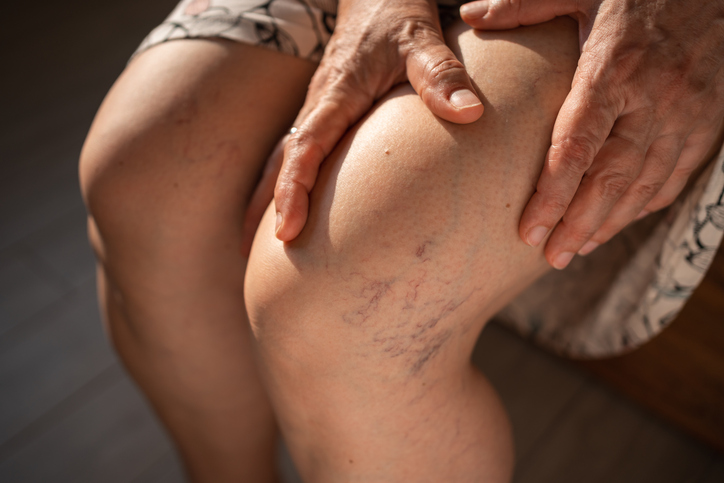
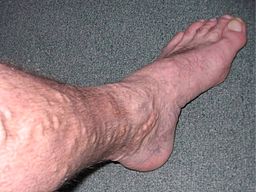
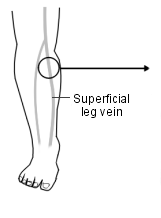
Varicose veins are enlarged (dilated) sections of veins which are located just under the surface of the skin - usually on the leg. They are often easy to see, as they look thick and knobbly. They may be less obvious if you are overweight, as they are hidden by fatty tissue under the skin.
Varicose veins on leg
Other, smaller types of veins which can be noticeable are:
Reticular veins - a closely grouped network of small veins.
Thread veins, or spider veins - these look like a kind of star burst pattern on an area of the leg. They are not true varicose veins.
Leg veins
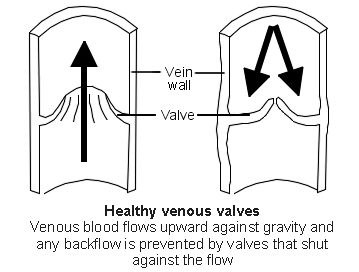
Normal valves
What causes varicose veins?
Varicose vein
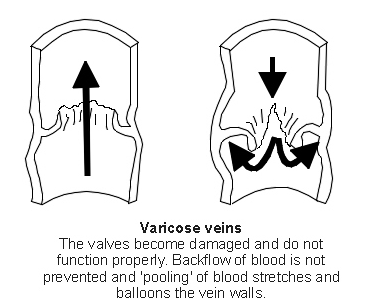
It is thought that the wall of the vein becomes weak in some sections. These sections then widen and become more prominent.
If this occurs near a valve then the valve may become leaky and blood may flow backwards. Once this happens at one valve there is increased pressure on the vein. This can cause more widening and more leaky valves. Blood then pools (collects) in the enlarged vein and makes it stand out.
About 10-20 out of 100 men and 25-33 out of 100 women develop varicose veins at some time in their lives. More women than men develop varicose veins. Most people with varicose veins do not have an underlying disease and they occur for no apparent reason. However, the chance of them developing is increased with:
Pregnancy. This is partly due to the baby causing extra pressure on the veins and partly because hormones you make during pregnancy tend to relax vein walls. The more babies you have, the more the risk of permanent varicose veins developing. Varicose veins tend to appear, or become worse, during pregnancy but often improve after childbirth when the pressure on the veins eases.
Age. They are more common with increasing age.
Being overweight, which appears to increase the chance for women but not for men.
Standing a lot. Jobs which involve lots of standing are often said to cause varicose veins. However, there is little scientific evidence to support this theory.
Sometimes an underlying disease may cause varicose veins - for example:
A previous blood clot (thrombosis) or injury in a deep leg vein.
Rarely, a swelling or tumour in the lower part of the tummy (the pelvis) which blocks flow in the veins at the top of the leg.
Very rarely, varicose veins are due to abnormal blood vessels - if some of the veins or arteries have not formed in the normal way.
What are the symptoms of varicose veins?
Most people with varicose veins have no symptoms. Some people are concerned about the appearance of the veins. Larger varicose veins can ache, feel heavy or itch.
Are varicose veins dangerous?
Most people with varicose veins do not develop complications. Complications develop in a small number of cases. Complications are due to the higher pressure in the varicose veins causing changes to the small blood vessels in nearby skin.
Possible complications include:
Skin changes over the prominent veins. The possible skin changes are discolouration, varicose eczema, skin ulcers, or lipodermatosclerosis - hardening of the fat layer under the skin, causing areas of thickened, red skin. See the separate leaflet called Venous Leg Ulcers for more details.
Rarely, varicose veins may bleed.
First aid for bleeding varicose veins: bleeding happens only rarely. If a varicose vein does bleed then you need to stop the bleeding quickly by doing the following:
Raise the leg - lie down flat and raise the leg high. This will ensure that it is well above the rest of the body (for example, rest it on a chair, use lots of pillows or someone can hold the leg high).
Pressure - put a clean cloth or dressing on to the bleeding area and put firm pressure on it, for at least 10 minutes.
Call an ambulance if the bleeding is heavy, or does not quickly stop. See a doctor urgently, as you may need treatment to prevent the bleeding from happening again.
Varicose vein treatment
Most people with varicose veins do not need any treatment. You may want to have treatment for one of the following reasons:
If complications develop - these occur in a small number of cases. If leg swelling or skin changes develop over prominent veins, treatment is usually advised to prevent a skin ulcer from developing. If a skin ulcer does occur then treatment of any varicose veins may help to cure the ulcer. If you have a varicose vein which has bled, you should be referred urgently for treatment.
For symptoms of itch or discomfort.
Cosmetic reasons. You may feel that the veins look unsightly. Treatment which is purely for cosmetic reasons is not usually available on the NHS.
Combination symptoms: you will need to have the leg circulation examined before certain treatments (such as wearing compression stockings) can be used if you have a combination of BOTH:
Varicose veins which are problematic; AND
Arterial disease (poor circulation, or peripheral arterial disease) of the legs.
Tests for varicose veins
If varicose veins are problematic, you will usually be referred for assessment by a doctor who is a specialist. You may have a type of ultrasound scan called a Doppler or a duplex scan. This helps to show how the blood is flowing in the veins. It can show whether any of the valves are damaged - which is useful to know when planning treatment. Occasionally, other tests are needed if the veins are complex.
If you have arterial disease (poor circulation, or peripheral arterial disease) in your legs, or if arterial disease is suspected, the arterial circulation needs to be measured. This needs to be done before you have treatment which puts pressure on the leg, such as compression stockings (below).
The arterial circulation is normally measured by using an ultrasound machine called a Doppler ultrasound, which is used to give a measurement called the ankle brachial pressure index. This test can be done in specialised clinics and also by some nurses and GPs.
How to get rid of varicose veins
There are several different options. Traditional operations such as vein stripping have largely been replaced by procedures which involve heat, lasers or the injection of chemicals into the vein.
Self-help methods
Avoid prolonged standing or sitting still. Try to put your feet up frequently (sit or lie down and raise the feet above the level of your hips). You can, for example, use extra pillows under your feet on a bed or footrest). This helps to reduce blood pooling in the veins. Use a moisturising cream or ointment to protect the skin in the affected area if it is dry, flaky or itchy.
Varicose vein treatment techniques have been developed which have a lower rate of complications, such as bruising, compared with traditional surgery. The National Institute for Health and Care Excellence (NICE) recommends that they be used in preference to traditional surgery for people who are having their veins treated for the first time. They include:
Radiofrequency ablation and endovenous laser ablation. These methods involve passing a probe into one of the longer varicose veins, using ultrasound to guide the position. The laser or radiofrequency energy makes the vein heat up, which seals it.
Foam sclerotherapy. This technique is used if heat or lasers do not work. It uses a chemical mixed with air to make foam. The foam is injected into the veins, pushing the blood away and making the veins go into spasm. After treatment, compression stockings are needed,and the veins will be hard and swollen for a while before they shrink down. More than one treatment may be needed
Surgery
Traditional surgery is recommended if treatment with heat, lasers or foam does not work. Different techniques can be used to remove the veins, depending on their site and severity.
Sclerotherapy
The vein is injected with a chemical that can close and seal (sclerose) it. It was once used as a main treatment but it became clear that it commonly causes skin staining and ulcers. It is now mainly reserved for small veins below the knee which have not been treated properly or have come back after surgery. The vein needs to be compressed afterwards, which involves wearing bandaging or compression stockings for a few days or weeks.
Support tights and compression stockings
These counter the extra pressure in the veins. They may help to ease symptoms such as ache, although there is little proof as to how well they work. They may be difficult to put on, particularly by people who have arthritis in their hands. Current guidelines do not recommend that they be used routinely unless treatments to seal the veins are not suitable or do not work.
If you do need compression stockings, below-knee class 1 (light) or class 2 (medium) are usually the most suitable. Ideally, they should be put on first thing in the morning, before you get out of bed, then taken off when going to bed at night. Compression stockings are available on prescription or you can buy them.
Note: if you have arterial disease in the legs, you will need a medical assessment of your circulation to decide if compression stockings are suitable (see above).
How to prevent varicose veins
There's little evidence for any particular ways of preventing varicose veins. However, there are ways to ease the symptoms of varicose veins, such as:
Avoid standing or sitting still for long periods.
When sitting, raise your legs, and support them, such as with pillows, a chair or on the sofa.
Exercise regularly to improve circulation.
Maintain a healthy weight and reduce weight if overweight.
Patient picks for Blood vessel disorders
Heart health and blood vessels
Peripheral arterial disease
Peripheral arterial disease, also called peripheral vascular disease, is a narrowing of the blood vessels (arteries). In addition to also being known as peripheral vascular disease (PVD), it is also sometimes called 'hardening' of the arteries of the legs.
by Dr Hayley Willacy, FRCGP

Heart health and blood vessels
Buerger's disease
Buerger's disease causes inflammation of blood vessels in the legs and arms, particularly in the hands and feet. It leads to narrowing and blockage of the blood vessels so that blood flow to the hands and feet is reduced. This causes pain and other symptoms. It may eventually lead to damage and death of the tissues in the hands and/or feet. The exact cause is not known. It mainly affects smokers but occasionally occurs in non-smokers. The single most important thing that you can do if you are diagnosed with Buerger's disease is to stop smoking. This can help to stop the disease from becoming worse and reduces your chance of needing surgical removal (amputation) of a finger, a toe, or worse.
by Dr Laurence Knott
Frequently asked questions
Can men also get varicose veins, or is it mostly a women's health issue?
Yes, men can absolutely get varicose veins. While more women tend to develop them (about 25-33 out of 100 women), approximately 10-20 out of 100 men will also develop varicose veins at some point in their lives.
If I have varicose veins, does that mean I have an underlying medical condition?
Not usually. For most people, varicose veins develop for no apparent reason and are not linked to an underlying disease. However, in some rare cases, they can be caused by a previous blood clot, an injury to a deep leg vein, a tumour in the pelvis blocking blood flow, or very rarely, abnormally formed blood vessels.
Is it true that standing for long periods at work can cause varicose veins?
It is often suggested that jobs requiring a lot of standing can cause varicose veins. However, there is little scientific evidence to strongly support this theory.
What is the difference between small, noticeable veins like thread veins and actual varicose veins?
Thread veins, also known as spider veins, and reticular veins are smaller types of noticeable veins. Thread veins appear as starburst patterns on the skin, and reticular veins are a network of small veins. These are distinct from true varicose veins, which are enlarged, dilated sections of veins located just under the skin's surface, typically appearing thick and knobbly.
What happens if a varicose vein bleeds, and what should I do?
Bleeding from a varicose vein is rare, but if it occurs, you need to act quickly. Lie down flat and raise the affected leg high above your body, for example, by resting it on a chair or pillows. Apply firm pressure to the bleeding area with a clean cloth for at least 10 minutes. If the bleeding is heavy or doesn't stop quickly, call an ambulance. You should see a doctor urgently afterwards to prevent future bleeding.
Further reading and references
- Kanwar A, Hansrani M, Lees T, et al; Trends in varicose vein therapy in England: radical changes in the last decade. Ann R Coll Surg Engl. 2010 May;92(4):341-6.
- Dindyal S, Woodburn KR; Changing practice from conventional surgery to endovenous treatments produces excellent results for both. Ann R Coll Surg Engl. 2010 Jan;92(1):87.
- Ultrasound-guided foam sclerotherapy for varicose veins; NICE Interventional procedure guidance, February 2013
- Varicose veins: diagnosis and management; NICE Clinical Guideline (July 2013)
- Kuhlmann A, Prenzler A, Hacker J, et al; Impact of radiofrequency ablation for patients with varicose veins on the budget of the German statutory health insurance system. Health Econ Rev. 2013 Apr 3;3(1):9. doi: 10.1186/2191-1991-3-9.
- Varicose veins; NICE CKS, February 2024 (UK access only)
About the authorView full bio
Updated by

Dr Colin Tidy, MRCGP
General Practitioner, Medical Author
MBBS, MRCGP, MRCP (Paediatrics), DCH
Dr Colin Tidy is an NHS Doctor, based in Oxfordshire.
About the reviewerView full bio

Dr Krishna Vakharia, MRCGP
Chief Medical Officer for Health, Optum UK
MBChB, MRCGP(2013), BMedSci (hons), DFSRH, DRCOG, PGDipDerm (Distn)
Dr Krishna Vakharia is an NHS GP. She is also a regular examiner for the postgraduate Diploma in Practical Dermatology at Cardiff University as well as being the Chief Medical Officer for health at Optum UK.
Join the conversation
Share your thoughts or experiences with others in our patient communities.

Ask, share, connect.
Browse discussions, ask questions, and share experiences across hundreds of health topics.

Feeling unwell?
Assess your symptoms online for free
Sign up to the Patient newsletter
Your weekly dose of clear, trustworthy health advice - written to help you feel informed, confident and in control.
By subscribing you accept our Privacy Policy. You can unsubscribe at any time. We never sell your data.