Swollen eyelid
Peer reviewed by Dr Toni Hazell, MRCGPLast updated by Dr Caroline Wiggins, MRCGP Last updated 27 May 2026
Meets Patient’s editorial guidelines
- DownloadDownload
- Share
- Language
- Discussion
- Audio Version
- Add to preferred sources on Google
A swollen eyelid is very common and is usually due to allergy, inflammation, infection, or injury. It can affect either the upper or lower eyelid, or both.
In this article:
Video picks for Eyelid problems
Key points
Swollen eyelids are a common symptom of many conditions and are usually caused by infections, inflammation, allergies, or injury.
Symptoms include redness, puffiness, pain, itching, or a visible lump on the eyelid.
Eyelid swelling can be treated with a warm compress, over-the-counter remedies such as eye drops or antihistamines, and regular cleaning of the affected area.
Continue reading below
Swollen eyelid causes
A swollen eyelid is usually caused by inflammation from allergies, infection, or injury.
Swelling occurs when inflammation causes fluid to leak from blood vessels into the surrounding tissue, which is especially noticeable in the thin skin of the eyelids.
In some cases, swelling may be the only symptom, but it can also be accompanied by redness, itching, a gritty sensation, or soreness depending on the cause.
Common causes of swollen eyelids include:
Stye.
Conjunctivitis (pink eye) which may be allergic conjunctivitis or infective conjunctivitis.
Skin infections.
Eye irritation or rubbing.
Injury.
These causes are discussed in more detail below.
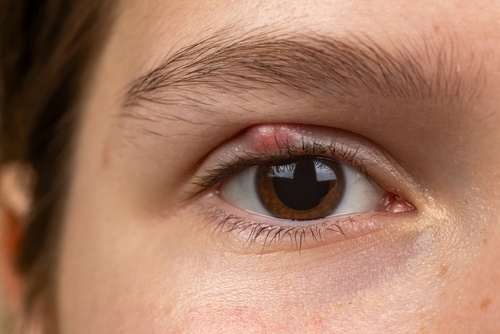
Chalazion
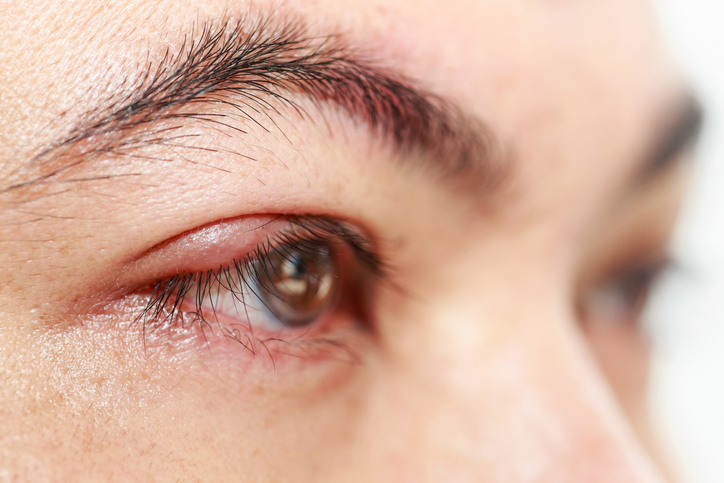
A chalazion is a small lump or swelling in the eyelid, sometimes causing the whole lid to swell if it becomes inflamed or infected.
It happens when an oil gland in the eyelid gets blocked, forming a small fluid-filled cyst (about 2-8 mm).
It’s more common on the upper eyelid and usually isn’t painful or itchy.
The area can look red or slightly darker than the surrounding skin.
Stye
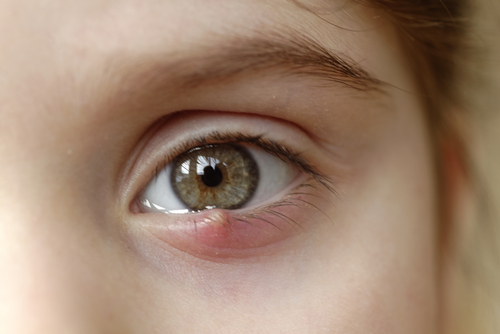
A stye is a common, painful infection at the base of an eyelash.
It appears as a red, swollen, pus-filled spot along the edge of the eyelid.
The infection and inflammation can spread, sometimes making the whole eyelid swell.
The eyelid is usually red, swollen, and can feel sore or tender.
© By Andre Riemann, Public domain, via Wikimedia Commons
Blepharitis
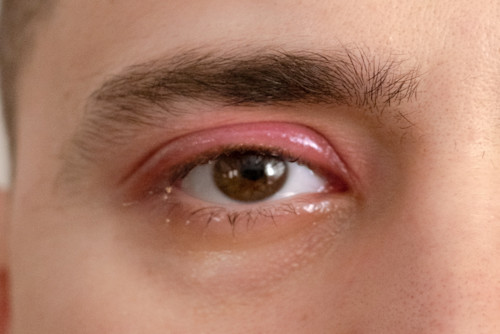
Blepharitis is inflammation of the eyelids that can make the eyes feel sore, irritated, and gritty.
The eyelids often look puffy, pink-red, and slightly swollen, especially along the edges.
It can be a persistent or recurring problem.
It’s sometimes linked with skin conditions such as rosacea or seborrhoeic dermatitis.
© By clubtable, Public domain, via Wikimedia Commons
Conjunctivitis (pink eye)
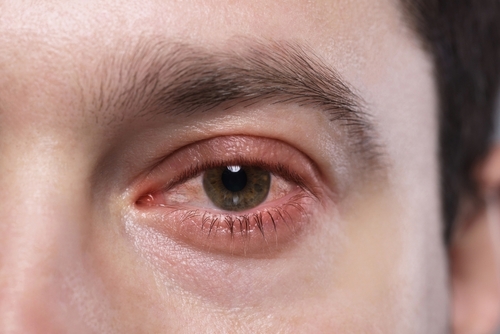
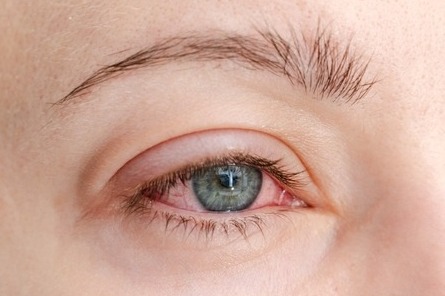
Conjunctivitis (pink eye) is inflammation or infection of the conjunctiva (the thin membrane covering the white of the eye and the inside of the eyelids).
Conjunctivitis can be either allergic conjunctivitis, or due to sensitivities (to eye make-up, for example), or infective conjunctivitis.
Common symptoms include red/pink eyes, a gritty feeling, and mild soreness.
The eyelids may look puffy and slightly red. The eye can be watery or produce some discharge.
Allergies
Allergic reactions to allergens can cause eyelids to swell. An allergen is something which the body's immune system reacts to.
The body reacts to an allergen by releasing chemicals that cause swelling, redness, and itching.
The eyelids may feel tight and can swell enough to make opening the eyes difficult.
Common triggers include pollen (which causes hay fever), pet hair, dust, make-up, shampoo, eye drops, contact lens solutions, and sometimes viruses or bacteria.
Skin infection
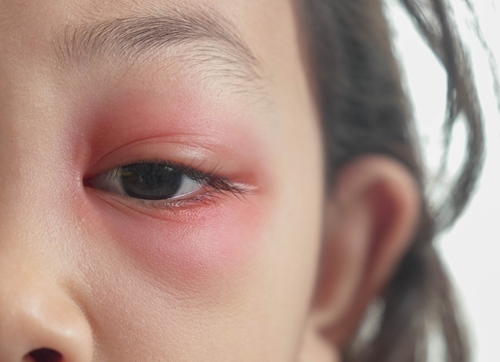
Eyelid skin infections usually cause noticeable swelling, redness, itching, and soreness.
Infection can spread to the eyelids from nearby areas of the face.
Common skin infections include cellulitis, impetigo, and erysipelas.
Infection is more likely if the skin is broken or damaged.
Ectropion and entropion
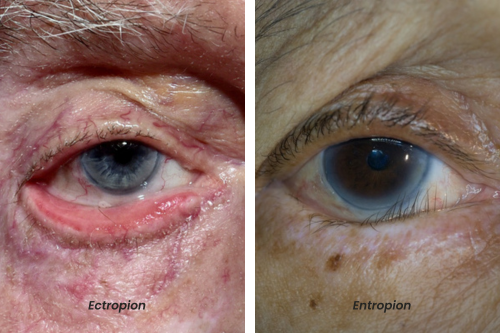
An ectropion occurs when part or all of the lower eyelid turns outwards away from the eye.
An entropion occurs where the lower eyelid turns in towards the eye, causing the eyelashes to rub against the front of the eye.
The eyelids can occasionally become inflamed and a little swollen, although this is not usually dramatic.
Eyelid irritation and rubbing
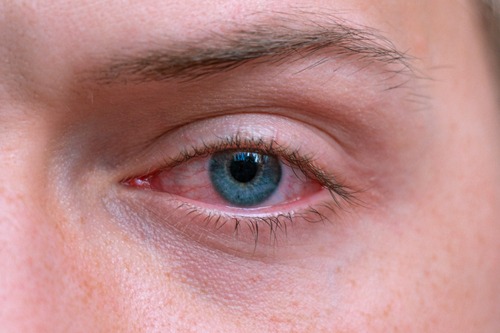
Eyelids can become puffy, swollen, and red due to irritation from grit, dust, smoke, or other environmental factors, even without an allergic reaction.
The eyes themselves are often red and watery when irritated.
Rubbing the eyes can make swelling worse by increasing blood flow to the area and causing fluid to leak into the eyelid tissue.
Continuous rubbing may also irritate the skin further, prolonging redness and puffiness.
Injury
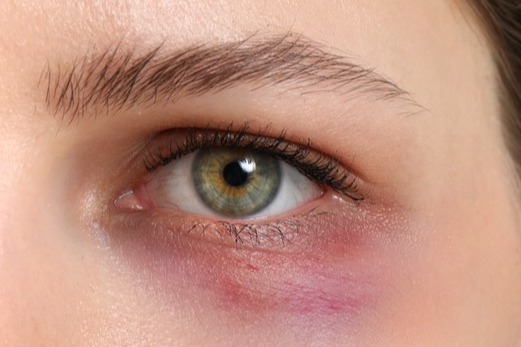
Direct injury to the eyelid usually causes swelling and bruising, which is often worse the day after the injury.
A black eye can result from injury to the eyelid, nose, or forehead.
Loose eyelid skin allows blood to pool easily, which leads to swelling.
As the black eye heals, swelling decreases and bruising changes colour before fading, but full recovery can take a few weeks.
Other causes
Less common causes of swollen eyelids include:
Angio-oedema - a skin reaction that causes marked skin swellings in the eyelids and face that can be itchy.
Oedema - when fluid builds up in the body, sometimes causing swelling in the eyelids.
Anaphylaxis (or anaphylactic shock) - a severe allergic reaction that can cause swollen eyelids as an early warning sign.
Sinusitis - a sinus infection that can cause puffiness around the eyes, affecting the eyelids. The eyelids are not usually red, sore or itchy.
Sunburn - eyelids can easily burn in the sun which causes them to become swollen, red and sore.
Head trauma - significant head injuries, particularly to the forehead, can result in swelling and bruising of the eyelids as the blood moves underneath the skin, down the face due to gravity. A high-impact injury causing a fracture of the base of the skull can cause two swollen black eyes, sometimes called 'raccoon eyes'.
Crying - crying, particularly if it is prolonged, can cause swollen eyelids as the eyelids tend to absorb some of the tears.
Chemical irritation and burns - some chemicals such as certain make-up, soaps, chlorine, tear gas, and cleaners can irritate or burn the eyelids, causing them to swell.
If a chemical gets in the eyes or on the eyelids, rinse immediately with running water for 5-10 minutes before seeking medical help.
How to treat swollen eyelids
Back to contentsTreatment for swollen eyelids involves treating the underlying cause. However, some simple measures may be suggested, such as:
Cleaning the area (using clean cotton wool with very diluted baby shampoo and water).
Using a warm wet compress.
Avoiding rubbing or touching your eyes.
Eyelid swelling caused by a medical condition may need specific treatment. Further treatment information is available by following the links to specific conditions.
Continue reading below
When to seek medical attention for a swollen eyelid
Back to contentsMany cases of a swollen eyelid will get better on their own or can be treated with medication bought from a pharmacy.
You should seek medical attention urgently if:
Your eyesight is significantly impaired (more than just blurry because of a watery eye and recovering fully when you wipe your eyes).
You can feel a deep pain in the eye, rather than a gritty feeling on the surface of the eye.
The whole area around the eye is red and swollen. This may indicate a serious infection.
You are suffering from an allergic reaction called anaphylaxis as this is a medical emergency.
Who can help treat a swollen eyelid?
An optician, doctor or pharmacist is a sensible first step - they are well trained to deal with these issues and will advise if it is something that can be treated by them.
Outlook
Back to contentsMost causes of swollen eyelids are not serious. See "When to seek medical attention" above for more information on this. Other causes are often easily treated. Some conditions may cause the swelling to come and go, for example, people who get eyelid swelling with hay fever each year.
Continue reading below
Frequently asked questions
Back to contentsHow long will a swollen eyelid last?
A swollen eyelid can last for a day, several days, or even several weeks depending on the cause. If your eyelid swelling hasn't improved after 24-48 hours, or is getting worse, you should seek attention from a pharmacist, optician, or doctor depending on your symptoms.
Is a hot or cold compress better for swollen eyelids?
A cold compress helps reduce swelling, puffiness, and redness. A warm compress soothes the eyelid and encourages the glands and pores in the skin to open, which may help to reduce swelling caused by a stye or chalazion. Pain may be helped by either a cold or warm compress, depending on the cause.
Can make-up cause an eyelid to swell?
Make-up can cause an eyelid to swell due to an allergic reaction to ingredients, irritation because of sensitive skin, or from products contaminated with bacteria.
Can alcohol cause swollen eyelids?
Alcohol can cause your body tissues to hold more water than usual within it. This may be more noticeable in the thin skin of the eyelids than in other body areas.
Dr Mary Lowth is an author or the original author of this leaflet.
Patient picks for Eyelid problems

Eye health
Blepharospasm
Blepharospasm is a condition in which blinking or spasmodic closing of the eyes occurs at an increased rate. It ranges from a mild, embarrassing condition of twitching or fluttering of an eyelid to severe spasms of eye closure which interrupt useful vision. Secondary blepharospasm is a common response to many common eye conditions, and can be caused by some conditions affecting the nervous system. This leaflet is mainly about primary blepharospasm, also called benign essential blepharospasm (BEB). BEB cannot be cured, but is usually successfully managed with botulinum toxin injections, repeated at intervals. In the UK, if you have blepharospasm you must notify the Driver and Vehicle Licensing Agency (DVLA).
by Dr Hayley Willacy, FRCGP
Eye health
Chalazion
A chalazion is a small cyst that forms on the eyelid when an oil gland becomes blocked or inflamed. It is usually painless and mainly affects the upper eyelid.
by Dr Philippa Vincent, MRCGP
Continue reading below
About the authorView full bio

Dr Mary Elisabeth Lowth, FRCGP
MA (Cantab), MB, BChir, DFFP, DRCOG, PG Cert, Med Ed, FRCGP, MA (London)
Dr Mary Lowth was a Suffolk GP for 20 years, specialising in paediatrics and child protection, and later in documentation of torture.
About the reviewerView full bio

Dr Toni Hazell, MRCGP
MBBS, BSc, MRCGP, DFSRH, Dip GU med, DRCOG, DCH (London, UK, 2000)
Dr. Toni Hazell qualified from St. Mary’s Hospital Medical School and did her VTS at Northwick Park Hospital.
Article history
The information on this page is written and peer reviewed by qualified clinicians.
Next review due: 27 Nov 2030
27 May 2026 | Latest version
7 Mar 2018 | Originally published
Authored by:
Dr Mary Elisabeth Lowth, FRCGP

Ask, share, connect.
Browse discussions, ask questions, and share experiences across hundreds of health topics.

Feeling unwell?
Assess your symptoms online for free
Sign up to the Patient newsletter
Your weekly dose of clear, trustworthy health advice - written to help you feel informed, confident and in control.
By subscribing you accept our Privacy Policy. You can unsubscribe at any time. We never sell your data.