Lower urinary tract symptoms in men
Peer reviewed by Dr Colin Tidy, MRCGPLast updated by Dr Philippa Vincent, MRCGPLast updated 8 Jun 2023
Meets Patient’s editorial guidelines
- DownloadDownload
- Share
- Language
- Discussion
- Audio Version
- Add to preferred sources on Google
In this series:Prostate problemsEnlarged prostateUrinary retentionPSA testUrethral strictureChronic prostatitis
Lower urinary tract symptoms (LUTS) are a very common problem, especially in men over the age of 65 years. They can be caused by various conditions. These symptoms may include slowing of the urine stream and needing to get up to pass urine at night.
There are different causes of LUTS and the treatment will depend on the cause. Some men choose not to have treatment if their symptoms are not too bothersome and the cause is not serious.
At a glance
Lower urinary tract symptoms (LUTS) are problems with storing or passing urine.
Symptoms include a poor stream, needing to wait for urine to flow, or needing to pass urine urgently.
Common causes are an enlarged prostate gland, an overactive bladder, and water balance problems.
Various tests like urine and blood tests can help find the cause.
Treatments depend on the cause and how much symptoms affect your life.
Self-help includes reducing evening drinks, avoiding fizzy or caffeinated drinks, and bladder training.
If self-help and initial medication do not help, you may be referred to a specialist.
What are lower urinary tract symptoms (LUTS)?
LUTS are usually divided into storage of urine (also called irritative) and voiding (also called obstructive) symptom groups.
Voiding symptoms include: poor stream, hesitancy (having to wait for the urine flow to start), intermittent flow and straining when passing urine.
Storage symptoms include: increased frequency and urgency of passing urine (having a need to pass urine urgently), urge incontinence and needing to get up to pass urine at night.
Other symptoms may include feeling the need to pass urine again after just emptying the bladder and dribbling of urine after going to the toilet.
What causes lower urinary tract symptoms (LUTS)?
There are various causes of LUTS. The most common causes include:
An enlarged prostate gland. The prostate gland is situated around the neck of the bladder. When this gets bigger it can cause voiding symptoms.
Water balance problems. As people get older, it becomes harder for the body to reduce the amount of urine that they pass at night. This leads to the need to pass urine more often at night. Therefore, at the age of 65 and over it can be normal to pass urine at least once a night.
Other less common causes of LUTS include diabetes mellitus, urinary infections, bladder stones, prostate cancer, bladder cancer and neurological conditions (eg, multiple sclerosis).
What tests are commonly performed?
The tests you may have will vary depending on the symptoms.
A doctor may examine the prostate to see how big it is. This is done by inserting a gloved finger through the anus into the rectum to feel the back of the prostate. The size of the bladder may be assessed by examining the tummy (abdomen).
The most common tests performed include:
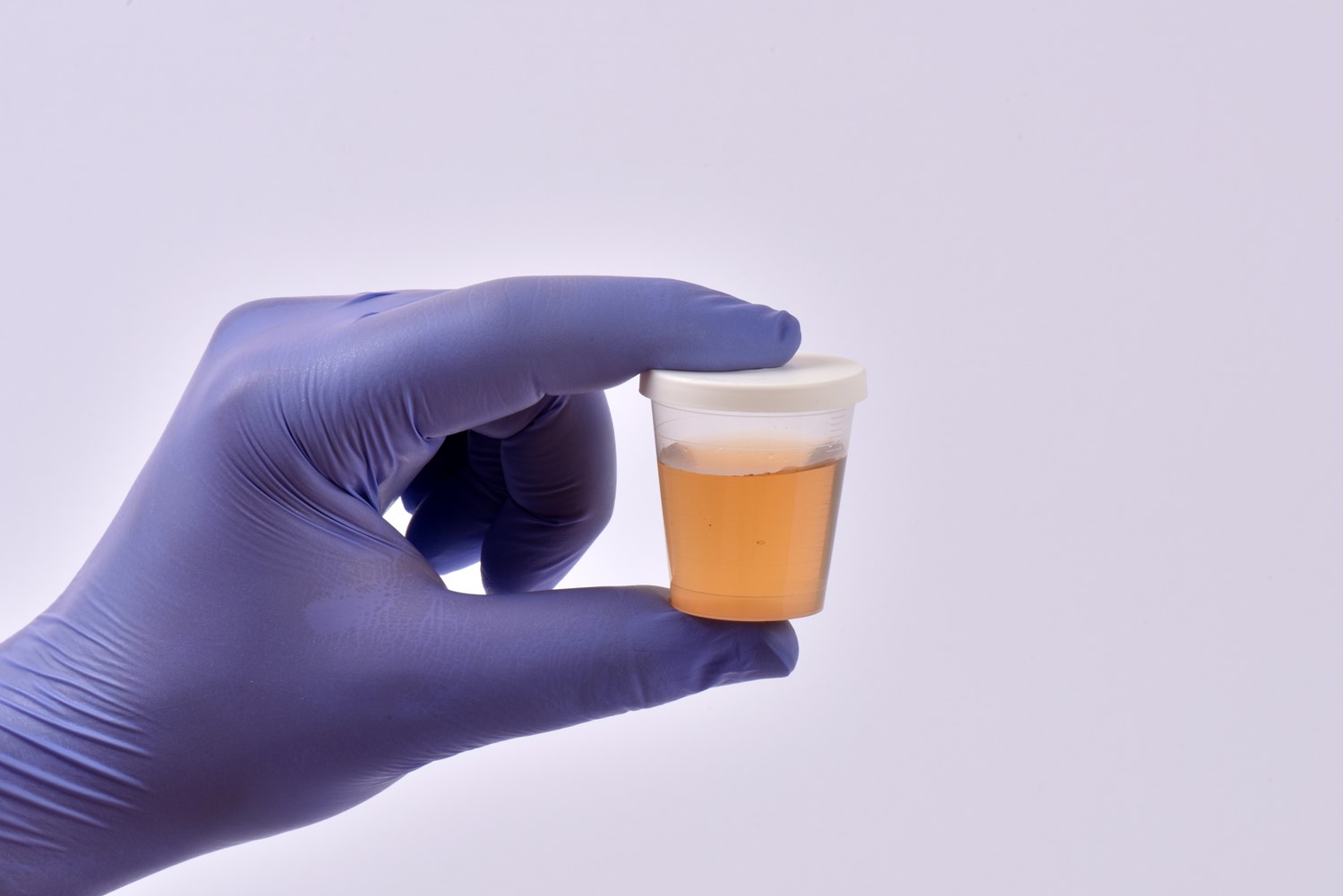
A urine dipstick test to exclude an infection in the urine or any blood in the urine.
A blood test for glucose to exclude diabetes.
Other blood tests may also be performed - for example, to test the function of your kidneys, and also a PSA test. These tests vary between cases.
It might be suggested to complete a urinary frequency volume chart on which the times passing urine are documented alongside the amount of urine passed each time.
Lower urinary tract symptoms (LUTS) treatment
The treatment for LUTS will depend upon:
The underlying cause.
How much the symptoms are interfering with the quality of life.
For example, if you have an enlarged prostate then a medicine can be offered to shrink the prostate gland or - less commonly nowadays - an operation to remove some of the prostate. Different operations can also be performed for men with other symptoms.
Medicines can also be effective to improve symptoms of an overactive bladder and storage symptoms. They can also improve symptoms of passing urine in the night.
If there are problems with incontinence of urine then a small tube (a catheter) to drain the urine from the bladder might be of benefit. Many men use catheters just to empty their bladders so they do not have a catheter in all the time. Rarely, some men may need to have long-term catheters.
A urology specialist referral might be suggested, especially if symptoms have not improved with some of the self-help measures or with some medication, and also if some further specialist tests are needed.
Self-help treatment for lower urinary tract symptoms
The following self-help measure might help:
Reduce drinking in the evening. It is ideal to try to drink as little as possible after 4 pm if you are having night-time symptoms.
Try to anticipate times when urinary frequency and urgency are likely to be most inconvenient and reduce the volume of fluid drunk beforehand.
Consider changing what is being drunk. Fizzy and caffeine-containing drinks can all make LUTS worse. It is best to stop drinking these.
Stopping smoking may significantly improve symptoms, as nicotine irritates the bladder.
Sitting to pass urine. Evidence shows that men with LUTS have reduced symptoms if they sit to pass urine instead of standing.
Try to train the bladder. This means you should try to hold on to urine for longer when experiencing a frequent desire to pass urine. This can be done gradually - literally holding on for 1 minute longer, then 2 minutes etc and building up to longer and longer times.
If hesitancy is a problem - try to relax when standing to pass urine. It may be easier to sit than stand.
If urgency is a problem - some distraction techniques can be tried such as breathing exercises and mental tricks (for example, counting) to take the mind off the bladder. Bladder training can be useful here too.
Pelvic floor exercises. These can help people to hold on to urine for longer and also reduce the risks of having accidents. The pelvic floor muscles are those used when trying to interrupt the flow of urine. Exercises involve tightening these muscles for around 10 seconds, at least 10 times each day.
Patient picks for Urinary problems in men
Kidney and urinary tract
Urinary retention
Urinary retention means that you are having problems emptying the bladder completely. It may occur suddenly (acute urinary retention) or it may develop over a longer period of time (chronic urinary retention). Acute urinary retention is a medical emergency. Urinary retention is more common in men than in women. It becomes more common as you become older. In men aged in their 70s, urinary retention occurs in about 1 in every 100 men. For men in their 80s, urinary retention occurs in about 3 in every 100 men. You may need tests to help find the cause of your urinary retention. The treatment and outcome for both acute and chronic urinary retention will depend on the underlying cause. You should see a doctor immediately if you are unable to pass any urine when your bladder feels full and painful.
by Dr Rosalyn Adleman, MRCGP

Men's health
Urethral stricture
A stricture occurs when a part of your urethra (the tube that carries urine) becomes narrowed. Any section of your urethra may be affected, from the bladder to the tip of the penis. There is usually some scar tissue around the affected part of your urethra that causes the narrowing. The length of strictures vary from less than 1 cm to the full length of the urethra. The diagram below illustrates a fairly long and severe stricture. However, many are shorter than this. Urethral stricture is uncommon in men and rare in women.
by Dr Toni Hazell, FRCGP
Frequently asked questions
What is the difference between voiding and storage symptoms?
Voiding symptoms are related to the act of passing urine itself and include issues like a poor stream, difficulty starting the flow (hesitancy), an intermittent flow, or straining during urination. Storage symptoms are about how the bladder holds urine and include increased frequency, a strong sudden need to urinate (urgency), accidental leakage due to urgency, and needing to wake up at night to urinate.
Are any LUTS considered normal as people get older?
Yes, as people age, particularly those aged 65 and over, it is common for the body to find it harder to reduce the amount of urine produced at night. This can lead to needing to pass urine at least once during the night, which is considered normal in this age group.
Why might my doctor examine my tummy for LUTS?
A doctor might examine your tummy (abdomen) to assess the size of your bladder. This can provide additional information related to your lower urinary tract symptoms, alongside other tests and examinations.
What kind of tests might be done to check my kidney function for LUTS?
In some cases, blood tests may be performed to specifically check the function of your kidneys. This is in addition to other common tests like a urine dipstick or glucose blood test, and the specific tests can vary depending on your individual situation.
How can changing my diet help with LUTS?
Changing your diet can help alleviate LUTS. Specifically, fizzy drinks and beverages containing caffeine are known to worsen symptoms, so it's best to stop drinking these. Reducing fluid intake in the evening, especially after 4 pm, can also help if you experience a frequent need to urinate at night.
Further reading and references
- Guidelines on the Management of Non-Neurogenic Male Lower Urinary Tract symptoms (LUTS), incl. Benign Prostatic Obstruction (BPO); European Association of Urology (2022)
- Pelvic floor muscle exercises for men; Prostate Cancer UK.
- LUTS in men; NICE CKS, June 2025 (UK access only)
- Oelke M, De Wachter S, Drake MJ, et al; A practical approach to the management of nocturia. Int J Clin Pract. 2017 Nov;71(11):e13027. doi: 10.1111/ijcp.13027. Epub 2017 Oct 5.
- de Jong Y, Pinckaers JH, ten Brinck RM, et al; Urinating standing versus sitting: position is of influence in men with prostate enlargement. A systematic review and meta-analysis. PLoS One. 2014 Jul 22;9(7):e101320. doi: 10.1371/journal.pone.0101320. eCollection 2014.
About the authorView full bio
Updated by

Dr Philippa Vincent, MRCGP
General Practitioner, Medical Author
MB BS, Bsc, MRCGP (2000), DCH, DFSRH, DRCOG
Dr Philippa Vincent is an NHS GP working in North London.
About the reviewerView full bio

Dr Colin Tidy, MRCGP
General Practitioner, Medical Author
MBBS, MRCGP, MRCP (Paediatrics), DCH
Dr Colin Tidy is an NHS Doctor, based in Oxfordshire.
Join the conversation
Share your thoughts or experiences with others in our patient communities.

Ask, share, connect.
Browse discussions, ask questions, and share experiences across hundreds of health topics.

Feeling unwell?
Assess your symptoms online for free
Sign up to the Patient newsletter
Your weekly dose of clear, trustworthy health advice - written to help you feel informed, confident and in control.
By subscribing you accept our Privacy Policy. You can unsubscribe at any time. We never sell your data.