- Health topics
- Children's health

Children's health
Abdominal pain
As a parent, the health of your children is never far from your mind, whether you're dealing with nappy rash or wondering whether a high temperature is something more serious. Here's a small selection of our extensive range of information on kids’ health issues, highlighting symptoms to look out for and some suggested treatments.

Abdominal pain
Tummy pain is a regular complaint. Learn about possible causes, from mild infections to more serious issues, and how to help your child feel better.
Baby and toddler
Caring for babies and toddlers comes with many questions. From feeding to sleep and common illnesses, discover trusted advice for this vital stage of life.
- Baby-led weaning
- Blocked nose in babies
- Bottle-feeding your baby
- Breastfeeding your baby
- Bronchiolitis
- Childhood gastro-oesophageal reflux
- Cleft lip and palate
- Colic in babies and infants
- Cot death
- Erythema toxicum neonatorum
- Feeding premature babies
- Feeding your baby
- Feeding your toddler
- Hydrocele in infants
- Intraventricular haemorrhage in babies
- Nappy rash
- Necrotising enterocolitis
- Neonatal jaundice
- Oral thrush in babies
- Pyloric stenosis
- Retinopathy of prematurity
- Seborrhoeic dermatitis in babies
- Tear duct blockage in babies
- Teething
- Treating newborn health problems
- Undescended testicles
Bedwetting
Bedwetting is common in young children. Find out why it happens, how to support your child through it, and when to seek medical advice.
Childhood cancers
Though rare, cancers in children require urgent care. Discover the early signs, how diagnosis happens, and the treatment options that offer the best outcomes.
Development
Childhood physical development conditions encompass issues that affect a child's ability to master physical milestones. These range from temporary developmental delays to lifelong neurological and musculoskeletal conditions.
Digestive conditions
Vomiting, diarrhoea, or constipation? Discover the most common digestive issues in children and when to seek advice from a healthcare professional.
General health conditions
Not all childhood conditions are easy to categorise. Explore a range of some common and less common conditions and when to seek advice if you’re concerned.
Genetic conditions
Some children are born with inherited conditions. Discover how genetic disorders are diagnosed, the treatments available, and where to find support and advice.
- Albinism
- Alpha-1 antitrypsin deficiency
- Congenital adrenal hyperplasia
- Congenital heart disease
- Congenital pulmonary airway malformation
- Cri du chat syndrome
- Cystic fibrosis
- Down's syndrome
- Ehlers-Danlos syndrome
- Glycogen storage disorders
- Hirschsprung's disease
- Huntington's disease
- Klinefelter's syndrome
- Marfan syndrome
- Muscular dystrophy
- Sickle cell disease
- Sickle cell trait
- Thalassaemia
- Turner syndrome
- Wilson's disease
Infections
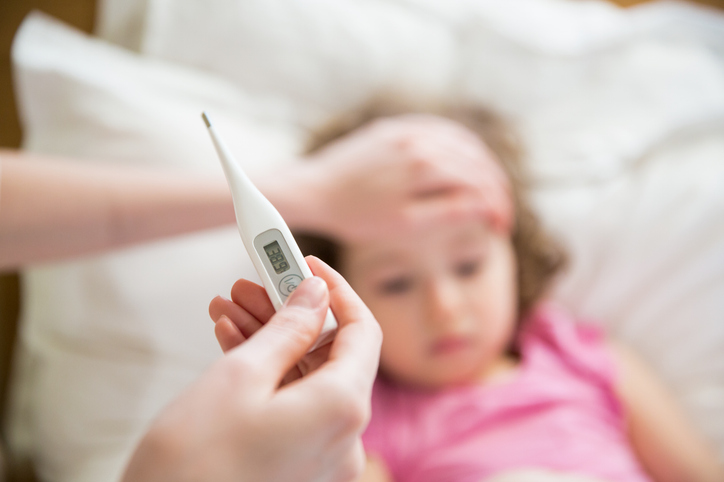
Infections are a normal part of childhood and help develop the immune system, with most children getting 6 to 8 respiratory or stomach infections a year. While most are viral and resolve with rest and fluids, you should monitor for high fever, lethargy, or dehydration.
- Chickenpox in children
- Coughs and colds in children
- Croup
- Febrile seizure
- Fever in children
- Hand, foot and mouth disease
- Head lice and nits
- Head lice treatment and prevention
- Measles
- Mumps
- Respiratory syncytial virus (RSV)
- Roseola
- Rubella
- Scarlet fever
- School exclusion for infections
- Threadworms
- Urine infection in children
- Whooping cough
Meningitis and sepsis
Meningitis (inflammation around the brain/spine) and sepsis (blood poisoning) are life-threatening medical emergencies. In children, they can develop quickly within hours. Immediate medical attention is vital.
Mental health and behaviour
Mental health in childhood includes reaching developmental and emotional milestones, and learning healthy social skills and how to cope when there are problems.
Vaccinations
Vaccines help protect children from serious diseases. Learn which jabs are recommended, when they’re given, and why vaccination is so important for lifelong health.